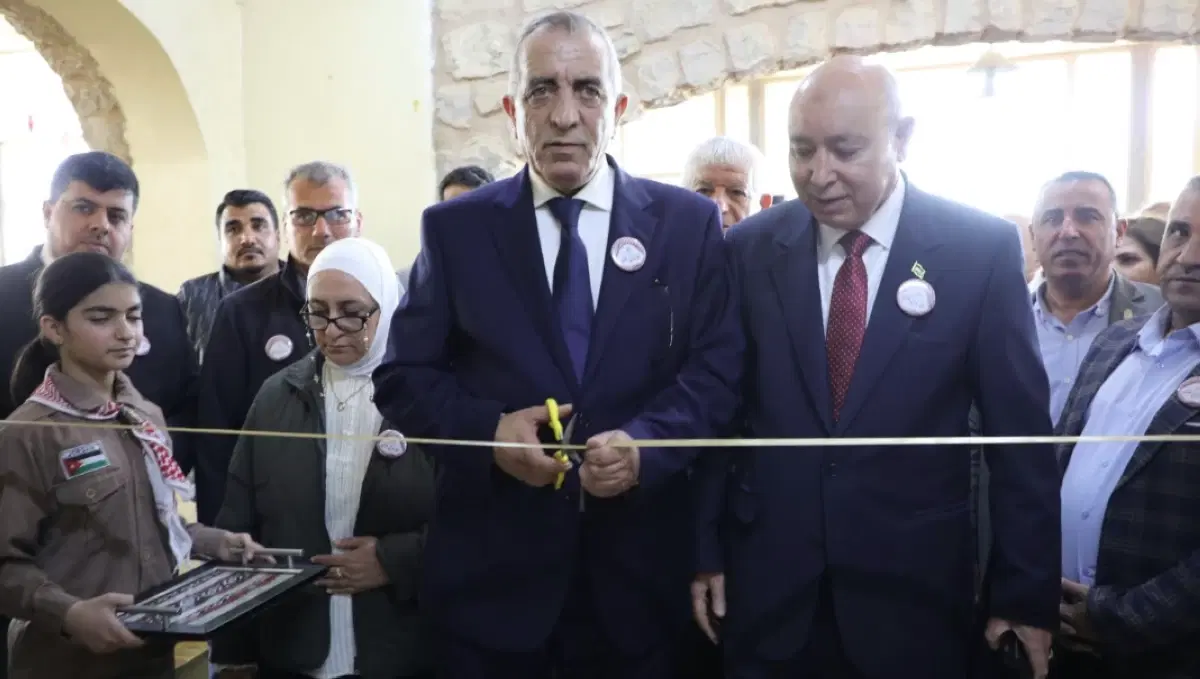
Al-Rawashdeh stated that the selection of Hamoud comes in recognition of its people's contributions to building Jordanian society, and its educational and cultural history, emphasizing that culture is a fundamental pillar in strengthening national awareness and consolidating the values of citizenship, tolerance, and pluralism.
He added that the selection of the town comes in the wake of the painful events it witnessed, to express the solidarity of the state and Jordanian society with its people, and the belief in the ability of culture and knowledge to confront extremist ideology and hatred, preserve the social fabric, and promote the values of coexistence.
He pointed out that Hamoud possesses a rich educational and cultural history, recalling the initiative of its people more than a century ago to build a school with their own funds and efforts, to be open to their children and the children of neighboring villages, in addition to the literary and cultural figures it has produced, most notably the Arab novelist Ghalib Halasa.
Al-Rawashdeh emphasized that launching the Jordanian Family Library project from Hamoud carries a message that books and knowledge represent the choice of Jordanians in confronting ignorance and extremism, and that culture is not a luxury, but a right for every citizen and a shared national responsibility.
He added that distributing the project's publications for free to participants at the launch event as a tribute to the souls of the martyrs of Hamoud embodies the meanings of loyalty and solidarity, and confirms that the book is a message of life, hope, knowledge, and tolerance.
He pointed out that the Jordanian Family Library project aims to entrench a culture of reading, expand the base of book beneficiaries, and provide diverse publications to families, students, and youth at nominal prices, contributing to enriching home libraries and enhancing the presence of knowledge in daily life.
He called on families, students, and youth to visit the approved exhibition and sales centers in various governorates of the Kingdom during the period from the first to the fifth of November, and to benefit from the project's publications that meet the interests of various age groups.
He emphasized that the Ministry is continuing to expand access to knowledge, preserve national identity, and promote values of moderation, citizenship, and openness, in a way that contributes to building a cohesive society that believes in dialogue and respects difference.
Al-Rawashdeh began his speech by observing a minute of silence and reciting Al-Fatiha for the souls of the martyrs of Jordan and the nation and the martyrs of Hamoud, confirming that the wound that afflicted the town is a wound in the heart of all of Jordan, and that the values of belonging, citizenship, and brotherhood are stronger than attempts to spread hatred and division.