Recommendations to transform the Jordanian Theatre Festival into a sustainable cultural project throughout the year
Amman5 min read
Share
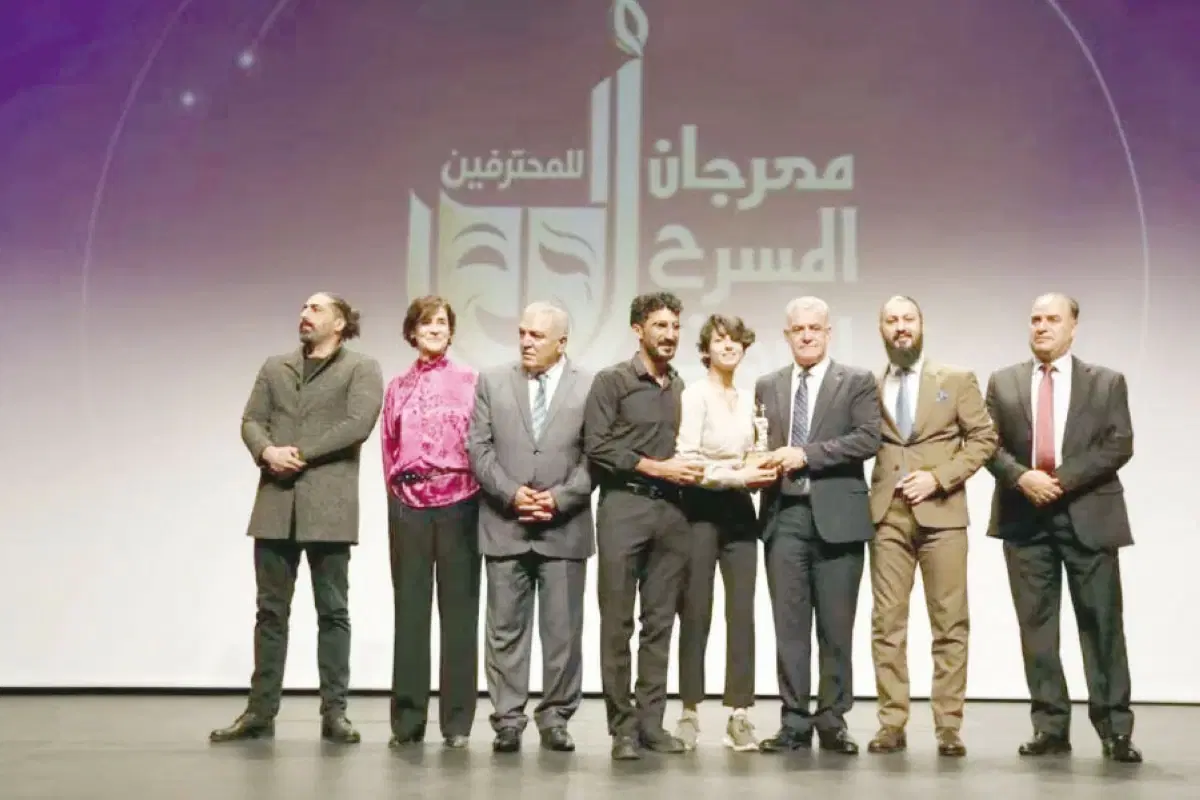
The Ministry of Culture concluded, on Friday evening at the Royal Cultural Centre, the activities of the Jordanian Theatre Festival for Professionals, announcing the results of the official competition alongside a set of recommendations issued by the jury to develop the national theatre movement, foremost among them transforming the festival into a sustainable cultural project extending throughout the year, rather than being limited to seasonal performances.
The closing ceremony, held under the patronage of Minister of Culture Moustapha Al-Rawashdeh and represented by the Secretary-General of the Ministry, Dr. Nidal Al-Ahmad, was attended by Dr. Hani Al-Jarrah, President of the Jordanian Artists Syndicate, Isaac Yassin, Director of the Theatre and Arts Department and Festival Director, along with a large audience of artists, intellectuals, and theatre enthusiasts.
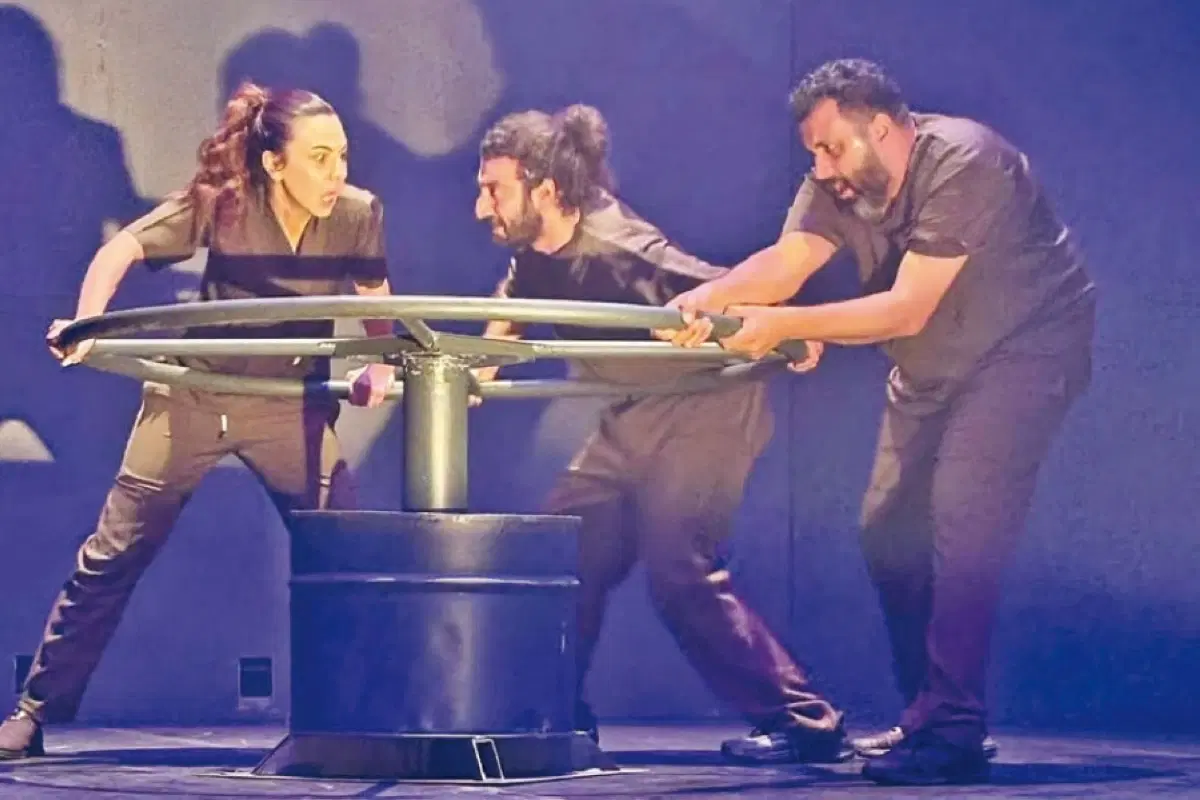
In the official competition, Dana Abu Laban's play "As It Is Not Lived" stood out prominently in the awards list, with Abu Laban winning two awards for Best Overall Production and Best Direction, while the Best Actor award went to Al-Mithna Al-Qawasmi and Best Actress to Batoul Al-Dmour for their performances in the same production.
The play's team, comprising Dana Abu Laban, Al-Ma'tam Al-Manasir, and Moutaz Karima, won the Best Scenography award, while Abdul Razzaq Mataria received the Best Music award, named in honor of the late artist Mourad Demergian. Dr. Eyad Al-Rimoni won the Best Theatrical Script award for his play "A Feminine Autumn."
In reviewing the outcomes of this edition, the jury's recommendations went beyond merely evaluating participating performances, proposing practical pathways to advance Jordanian theatre by establishing an integrated project linking production with training, development, performances, and critical dialogues, providing continuous opportunities for theatrical experiences to grow and engage with audiences.
During the closing ceremony, jury chairman and artist Habes Hussein stated that advancing theatre requires a vision that transcends the traditional festival framework, aiming instead to establish an ongoing theatrical movement that provides artists and creatives with an environment to develop their experiences and test their artistic abilities before audiences.
The jury emphasized the importance of revitalizing theatrical writing as the foundational pillar of dramatic work, calling for the establishment of specialized laboratories to develop scripts and train writers, and opening opportunities for young talents to present works that move beyond directness and rhetoric toward deeper, richer dramatic construction.
On the technical and aesthetic level, the recommendations stressed the need to enhance elements of theatrical performance, including lighting, sound, music, and visual effects, as well as completing performances requiring artistic and technical refinement, and leveraging specialized Jordanian and Arab expertise.
The recommendations also called for treating scenography and theatrical space as essential components in shaping dramatic meaning, not merely as aesthetic additions, clarifying that the value of the stage is not tied to the number of tools used upon it, but rather to the images, meanings, and imaginative and interpretive spaces it generates for the audience.
The jury gave special attention to the actor, affirming the necessity of restoring their central role as the core and soul of the theatrical process, and working to develop their tools for character building and dramatic action, deepening their relationship with the stage space and the audience through advanced training programs based on research, experimentation, and collaborative work.
Regarding expanding the production base, the recommendations called for a more inclusive distribution of theatrical opportunities across the Kingdom's governorates by supporting independent and emerging theatre groups, activating cultural centers and university theatres, and providing production and performance environments that allow local talents to reach wider audiences, moving beyond the concentration of activity within limited geographical or institutional boundaries.
In the context of preserving national theatrical memory, the jury recommended establishing a comprehensive digital Jordanian archive to document scripts, performances, theatrical experiences, pioneers, and stages of development, making these materials accessible to researchers, scholars, and new generations, alongside supporting serious theatre criticism and enhancing the presence of research and documentation within the cultural landscape.
To ensure these proposals move from recommendations to implementation, the jury stressed the need for a follow-up mechanism involving the Ministry of Culture, relevant institutions, theatre groups, and specialists, tasked with defining priorities, responsibilities, and timelines, alongside adopting clear indicators to measure achievement levels and evaluate outcomes.
In concluding his remarks, Hussein affirmed that advancing theatre cannot be achieved through festivals alone, but requires an integrated cultural vision, institutional will, and genuine investment in human capital and creativity, enabling theatrical experiences to develop and reach their audiences, and making theatre a vibrant space for shaping awareness, preserving memory, celebrating life, and envisioning the future.
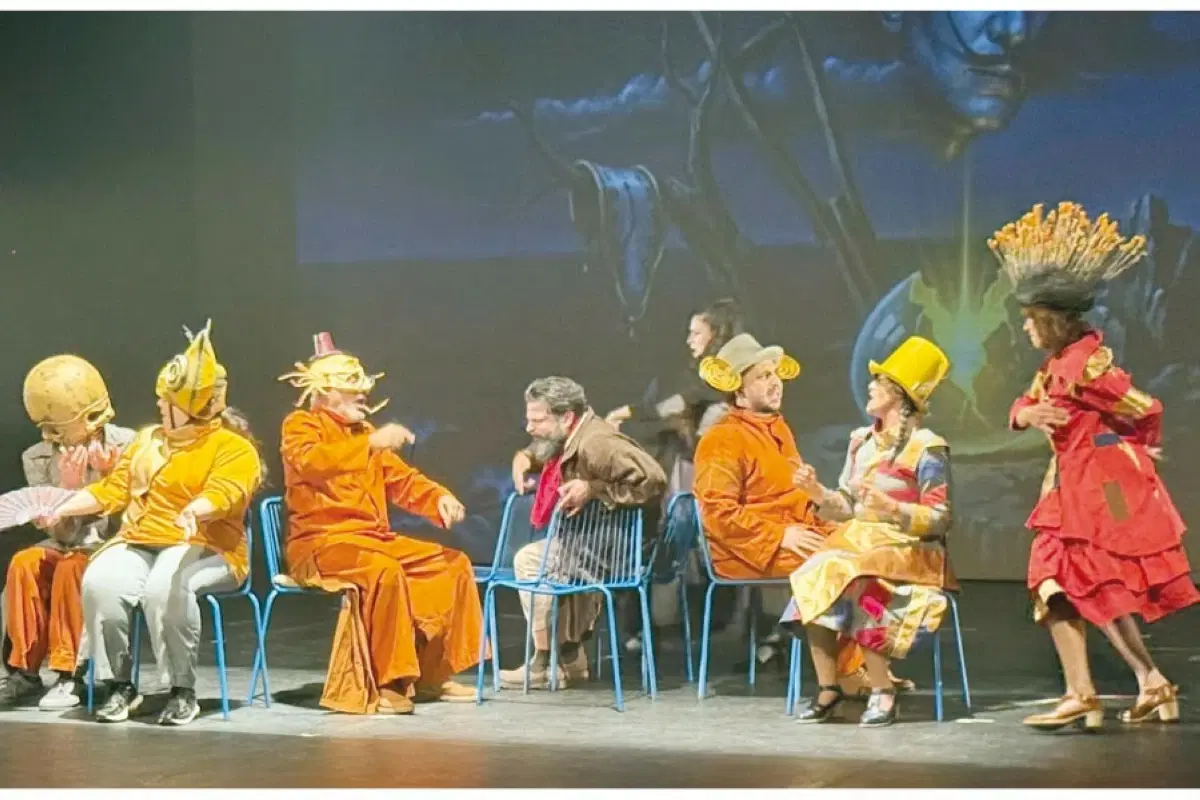
The festival's events began on October 19 at the main stage of the Royal Cultural Centre, featuring a number of Jordanian theatrical productions: "Middle Island" by Karam Al-Zawahreh, "A Rehearsal of Freedom" by Firas Al-Masri, "Awaiting Salvation" by Dr. Yahya Al-Bashtawi, "A Feminine Autumn" by Dr. Eyad Al-Rimoni, "As It Is Not Lived" by Dana Abu Laban, "The Chairs" by Dr. Majd Al-Qasas, and "Kawn" by Hisham Sweidan.
Accompanying the performances were practical seminars held at the circular theatre of the Royal Cultural Centre, with participation from critics, artists, and specialists, discussing the presented works and their artistic and aesthetic dimensions, and providing a platform for dialogue between creators and audiences.
The festival's organization comes within the Ministry of Culture's efforts to develop the Jordanian theatre season, support professional production, provide platforms for showcasing local experiences, and enhance opportunities for knowledge and critical exchange among sector professionals, thereby reinforcing theatre's presence as a fundamental component of cultural life and a medium for expressing societal issues and transformations.