((And I Wanted to Survive)) by Inas Maarouf.. The story of the Gazan human facing war
Amman5 min read
Share
The book "And I Wanted to Survive" by Palestinian writer Inas Maarouf presents a novelistic testimony of the Gazan human in times of war, through the story of an ordinary young woman trying to cling to life amidst fear, displacement, and loss, turning her individual experience into a portrait of an entire generation that found itself facing an exceptional reality.
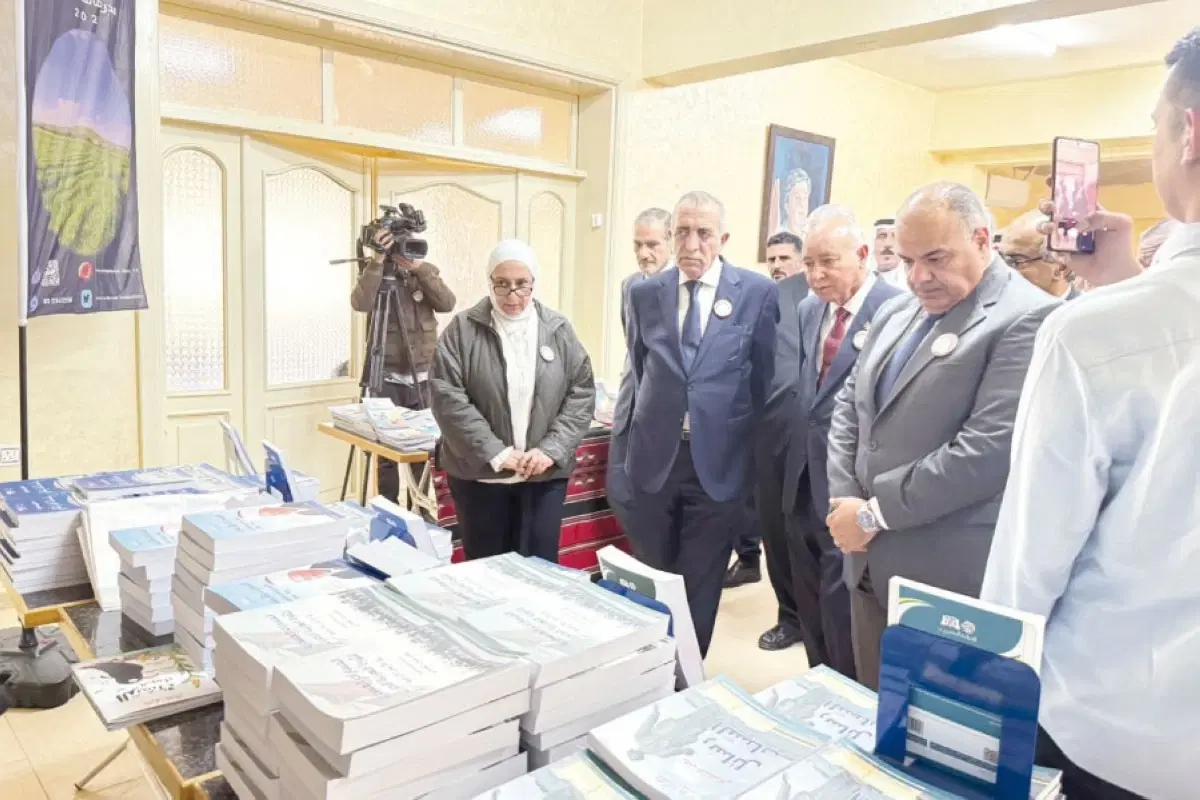
The novel, the seventh release in the "Gaza Creates" initiative launched by "Al-Aan Publishers and Distributors" and overseen by writer Jafar Al-Aqili, aims to publish creative works by writers from Gaza, as part of a cultural project seeking to preserve the memory of the stage that Palestinians in Gaza are living, and to document the effects left by the war on the person, the place, the language, and time.
The novel accompanies the reader on a journey through the details of the daily life of an ordinary Gazan family, whose members' small dreams intersect with the major events of the war. Through the narrator's voice, the novel follows the transformations of life since the morning of October 7, 2023, passing through fear, bombardment, and displacement, to the attempt to restore the meaning of home and normal life.
The title of the novel carries a significance that transcends the individual desire to survive; survival in the work is not merely escaping death, but holding onto humanity, life, and memory. In the introduction, novelist Samiha Khreis believes that writing coming from Gaza plays a role in preserving the archive of the stage and embracing the voices that emerged from the womb of suffering, emphasizing that the Palestinian cause remains a fundamental issue in the face of wars and conflicts. Khreis describes this novel as the story of an ordinary Gazan family that resembles many Arab families, yet the war makes it part of a broader gamble on the continuity of life. Inas Maarouf adopts a calm language in her novel that approaches the details of daily life, away from traditional heroism and pulpit rhetoric; the weapon is not the hero of the work, but the human being trying to preserve their life in the most difficult circumstances. Daily details, such as waiting for family members, securing food and water, sleeping in one room, and leaving the house, turn into scenes that reveal the magnitude of the fear that has become part of memory. The writer begins her story by confirming the nature of her protagonist, saying: "This story does not resemble the stories of heroes.. its owner did not carry a weapon.. nor a surgeon's scalpel... and did not wear her helmet to convey the truth," before summarizing the essence of her experience in the phrase: "She was just an ordinary girl trying to protect her heart from despair." Then she invites the reader to carry their heart with them while reading, indicating that the novel is based on a human, emotional experience, not on a display of heroism.
From the first pages, the novel paints a picture of the life the narrator had before the sound of rockets turned it upside down. In the first chapter, titled "A Morning That Changes Our Lives – October 7, 2023," the day begins with a calm morning, coffee, and meditation on the sunrise, before the scene gradually turns into the sound of rockets and explosions. From here, the novel's journey begins in monitoring the sudden transition from normal life to war.
The novel then follows the experience of displacement, as the family moves from its house to the grandfather's house, carrying with it fear, anxiety, and some necessary belongings, while leaving behind clothes, books, memories, and dreams. The word "displaced," which the narrator knew from history and language lessons, becomes part of her daily life. In the grandfather's house, a new phase of the war begins, with power outages, water and internet shortages, and the transformation of basic life details into daily battles for survival.
On the back cover, we read from Dr. Khaled Abdul Raouf Al-Jabr, head of the evaluation committee that includes novelists Samiha Khreis and Sharifa Al-Toubi, that the works issued within the "Gaza Creates" initiative include texts by writers from Gaza written under the shadow of an ongoing war, describing the facts and dismantling their impact on the human, language, place, and time. He adds that writing in these circumstances turns into a human and cognitive act, and places the reader before a moral responsibility in reading the experience away from emotion and propaganda, as a contemporary and shared human experience.
"And I Wanted to Survive" documents the war experience from the inside, and gives the daily details of the ordinary human their place in the narrative. Thus, the novel does not present war merely as military events, but as an experience that touches the home, family, memory, and dreams, and places the question of survival in the face of a deeper question: How does a human preserve their humanity when life itself becomes a daily battle?