Skip to content
Amman —

"Ma'an Poetry Eighth" Concludes with an Evening Blending the Radiance of the Homeland with the Beauty of the Word

"Ma'an Poetry Eighth" Concludes with an Evening Blending the Radiance of the Homeland with the Beauty of the Word

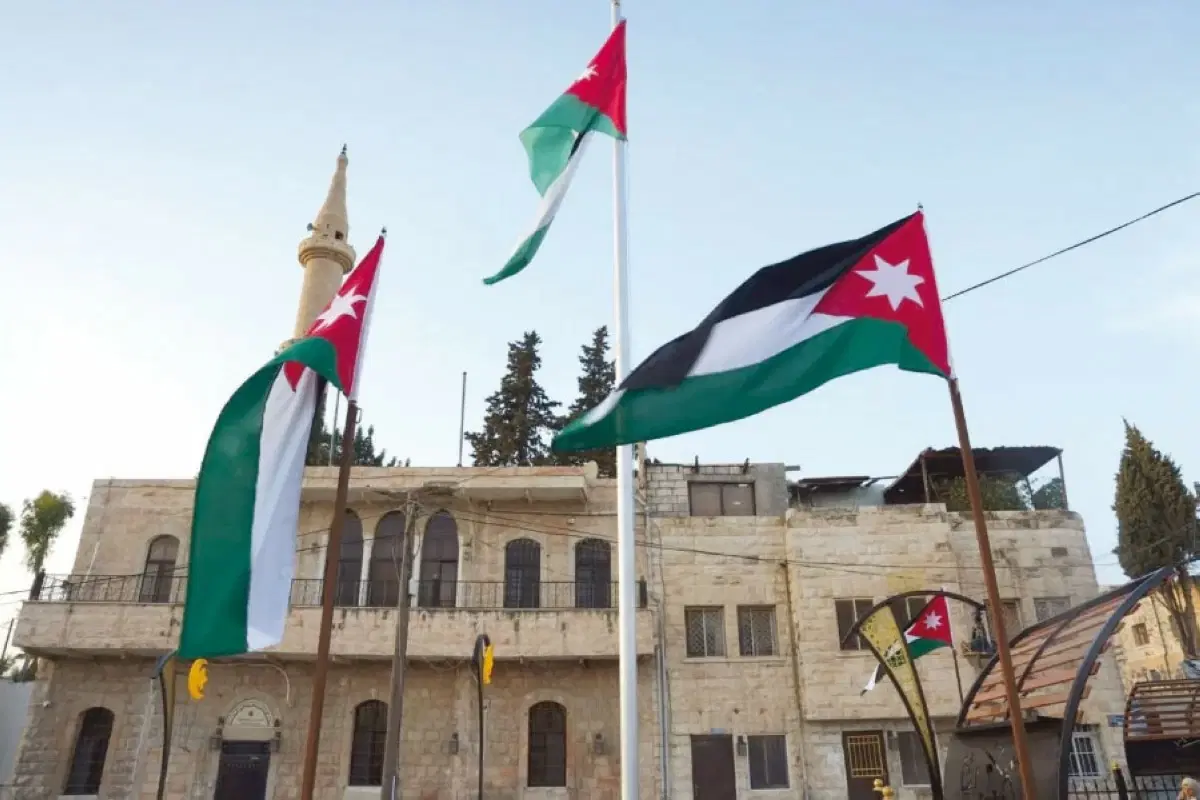
The Ma'an Poetry Eighth Festival, in its 'Fusha and Nabati' sections, organized by the Karak Culture Directorate, under the slogan 'An Independence that Tells a Story of a Country, and Poetry that Seeks its Narrative', wove pages adorned with rhymes and echoed by sweet voices that sailed in the realms of beauty and loyalty to the homeland and human meanings, in a cultural scene that combined poetry, national identity, and pride in the place, and established the presence of Karak and Al-Qasr in the Jordanian cultural scene.

Assistant Secretary-General of the Ministry of Culture, Director of Karak Culture / President of the Festival's Higher Committee, Orouba Al-Shama'ila, told 'Al-Rai' after two days of poetic and cultural presence that brought together an elite of Jordanian poets and a number of Arab brothers, in the embrace of the Al-Hassan Cultural Center in Karak Governorate, the Ma'an Festival concluded in its eighth edition, which carried this year the slogan 'An Independence that Tells a Story of a Country, and Poetry that Seeks its Narrative', to be poetry present in celebrating the homeland, and evoking its memory and story, within the activities of Al-Qasr District - the Jordanian Cultural City 2026.
She added, 'We are proud of what the festival's activities witnessed in terms of diverse poetic presence, and interaction from the public and those interested in cultural affairs, and we believe that the continuation of such festivals constitutes a real addition to the cultural movement in the governorate, and gives poets a space to meet, dialogue, and exchange experiences.'

She continued, 'The festival evenings have ended, but poetry remains present, and the poem remains capable of carrying the story of the place, the human, and the homeland from generation to generation, affirming the continuation of the directorate in supporting the cultural scene, opening the field to creatives, and enhancing the presence of poetry, literature, and arts in various areas of the governorate, expressing thanks to the participating poets, festival guests, members of the Higher Committee, and everyone who contributed to the preparation and organization of this session, and to the Karak public who were present and supportive of the activities.'

In the festival's closing evening, which was held in the presence of Al-Shama'ila, members of the festival's Higher Committee, a gathering of poetry and culture lovers, and directed by Rahma Abu Ghura, poets participated: Muhammad Al-Majali, Muhammad Al-Fraya, Wasfi Al-Muzaydah, Hikmat Al-Azza, Muhammad Khalaf Al-Enezi, Omar Abu Al-Hija, Zakariya Al-Za'amim, and Thabet Al-Dhaham.

The poets recited their most beautiful poems, which varied between Fusha and Nabati, and blended the authenticity of the popular heritage with the antiquity of the classical Arabic language, and sang about the homeland, Arabism, and highlighted the memory of the place and the national narrative in an inspiring creative painting that made Karak a stage for the poem and a leaning for the letter.

The Iraqi poet Muhammad Nasif also participated in the evening, who presented a special poem about Karak, expressing its historical and cultural significance and its presence in the national memory.

The poets were accompanied during the festival evenings by the oud player and artist Jarir Al-Hils, who presented musical pieces that added distinctive artistic atmospheres, and the poet and rebab player Salah Al-Shama'ila also participated in the closing evening, presenting folkloric singing sections from the Jordanian heritage accompanied by the rebab.

Know more about this story?Send us a tip

Al Rai

AI

Ask about this report — answers stay grounded in its text.

Answers are experimental and grounded in Al Rai reporting. Each question uses 2 credits.