Launch of the 10th "Archaeology and Heritage Diwan" Forum: Ancient Civilizations and Material Cultures in Jordan at the University of Jordan
With the participation of researchers from Jordan and Arab and foreign countries
Amman5 min read
Share
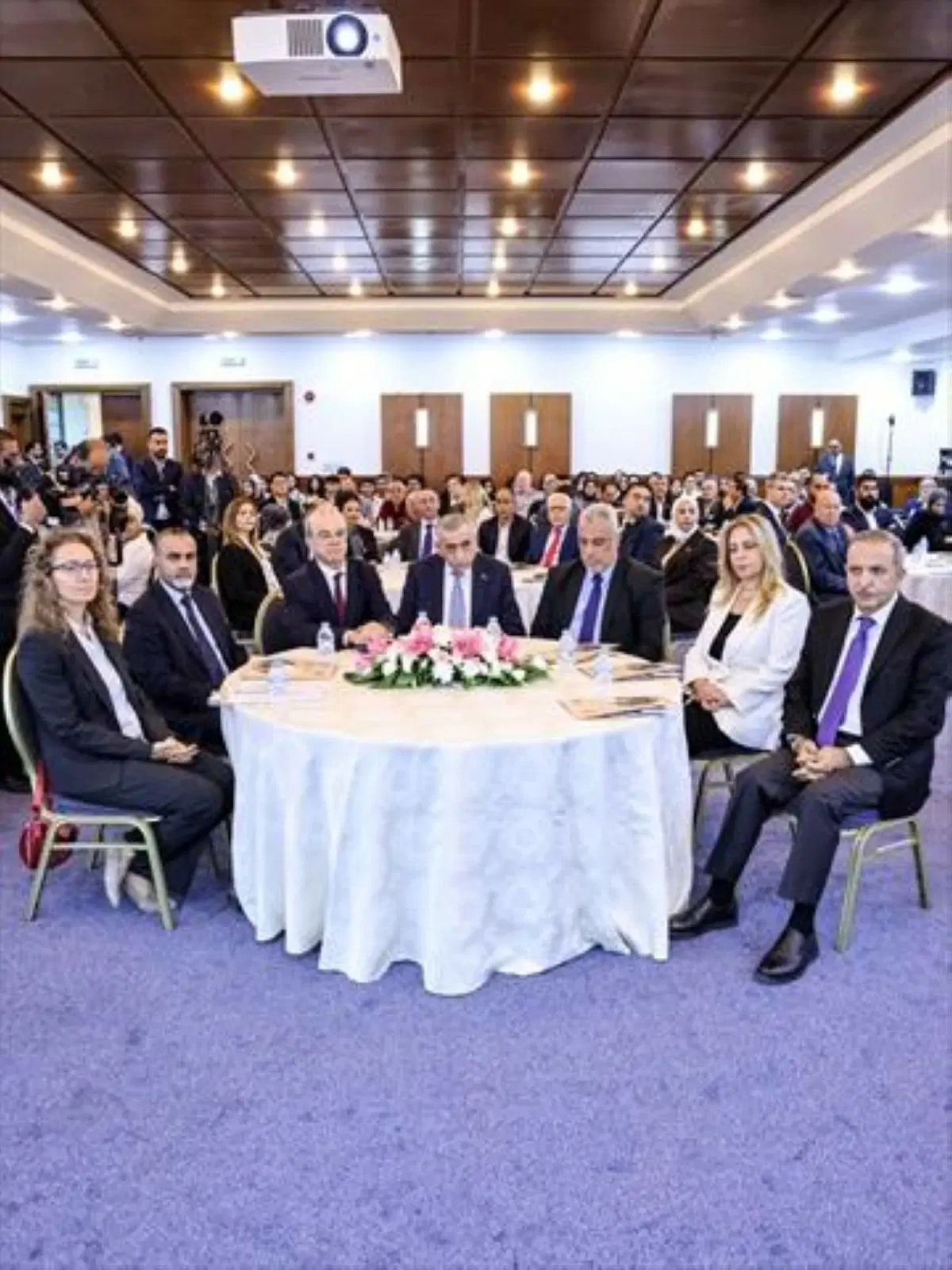
The 10th "Archaeology and Heritage Diwan" Forum was launched at the University of Jordan, under the patronage of the University President, Dr. Nathir Obeidat, titled: Ancient Civilizations and Material Cultures in Jordan, with the participation of researchers and academics from Jordanian and international universities and research institutions.
The forum's activities, which were held over two days, included 19 research papers distributed across four scientific sessions, in addition to an exhibition featuring five research posters.
In his speech during the opening, Obeidat emphasized the importance of presenting a broader image of Jordan's civilizational status, calling on archaeologists and researchers to go beyond describing it as a land rich in antiquities, saying: "This land is one of the richest pages of human history, and it is an open museum that knows no walls and is not limited by borders."
He pointed out that the value of the Jordanian land is greater than what researchers have been able to discover or describe so far, noting that the human traces it has carried through the ages remain a witness to its civilizations and the legacy left behind.
He said: "Technology, artificial intelligence, and quantum computing will open new horizons for archaeologists to understand what humans have left behind, and to read what they were previously unable to read."
Obeidat addressed the relationship between humans, the land, and antiquities, asking: "Antiquities have a Diwan, and humans have a Diwan, but what about the land? Is the land not another Diwan written by human hands, left as a witness to their existence, to what they knew and created, and to what they lived and loved? And is the land of Jordan any less generous in this human Diwan?"
For his part, the Dean of the School of Archaeology and Tourism, Dr. Ismail Abu Amoud, affirmed that Jordanian archaeological sites, from Ain Ghazal to Petra and the Umayyad palaces, bear witness to the contribution of the civilizations that succeeded one another on the land of Jordan to human history.
He stressed the importance of scientific research in documenting this civilizational heritage and verifying the accuracy of historical information and narratives when employing artificial intelligence to present heritage to the public.
Abu Amoud praised the partnership between the university and research institutions, which contributed to the continuity of the Diwan until its tenth edition, expressing his pride in the Department of Archaeology and the Department of Heritage Resources Management at the school receiving international accreditation from the Foundation for International Business Administration Accreditation (FIBAA), as this represents recognition of the quality of their academic programs and their alignment with international standards.
In turn, the Director-General of the Department of Antiquities, Dr. Fadi Bala'awi, emphasized that protecting civilizational heritage requires strengthening cooperation between the department, universities, and research institutes, noting that discoveries in Jawa, Wadi Faynan, and Ain Ghazal reveal the development of water harvesting techniques, mining, and ancient industries.
Bala'awi called on students and young researchers to benefit from meeting specialists and experts, discussing their research, and learning from their scientific experiences.
For her part, Dr. Micheline Al-Kurdi, a researcher at the French Institute for the Near East and representative of the forum's organizing committee, said that the initiative was launched in 2016 to provide an opportunity for master's and doctoral students and recent graduates to present their research in the fields of heritage, archaeology, and architecture.
She added that the current forum's research addresses five main themes: archaeological discoveries, heritage presentation and interpretation, trade and exchange networks, heritage conservation and restoration, and ancient technologies.
The first scientific session discussed topics related to domestic life during the transition from the Late Bronze Age to the Early Iron Age, religious symbols in the Southern Levant, and the acoustic design of the South Roman Theater in Jerash.
The second session addressed ways to present heritage to the public, including the use of artificial intelligence to produce videos introducing children to heritage, and the use of tactile models to facilitate the recognition of World Heritage sites by people with visual impairments.
The third and fourth sessions examine topics related to heritage conservation and documentation, the use of video games in reconstructing heritage sites, the role of local communities in protecting archaeological sites, in addition to studies on Safaitic inscriptions, the Tell Abu al-Suwan site, and Ottoman documents related to the Syrian Hajj route.
Researchers from the University of Jordan, Yarmouk University, the Hashemite University, Al-Balqa Applied University, the Lebanese University, University College London, and the German University of Marburg and American Calvin University are participating in the forum.
The program concludes with a tour for participants in the Archaeology and Folklore museums at the University of Jordan.
It is noteworthy that the forum's activities are organized by the University of Jordan in cooperation with the French Institute for the Near East, the Council for British Research in the Levant, the German Archaeological Institute, and the American Center of Research, and in partnership with the Department of Antiquities.