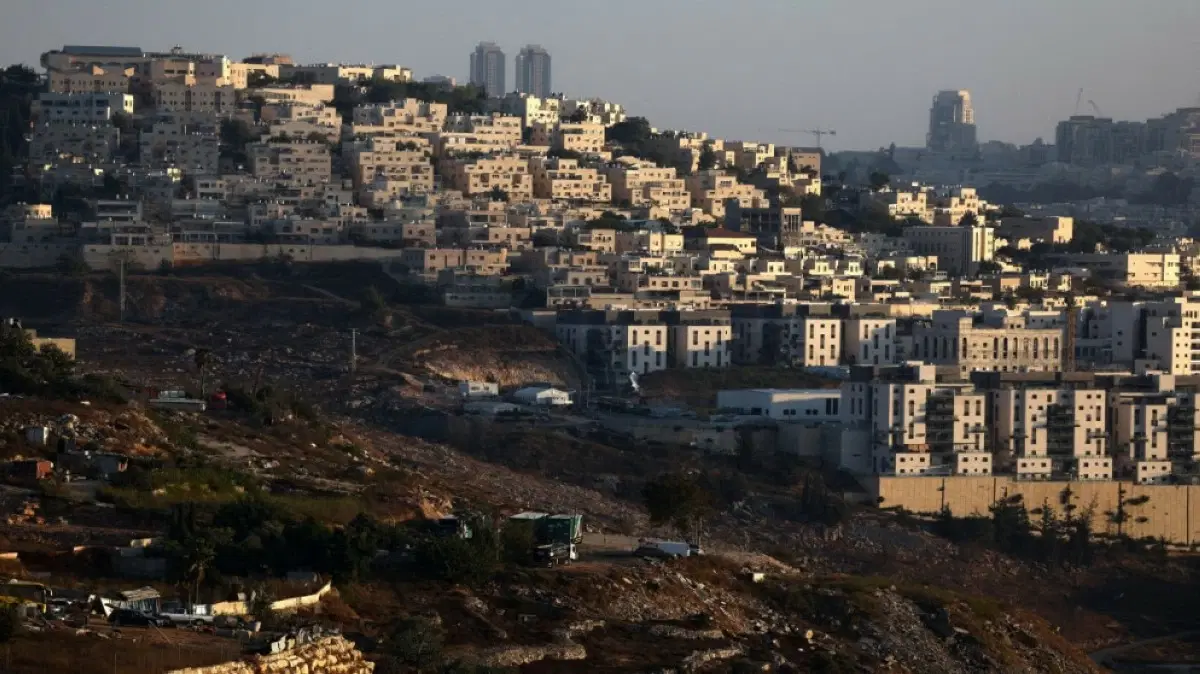
The ministers also welcome the joint statement on the two-state solution issued by the foreign ministers of Canada, Denmark, Finland, France, Iceland, Ireland, Norway, Poland, Portugal, Spain, Sweden, and the United Kingdom, in which they affirmed their intention to impose national restrictions and/or support the imposition of European restrictions on trade in goods with settlements that are illegal under international law, or to seriously consider taking these and other measures in accordance with the national procedures of each country. The ministers encourage the international community to build on these steps and take concrete measures to put an end to activities that support or contribute to the continuation of illegal Israeli settlements in the occupied Palestinian territory.
The ministers believe that the announced trends are consistent with international law and relevant United Nations resolutions, including Security Council Resolution 2334 (2016), and the advisory opinion issued by the International Court of Justice on July 19, 2024, including the obligation of all states not to recognize the legitimacy of the situation arising from the illegal Israeli occupation, and not to provide aid or assistance in maintaining the situation arising from the Israeli occupation. In this context, the ministers reiterate their call for Israel to rescind all measures taken regarding settlement activities and other actions aimed at changing the geographical and demographic character of the occupied Palestinian territory.
The ministers emphasize that the Gaza Strip is an integral part of the occupied Palestinian territory, and they call for the full and immediate implementation of President Trump's comprehensive plan to end the conflict in Gaza, in a manner that ensures the achievement of security and stability, addresses humanitarian conditions, facilitates reconstruction and recovery efforts, and establishes the foundations for lasting peace. The ministers affirm that the only viable path to achieving a just, lasting, and comprehensive peace is the implementation of the two-state solution, through the establishment of an independent, sovereign, geographically contiguous, and viable Palestinian state, based on the June 4, 1967 lines, with East Jerusalem as its capital, in accordance with international law and relevant United Nations resolutions.