Total British ban on West Bank settlement products
Sanctions on entities involved in settlement expansion
Follow Al Rai

London tightens the noose on settlements.. and Tel Aviv responds by closing the British consulate
Total British ban on West Bank settlement products
Sanctions on entities involved in settlement expansion
Miliband: "E1" settlement units are a crossing of red lines
12 countries intend to impose restrictions on trade with settlements
Settler violence in the West Bank has reached unprecedented levels
Israeli measures undermine the chances of implementing the "two-state solution"
Washington confirms it will not impose any sanctions on settlements
Expulsion of British diplomats and banning 12 figures from entering Israel
West Bank Settlements Council accuses Britain of "antisemitism"
Israeli judiciary refuses to freeze "E1" tender.. and a new settlement plan on 1665 dunams
The intensity of the dispute between Israel, Britain, and a number of Western countries has escalated against the backdrop of settlement expansion and settler violence in the occupied West Bank, after London announced a ban on the import of settlement products and the imposition of sanctions on entities and individuals involved in their expansion, as part of a move led by 12 Western countries. Israel responded by closing the British consulate in East Jerusalem and imposing restrictions on British diplomats and figures, while Washington confirmed that it would not join the Western sanctions on Israel.
British Foreign Secretary Ed Miliband told the House of Commons that the British government recognizes that "ethnic cleansing" is underway in the West Bank, accusing settlers of committing acts of violence against Palestinians, and noting that the Israeli government has often "turned a blind eye" to these practices, while some of its members were accused of supporting the forced displacement of Palestinians.
Miliband announced the imposition of a ban on the import of products from settlements established in the occupied territories, in addition to sanctions targeting companies and individuals providing services related to construction, infrastructure, finance, and real estate intended for settlement expansion, as well as sanctions on extremist settlers who supported or encouraged acts of violence against Palestinians.
He affirmed that London will continue to tighten restrictions on exports related to the occupation, noting that the British government had previously suspended more than 30 arms export licenses used by the Israeli army in Gaza, and that it would reject license applications for weapons and products that contribute significantly to the occupation.
The British move came within the framework of a joint position announced by 12 countries: Canada, Denmark, Finland, France, Iceland, Ireland, Norway, Poland, Portugal, Spain, Sweden, and the United Kingdom, in which they affirmed their intention to impose national restrictions on trade in goods with settlements that are considered illegal under international law, or to support the imposition of European restrictions, or to study taking similar measures in accordance with their national procedures.
The countries said in a joint statement that the escalation of settler violence in the West Bank has reached unprecedented levels, warning that Israeli measures undermine the chances of implementing the two-state solution.
French Foreign Minister Jean-Noël Barrot affirmed that his country would end trade with Israeli settlements in the occupied Palestinian territories, while the Palestinian presidency welcomed the British decision, considering it an important step to confront the settlement system, and calling for practical measures to hold those responsible for settlement crimes and settler violence accountable.
The British decision reflects a more hardline trend towards Israel under the new Labour Prime Minister Andy Burnham, who took office in July following the resignation of Keir Starmer.
Although the volume of trade between the United Kingdom and the occupied Palestinian territories reached about 38 million pounds sterling in 2025, observers believe that the direct economic impact of the sanctions may be limited, while Britain may face difficulties in distinguishing between products coming from the occupied West Bank and those coming from other areas in Israel.
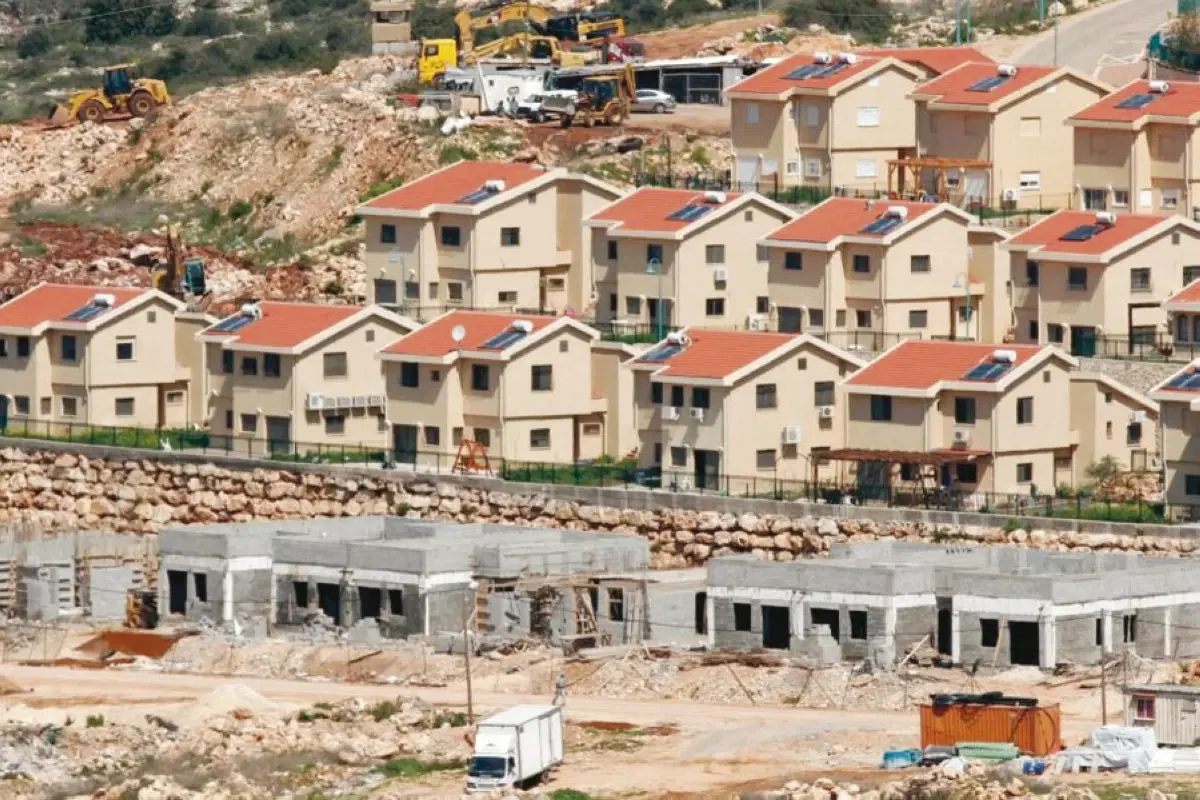
Miliband also criticized the settlement plan known as "E1", which includes the construction of more than 1,200 housing units, considering it a "crossing of red lines" because it undermines the geographical contiguity of the future Palestinian state and threatens to make its establishment unachievable.
French President Emmanuel Macron, British Prime Minister Andy Burnham, and Canadian Prime Minister Mark Carney also considered that Israeli settlements in the occupied West Bank undermine the chances of a two-state solution.
The joint statement by the three leaders came after 12 countries, including Britain, Canada, and France, announced their intention to impose sanctions on trade with Israeli settlements, following the escalation of settler attacks on Palestinians in the occupied territories. The officials affirmed that the two-state solution is necessary to achieve peace, stability, and security in the Middle East and beyond. They added, "Protecting and guaranteeing this solution represents a fundamental national interest for the United Kingdom and France."
The three officials said in the statement, "The systematic expansion of settlements in the West Bank, including the Israeli government's recent decision to move forward with the (E1) settlement, as well as the significant rise in settler violence, constitutes a direct and urgent threat to this vision for peace."
In response, Israel ordered the closure of the British consulate in East Jerusalem, in retaliation for Western sanctions related to settlements and settler violence, and after the 12 countries announced their intention to impose restrictions on trade with settlements.
Israeli Foreign Minister Gideon Sa'ar said that Prime Minister Benjamin Netanyahu approved the closure of the consulate, affirming that "unified" Jerusalem is the capital of Israel and is subject to its full sovereignty.
Israel also announced the expulsion of British diplomats working at a center monitoring the ceasefire agreement in the Gaza Strip, and the banning of British training programs for Palestinian Authority security forces, in addition to preventing 12 British figures from entering Israel, including 11 members of the British Parliament, former Labour Party leader Jeremy Corbyn, and MP Zara Sultana.
Sa'ar rejected Miliband's statements, describing his accusations as "reprehensible and false," considering the British measures "morally distorted" and an interference in Israel's affairs, especially with the approach of the Israeli legislative elections scheduled for October 27.
The British measures sparked sharp criticism within Israel; the head of the Yesha Council of settlements in the West Bank accused Britain of "antisemitism," while Israeli Finance Minister Bezalel Smotrich called for the expulsion of the British ambassador, and Israeli President Isaac Herzog said that the United Kingdom would place itself on the "wrong side of history" if it proceeded with imposing sanctions.
In Washington, US Secretary of State Marco Rubio condemned the tensions in the West Bank, but at the same time affirmed that the United States would not join the Western countries led by Britain in imposing sanctions on Israeli settlements.
Rubio said that Washington does not want to see any "destabilizing" developments in the West Bank in light of the rapidly unfolding events in the region.
These developments come in light of mounting international pressure on Israel due to settlement activity and settler violence in the West Bank, coinciding with the ongoing war in Gaza, while data in the article indicates that at least 1,105 Palestinians, including civilians and militants, have been killed by Israeli soldiers or settlers since the start of the war in October 2023.
For its part, the Israeli occupation government escalated its settlement steps in the West Bank, coinciding with the approach of the Israeli elections, as the Central Court in occupied Jerusalem rejected a request to freeze a tender for the construction of 1,234 settlement units in the E1 area east of Jerusalem, while the occupation authorities announced the introduction of the so-called "Blue Line" on an area of 1,665 dunams in preparation for the construction of more than a thousand new settlement units in the center of the West Bank.
Judge Nimrod Fleks refused to issue an injunction to stop the E1 tender procedures, considering that the actual start of construction is still far off, and that the petitions submitted against the plan can be resolved before reaching the implementation stage, while the Israeli prosecution pledged not to consider the tender procedures as a "fait accompli" that would prevent the court from intervening later.
Israeli anti-settlement organizations, including "Ir Amim," "Bimkom," and "Peace Now," along with Palestinian residents, had submitted petitions objecting to the plan, warning that continuing the tender could create facts on the ground that would be difficult to reverse, especially with the approach of the Israeli elections.
The E1 plan extends over about 12,000 dunams between Jerusalem and the "Ma'ale Adumim" settlement, and includes about 3,400 settlement units, amid warnings that its implementation would cut off geographical contiguity between the north and south of the West Bank, isolate East Jerusalem from its Palestinian surroundings, and undermine the chances of establishing a contiguous Palestinian state.
In parallel, the occupation authorities announced the publication of the "Blue Line" on an area of about 1,665 dunams for the benefit of the "Kida" and "Adei Ad" settlements in the Shilo bloc in the center of the West Bank, in preparation for pushing forward a comprehensive plan that includes more than a thousand housing units and the development of infrastructure and services in them.
Know more about this story?Send us a tip
Ask about this report — answers stay grounded in its text.