Israel and Lebanon: Military Superiority Does Not Guarantee Political Resolution
Amman8 min read
Share
Two years after the assassination of Hezbollah Secretary-General Hassan Nasrallah in the southern suburbs of Beirut, Israel still views the operation as one of its most significant military and intelligence achievements. However, increasing Israeli analyses reveal that the strike, despite its military importance, did not translate into a final strategic resolution in Lebanon.
On September 27, 2024, Israel assassinated Nasrallah in an operation it named 'The New System,' presenting it as a decisive blow to Hezbollah and Iran's axis in the region.
Two years later, the picture is more complex; the party has suffered significant losses in its leadership and military structure, and a significant portion of its capabilities have declined, but it has not disappeared as a political and military force, while Israel is still seeking a formula to prevent the rebuilding of its capabilities and ensure the security of its northern front in the long term.
Recent Israeli analyses acknowledge that the party is much weaker, but still capable of reorganizing and that the risk of a new confrontation has not ended.
New Israeli testimonies reveal the extent of the intelligence preparation that preceded the assassination of Nasrallah.
In an investigation published by the 'Jerusalem Post' in September of this year, an Israeli officer who participated in managing the target bank said that Israel dropped 83 bombs during the operation, while subsequent Israeli investigations showed that the strike came in the context of a broader campaign to dismantle Hezbollah's command and control system, which began before the assassination of its secretary-general and continued after it.
Israel had intensified its operations against the party's leadership and military structure before the assassination of Nasrallah, while the operation to blow up mobile communication devices (pagers) in September 2024 was one of the most significant intelligence strikes on the organization.
According to Israeli accounts, the attack disrupted the command and communication system and took a large number of elements and leaders out of service, before the assassination of Nasrallah struck the political and military apex of the party.
Israel presented these operations as a step towards changing the balance of power in the region.
Israeli officials and analysts considered that the assassination of Nasrallah removed the personality with which Hezbollah had been associated for decades and weakened its ability to manage the battle and maintain the deterrence system that the party had built over the years.
However, the military achievement did not automatically translate into the political outcome that Israel aspired to.
After two years, Hezbollah still exists, albeit much weaker than before the war, and still has the ability to reorganize and operate within a complex Lebanese political and social framework.
Israeli analyses suggest that the party is under unprecedented military, intelligence, and political pressure, but it has not turned into a finished organization or one incapable of rebuilding part of its capabilities.
Here lies the fundamental dilemma facing the Israeli strategy: how to transform military superiority and qualitative operations into a sustainable political and security reality.
In an article published by the 'Jerusalem Post' in June 2026 titled 'Israel Needs a Smarter Strategy for Lebanon,' the author Dan Perry concluded that about 45 years of Israeli attempts to deal with Hezbollah alone had revealed a gap between military objectives and political outcomes. He considered that the problem does not lie in the lack of Israeli military capability, but in the difficulty of translating military power into a permanent political solution, because Hezbollah's structure and its political, financial, and social networks extend far beyond southern Lebanon.
The same analysis raises a more complex question: if the complete military removal of Hezbollah requires a broad campaign extending deep into Lebanon, what is the human, political, and economic cost of such an option, and can Israel afford a long occupation or a permanent military presence within Lebanese territory?
This issue is not new in Israeli thinking, as other analyses have indicated that Israel has tried, at different stages, to establish security zones or rely on military force to keep Hezbollah away from its borders, but the party has managed each time to rebuild itself and adapt its methods of operation. In March 2026, Israeli analyses warned that establishing a buffer zone in southern Lebanon for a long period might reproduce the conditions that historically contributed to strengthening the resistance against the Israeli presence.
The dilemma is further complicated by Hezbollah's continued ability to adapt to Israeli strikes.
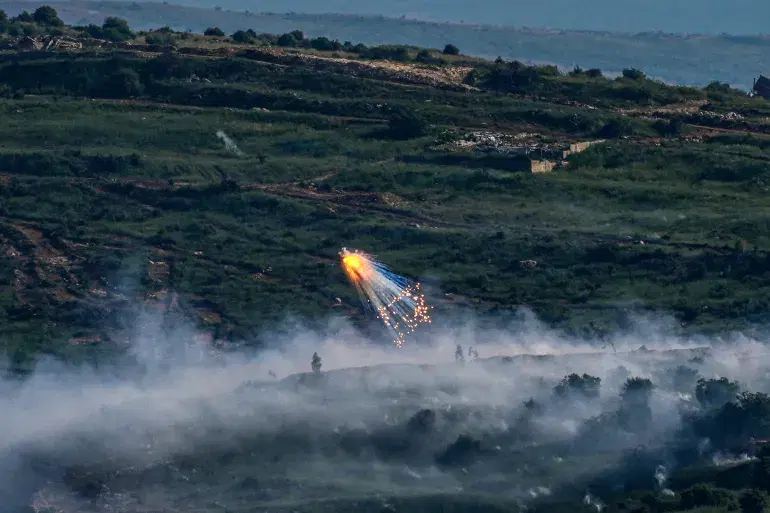
Recent Israeli estimates indicate that the organization is working to rebuild its capabilities, studying the movements and methods of the Israeli army, and trying to develop new patterns of operation under the umbrella of open war.
In September, officers in the Israeli Northern Command warned that the army's prolonged static presence in Lebanon could impose an increasing cost, while the party continues to study the Israeli experience and draw lessons from it.
Conversely, some Israeli analysts believe that the problem does not lie in Israel not delivering impactful strikes to Hezbollah; the strikes the organization has received since 2024 were, according to Israeli assessments, among the harshest in its history. However, the question is whether these strikes alone can change the structure that allowed the party to rebuild itself in the past.
Herein lies the difference between 'tactical achievement' and'strategic resolution.' The assassination of Nasrallah was, according to the Israeli narrative, a highly complex intelligence and military operation with a significant impact on Hezbollah's command system. However, the removal of a leader, regardless of his impact, does not necessarily mean the removal of the organization he led, nor the end of the political, social, and regional environment that allowed it to emerge and persist.
Other Israeli analyses indicate that the war in Lebanon weakened the party, but did not definitively resolve the future of its relationship with the Lebanese state, the future of its weapons, or the nature of its relationship with Iran.
Israel itself still faces the challenge of preventing the rebuilding of the party's capabilities, amid the continued existence of Lebanese and international political and security channels seeking new arrangements for the border and the future security situation.
In this context, the Gaza experience is part of the same dilemma, albeit under different circumstances. Israel achieved extensive military strikes against Hamas and destroyed a large part of its military infrastructure, but it also faces the same question: how to transform military control and repeated strikes into a stable political reality? And how can the re-emergence of the organization or the appearance of an armed alternative in a war-torn environment be prevented?
Thus, the Lebanese and Gaza fronts intersect in one issue: the ability to achieve military superiority does not necessarily mean the ability to impose a lasting political settlement.
The Israeli experience in recent years has shown that targeting leaders and infrastructure can temporarily change the balance of power, but it does not alone resolve the future of the conflict.
In Lebanon, Israel faces an even more complex equation.
On the one hand, it has significantly weakened Hezbollah, reducing its leadership and military capabilities, but on the other hand, it is still unable to ensure that the party does not rebuild its capabilities or develop new means of action against it. At the same time, the continuation of military operations within Lebanon may weaken the chances of strengthening the Lebanese state and its institutions if it leads to redirecting the conflict from confronting Hezbollah to confronting Israel itself.
Thus, the second anniversary of Nasrallah's assassination places Israel before a clear paradox: the operation itself can be considered a significant military and intelligence achievement, but the evaluation of its strategic results depends on whether it has succeeded in changing the reality that produced Hezbollah, not just in removing its leader.
After two years, the Israeli question is no longer just about how to reach Nasrallah or bring down Hezbollah leaders, but rather: what happens next? And can Israel transform its military superiority into a political and security arrangement that prevents the rebuilding of the party and guarantees the security of its northern borders?
Two years after the assassination of Nasrallah, it can be said that Israel has achieved a highly significant tactical achievement: a deep intelligence penetration, a precise military strike, and the removal of a pivotal figure in Hezbollah's history. However, the strategic question remains open: was the goal to assassinate Nasrallah and weaken the party, or to end the threat posed by the party and reshape the security and political environment in Lebanon?
So far, Israeli facts and analyses indicate that the gap between the two goals remains significant. Hezbollah emerged from the war weaker, but it did not disappear; Israel achieved a clear military superiority, but it is still searching for a formula to prevent the renewal of the threat; as for Lebanon, it remains caught between trying to strengthen state authority and the continued influence of Hezbollah and the repercussions of the regional conflict.
Thus, the question that imposes itself after two years is not just: did Israel succeed in assassinating Hassan Nasrallah? This is militarily certain, but: did it succeed in turning his assassination into a lasting political and strategic resolution, or does the experience of Lebanon and Gaza once again reveal the limits of military power when it is not accompanied by a clear political vision for the post-war period?