Record figures for the cost of the Israeli aggression
One and a half million displaced persons live in dilapidated tents
Follow Al Rai

The occupation seeks to implement the "Generals' Plan" to evacuate the northern Strip
Record figures for the cost of the Israeli aggression
One and a half million displaced persons live in dilapidated tents
The upcoming winter portends a humanitarian catastrophe in the Strip
Voices emerged in the Israeli media criticizing the absence of the war on Gaza, the West Bank, and occupied Jerusalem from the Israeli parties' election campaigns, at a time when the cost of the war is approaching 450 billion shekels and Israel continues its military operations in the Gaza Strip.
In this context, Haaretz senior analyst Aluf Benn wrote an article entitled "Everyone is arguing about October 7, and no one is talking about ending the war," questioning the paradox that the election campaign focuses on Prime Minister Benjamin Netanyahu's responsibility for ignoring the warnings preceding the "October 7" attack and on the issue of Arab representation in the Knesset and the government, while the war itself is absent from the political debate.
Benn points out that the war, whose cost is approaching 450 billion shekels and during which reserve soldiers have been drafted for extended periods while Israel continues to occupy wide parts of the Gaza Strip and expanses of Lebanon and Syria, does not enjoy a central place in the electoral discourse. He believes that the absence of public pressure to end the war allows candidates to suffice with general slogans rather than presenting clear choices regarding its future.
In the same context, the Institute for National Security Studies (INSS) in Tel Aviv published a position paper entitled "Breaking the Impasse: An Alternative Strategy for Ending the War in the Gaza Strip," with the participation of researchers including Kobi Michael, Oded Eran, Ofer Gutman, and Yohanan Tzoreff. The paper concludes that the continuation of the war exhausts the Israeli army, widens rifts within society, undermines Israel's international legitimacy, and harms its foreign standing. The paper indicates that after more than two years of fighting, Israel has found itself in a "dead-end strategic stalemate"; despite achieving military achievements in weakening Hamas, it has not achieved the declared goals of the war, foremost among them to topple Hamas rule and completely destroy its military capabilities.
The paper criticizes what it describes as the dichotomy imposed by Netanyahu on the public debate, which consists of choosing between full occupation of the Strip or surrender to Hamas, and instead proposes a third path that combines military and political instruments, based on what it considers a regional and international consensus regarding ending Hamas rule in Gaza, disarming it, and excluding it from any future role in managing the Strip, alongside demilitarizing the Strip.
Udi Dekel had published in June 2025 a paper entitled "The Necessity of the Hour: Closing the Circle of War in the Gaza Strip," in which he considered that the shifts that occurred in the regional balance of power following the confrontation between Israel and Iran, alongside what he described as the rebuilding of Israeli deterrence, U.S. President Donald Trump's desire to end the war, the weakening of the "Axis of Resistance," and Hamas's increasing isolation, have created a "window of opportunity" to end the war.
Dekel said that Israel has exhausted most of the possible military achievements in Gaza, and that the continuation of fighting thereafter will lead to further exhaustion and human casualties without achieving additional security gains, and may ultimately lead to the full occupation of the Strip.
In northern Gaza, Hebrew media reports indicate that the Israeli army is practically implementing what is known as the "Generals' Plan," which is based on pushing the region's residents to displace southward, imposing military control over it, and considering anyone who remains there a military target.
According to Israeli Army Radio, Beit Hanoun, the Jabalia camp, and Beit Lahia were separated from each other and from the Gaza City governorate, which means, according to its description, the completion of the division of the northern Strip. It added that the army evacuated about 60,000 people from the three areas, leaving only a few thousand.
According to a leaked copy, the plan stipulates that anyone who remains in the area is considered a "combatant," allowing them to be targeted according to military rules, concurrently with restricting residents' access to basic needs of food, water, medicine, and fuel.
In this context, at dawn last Tuesday, Israel assassinated Ezzeldin Al-Beik, the commander of the northern Gaza Strip brigade in the Qassam Brigades, in a strike targeting a residential apartment in the Al-Nasr neighborhood west of Gaza City.
Al-Beik had succeeded Ahmed Al-Ghandour in leading the brigade, and was nicknamed among resistance circles as the "Breaker of the Generals' Plan," in reference to the Israeli plan to control the northern Strip and displace its residents.
According to Hamas sources, Al-Beik led a defensive plan that contributed to inflicting losses on the Israeli army through a series of operations that hindered the achievement of its objectives, and he held out with his fighters for 107 days during the siege of northern Gaza.
Concurrently with the announcement of the transition to the second phase of the ceasefire agreement, disagreements continue regarding the interpretation of its clauses and implementation mechanisms. According to Yedioth Ahronoth, Israel believes that officially introducing the weapons file at this stage could turn it into open-ended negotiations without a time frame, giving it room for procrastination. The newspaper added that the current Israeli government cannot present a second phase to its public without clear political gains, and therefore the disarmament file is being amplified and turned into the central title of the negotiations.
On the ground, the Ministry of Health in Gaza reported that the number of martyrs who arrived at the Strip's hospitals since the ceasefire on November 2025 until September 29, 2026, reached 1,422 martyrs, in addition to 4,996 injuries and 834 recovery cases, while the total toll since the beginning of the aggression on October 7, 2023, rose to 74,023 martyrs and 175,111 injuries, according to ministry data.
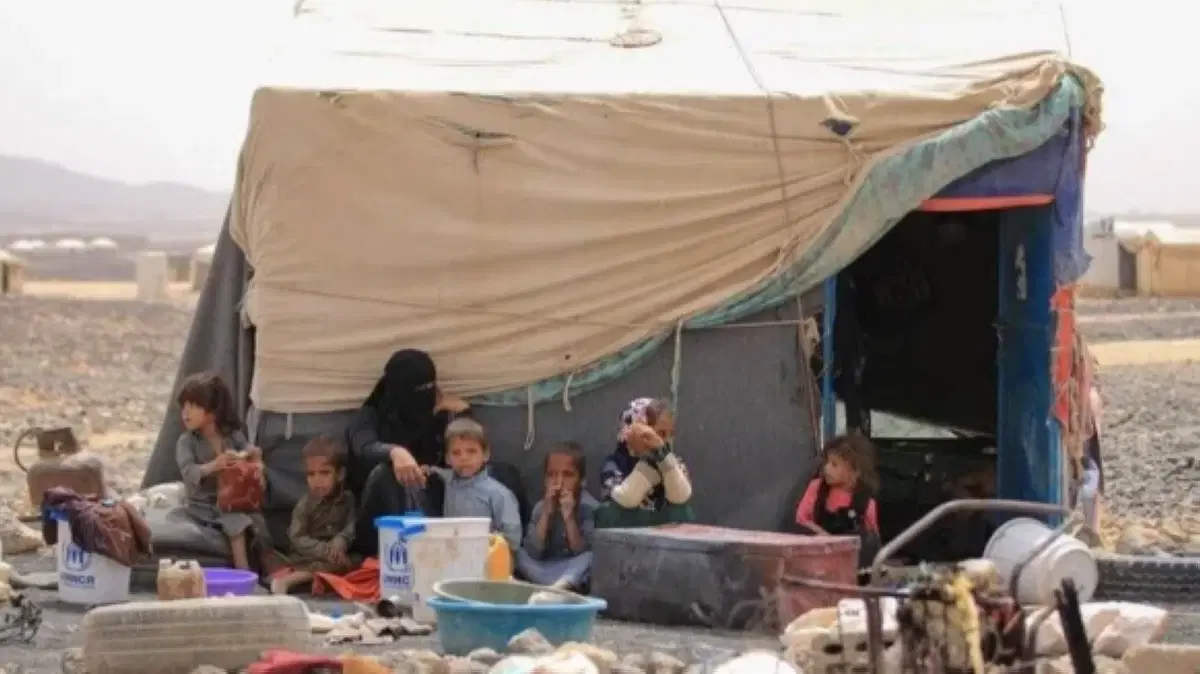
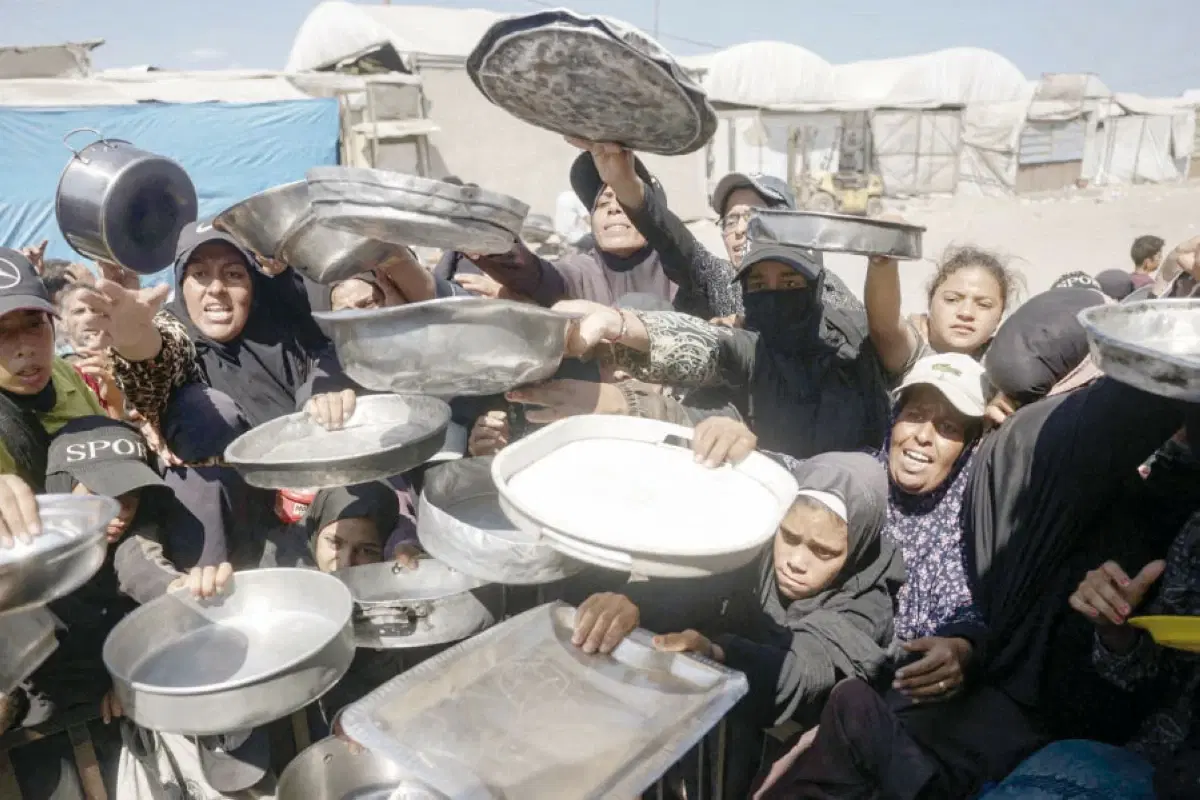
As winter approaches, the Government Media Office in Gaza warns of a new humanitarian catastrophe, pointing out that more than one and a half million displaced persons live in tents, out of about 270,000 tents in the Strip, including 162,000 dilapidated and unusable tents, with a dilapidation rate exceeding 60 percent.
The office also warned of the risks of the collapse of more than 255 cracked and dilapidated buildings inhabited by thousands of citizens, at a time when United Nations estimates indicate that 82 percent of households in the Strip suffer from water insecurity, and up to 70 percent of them cannot access the minimum limit of six liters of water per person daily.
One year after the signing of the ceasefire agreement, Gaza still lives in a reality far from peace, as Israel continues its military operations under various pretexts, from "eliminating Hamas" to "disarming," in parallel with the restrictions imposed on the entry of aid and the continuation of evacuation and displacement operations in the northern Strip.
At a time when Israel is heading towards new elections, the war appears strongly on the ground and largely absent from the election campaigns, while the question posed by Aluf Benn in Haaretz remains standing: If ending the war is the most urgent issue, why doesn't this issue top the election agenda?
Know more about this story?Send us a tip
Ask about this report — answers stay grounded in its text.