Indians are training robots for manual labor.. extra income or a threat to their jobs?
Amman5 min read
Share
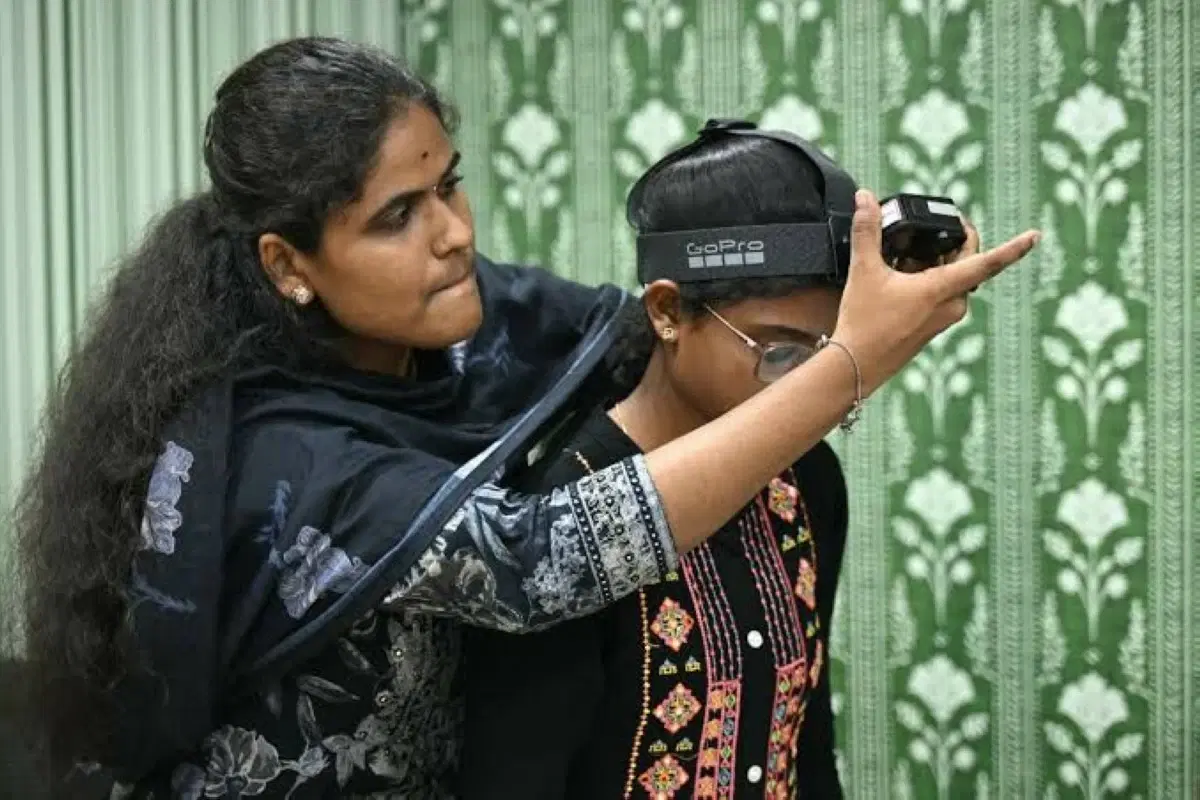
Head-mounted cameras are no longer just a way to document adventures; they have become a work tool for thousands of Indians who record the details of their daily tasks for extra pay, in an emerging industry aimed at teaching artificial intelligence how to perform manual labor in the real world.
In the Indian city of Bengaluru, a young barber wears a small camera to document the movements of his hands and fingers while cutting hair and trimming beards, as part of efforts to provide real-world data needed by technology companies to develop robots capable of performing human tasks with precision.
According to a report published by the British Broadcasting Corporation (BBC), this activity reflects a shift in the Indian labor market, where professions such as barbering, tailoring, cooking, and cleaning have become a source of data used to train artificial intelligence systems, amidst questions regarding the impact of this technology on the future of traditional jobs.
Mohammed Ashim has been working as a barber for about four years, but he recently began recording the details of his work using a camera mounted on his head, with the aim of contributing to the training of artificial intelligence systems.
The task requires paying attention to filming and lighting conditions, while taking measures to protect the privacy of customers, including hiding their faces in the recordings.
Ashim spends between five and six hours a day filming, in exchange for extra income that allows him to utilize his professional skills in a new way.
This experience is not limited to barbers; workers in the textile sector record the steps of cutting and sewing fabrics, while domestic workers document cooking, cleaning, and sweeping tasks, to provide diverse data on the activities humans perform daily.
This industry relies on what is known as "physical artificial intelligence," a field that aims to develop intelligent systems that can perceive and interact with the surrounding world, including controlling robots and executing physical tasks.
To achieve this, companies need real recordings that help systems understand the sequence of movements, how to hold tools, handle different objects, and estimate the force required to complete each task.
Specialized companies collect, categorize, and process the clips, then provide them to artificial intelligence laboratories and robotics companies that use them to train their systems and improve their performance.
The importance of this data lies in the fact that it moves the training process from digital simulation alone to examples derived from real-world human practices, even if video recordings alone are not enough to teach a robot all the required skills.
According to the report, some companies pay between $5 and $10 for a recording of eight to ten hours of work, which provides an additional source of income for some participants.
Estimates from one company indicate that it possesses a network of 96,000 data collectors in regions of Latin America and Southeast Asia, an indicator of the expansion of this activity beyond India's borders as well.
But behind these financial opportunities, important questions arise regarding the value of the labor exerted, the rights of workers in the recordings, how the data they provide is used, and whether they will receive any future return from the technologies they helped develop.
This question represents one of the most prominent challenges associated with the expansion of artificial intelligence into physical tasks.
While workers receive payment for recording their skills, this data may be used in the future to develop robots capable of performing some of the tasks that humans currently perform.
However, the development of these systems does not mean that robots will soon be able to completely replace barbers, tailors, and domestic workers; there are still technical and practical challenges related to precision, flexibility, cost, and the ability to deal with changing conditions.
Specialists believe that the challenge for India is not limited to providing raw recordings, but also includes developing its capabilities in data processing, quality verification, and setting standards for its use, allowing it to achieve greater economic value from this industry.
This phenomenon reveals a new stage in the relationship between humans and machines, as the worker no longer participates in the digital economy through traditional work platforms alone, but has become able to turn their daily movements and expertise into data used by technology companies to develop the next generation of robots.
Between the opportunities for improving income and the fears of automation, the challenge remains in ensuring that workers benefit from this industry, protecting their rights and privacy, and preparing for the shifts that may occur in the labor market with the development of artificial intelligence.
Conclusion: Thousands of Indian workers are training artificial intelligence systems on their manual skills for a fee, but this industry simultaneously opens a broad debate about who will benefit from technology in the future, and who might bear the cost of its shifts.