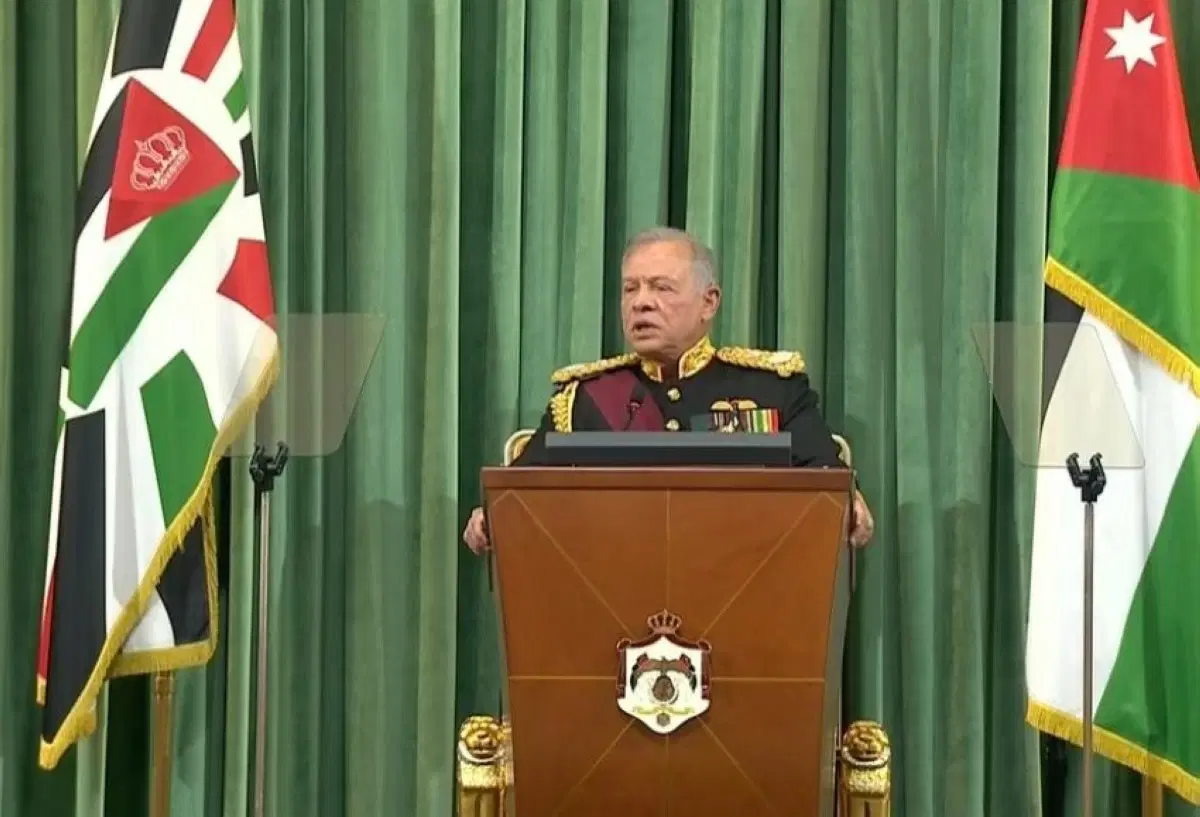
Tarawneh: Our duty is to protect the state with the power of the Constitution and preserve Jordan through national unity
Tarawneh: Jordanians do not expect us to describe the difficulty of the reality, but to find solutions
Follow Al Rai

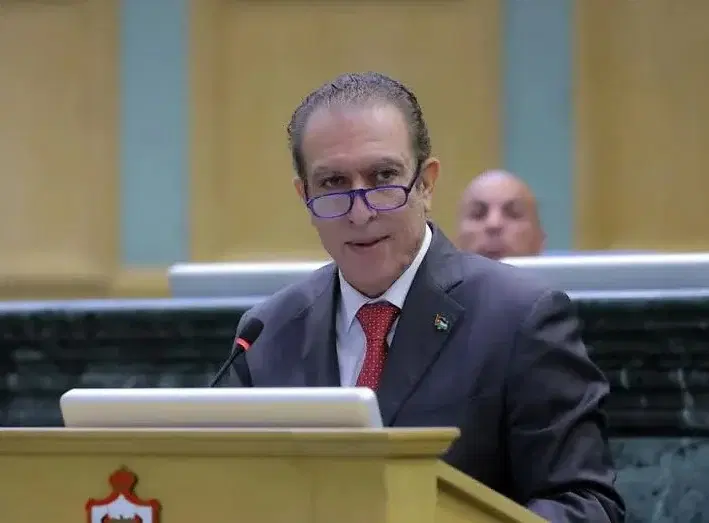
Tarawneh: Our duty is to protect the state with the power of the Constitution and preserve Jordan through national unity
Tarawneh: Jordanians do not expect us to describe the difficulty of the reality, but to find solutions
Tarawneh: The government is not above accountability, and every authority has its role and constitutional independence
Tarawneh: Jordan is a trust in our necks, and whoever carries the trust does not ask what they have received, but what they have given
Tarawneh: I weigh positions on the scale of the Constitution and public interest, and we remain open to parties, unions, and the media
Tarawneh: Blocs are not walls to separate deputies, but a space for partnership in responsibility
Tarawneh: No interest rises above the interest of Jordan, and no consideration precedes the consideration of the state
Tarawneh: We will convey to the chamber what is discussed outside it regarding debates and differences to reach a common vision and decisions that serve the nation
Deputy Ibrahim Tarawneh won the presidency of the 20th House of Representatives in its third ordinary session, after receiving 70 votes.
This came during a session held by the Council this Monday evening, chaired by Deputy Mousa Al-Wahsh, as he is the most senior member present in parliamentary tenure, replacing Deputy Majhem Al-Saqour, who is the most senior but ran for the presidency, and in the presence of Prime Minister Jafar Hassan and the cabinet team.
In addition to Tarawneh, Deputy Majhem Al-Saqour also ran for the position of Speaker of the "House of Representatives," receiving 38 votes, while Suleiman Al-Zabin received 23 votes, and there were 7 void ballots, with 138 deputies attending the session.
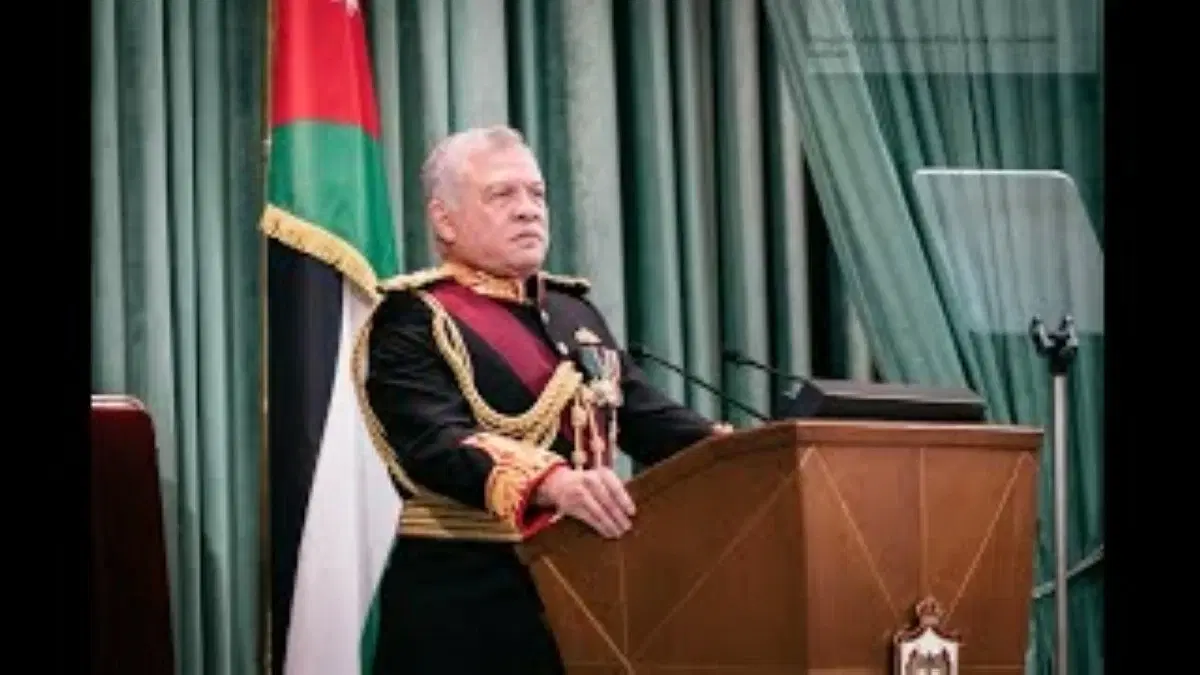
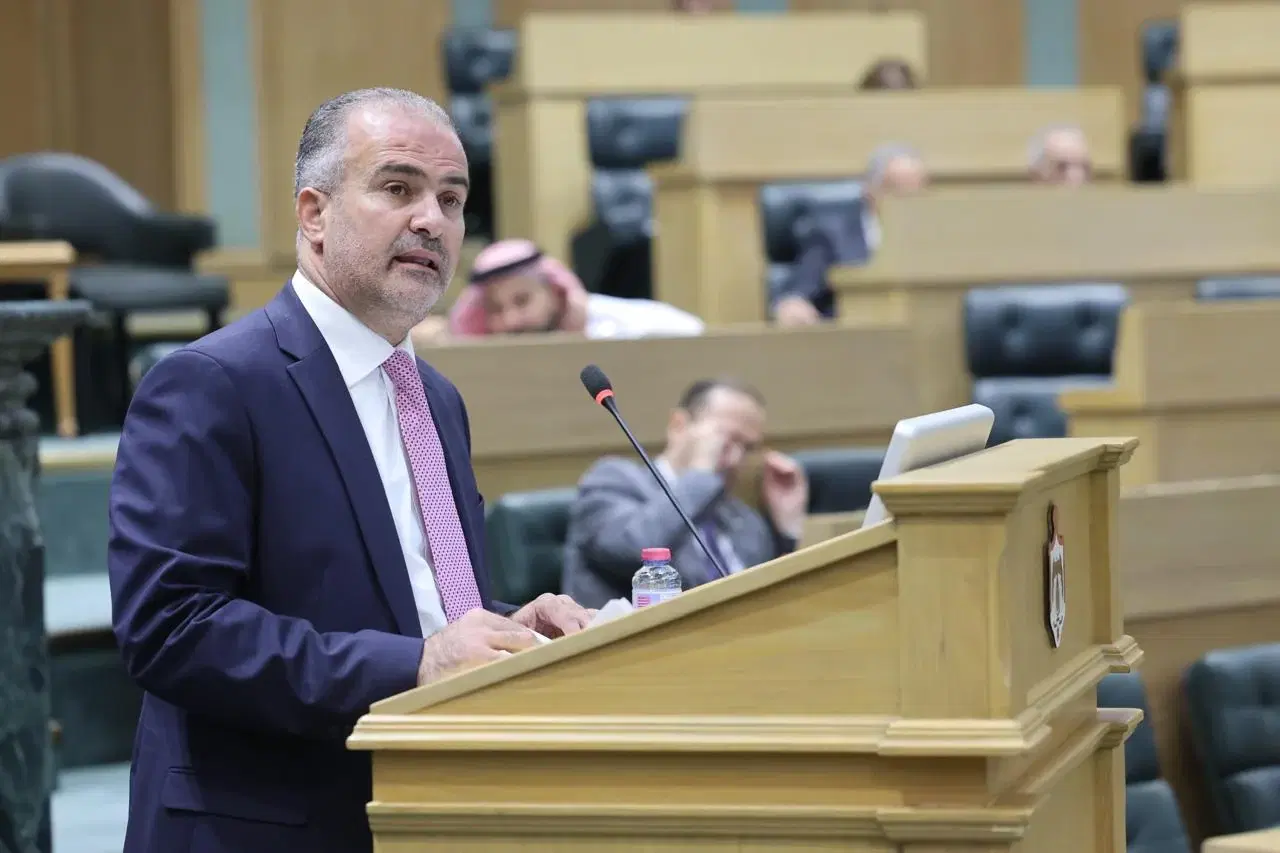
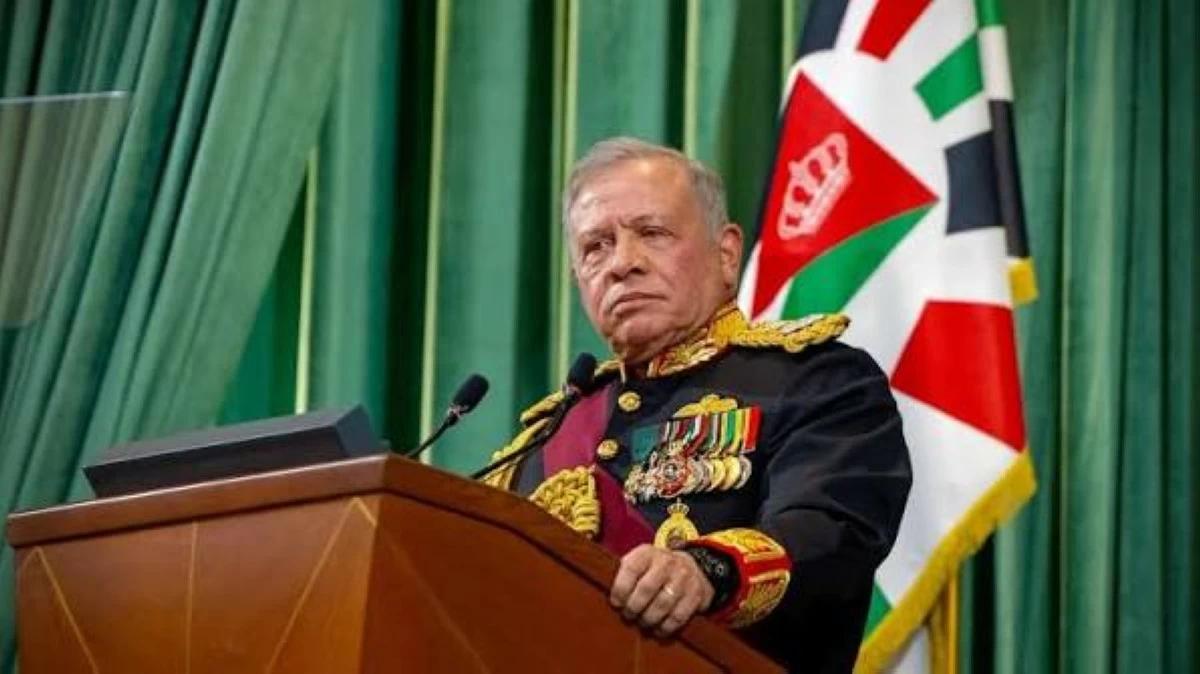
In his first speech after winning the presidency of the Council for the first time, Tarawneh said that the House of Representatives was honored to listen to the Royal Speech, which will form a path of action and a roadmap to guide us.
He added that the Council, in light of the directives contained in the Royal Speech, faces great responsibilities in supporting the rule of law, and its duty is to be at the forefront of the confrontation with terrorism, for the blood of the Karak martyrs is precious and a pledge we carry, explaining that our self-reliance and proceeding with the implementation of major strategic projects is our path toward national resilience, topped by those related to water security, and Jordan, by the strength of His Majesty the King, his army, and his people, will not compromise on its firm principles.
Tarawneh continued before the House of Representatives that it should be as His Majesty the King described it: the voice of the citizen and the guardian of public interest; oversight is not hostility toward the government, and cooperation with it is not subordination, and it is not above accountability.
He said, "We must realize that Jordanians do not expect us to describe the difficulty of the reality, but to seek solutions for unemployment, living costs, public debt, water scarcity, and energy security, and to discuss policies and priorities with courage and responsibility, as these are burdens in people's lives, and our duty is to place them at the forefront of legislation and oversight."
He affirmed his keenness on freedom of opinion and expression and protecting the right to disagree, stressing that the prestige of the Council is maintained by the height of achievement and the honesty of positions, "so we do not let an issue worsen while it finds someone under this dome to hear it, and we do not let a gap widen while it finds someone seeking to bridge it; this Council's national duty is to protect the state with the power of the Constitution and preserve Jordan through national unity."
Tarawneh said that the Council will work on oversight that follows up on results, relies on information and Audit Bureau reports, examines spending efficiency, protects public funds, and links responsibility with accountability. Our parliamentary committees will be houses of expertise and dialogue, studying legislation and listening to specialists, while blocs have the priority of forming spaces for cooperation and unifying visions regarding priorities; blocs are not walls separating colleagues, and parliamentary work is a space for partnership in responsibility. This is the essence of the political modernization path directed by His Majesty King Abdullah II, and it is our responsibility to play our role in consolidating this path and to make competition between blocs based on programs.
Tarawneh affirmed that the Palestinian cause will remain a cause of truth and justice, and we will not abandon our role in supporting our brothers until they obtain their legitimate rights, rejecting all displacement projects, and standing on the front of truth and steadfastness, confirming behind the master of the country that tyranny does not grant legitimacy and that peoples will not forget, and our Jordanian people behind His Majesty the King remain one rank, behind Abu Al-Hussein, the bearer of the banner of glory, and to his right is Al-Hussein, grandson of Al-Hussein, who kept the pledge and offered the nation every effort and contribution for the sake of its elevation and the defense of its interests.
The Speaker of the House of Representatives concluded his speech by praying for the martyrs of the Karak church, stressing that Jordan will remain resistant to strife, immune to adversity, strong in the face of crowded agendas and deals, and that no interest rises above the interest of Jordan, no consideration precedes the consideration of the state, and no gain equates to the dignity, security, and stability of Jordanians. Jordan is a trust in our necks, and whoever carries the trust does not ask what they have received, but what they have given.
A committee was selected to oversee the elections of the Permanent Bureau, consisting of deputies: Mohammad Hudaib, Mutaz Abu Rumman, and Haitham Ziyadin.
Paragraph (a) of Article 3 of the House of Representatives' Internal Rules states: "After the deputies go to their council, the House of Representatives holds its first session, and the most senior in parliamentary tenure assumes the presidency. If more than one deputy is equal in seniority, the deputy with the most legislative terms among them, and if they are equal, the oldest in age. He is assisted by the two youngest members present in age, and if any of them is unable to perform their duty for any reason, they may be replaced by the next in age in the Council, and their task ends with the election of a speaker."
Paragraph (a) of Article 14 of the Internal Rules states: "The winner of the position of Speaker is considered the one who obtains the absolute majority of those present if there are more than two candidates for the position. However, if there are only two candidates, the winner is the one who obtains the relative majority, and if the votes are equal, a draw is held between them."
A Royal Decree was issued on the 30th of last September to postpone the meeting of the Parliament in its ordinary session until November 2, 2025. Another Royal Decree was issued calling the Parliament to meet in its ordinary session, effective from Monday, the second of the current month.
Know more about this story?Send us a tip
Ask about this report — answers stay grounded in its text.