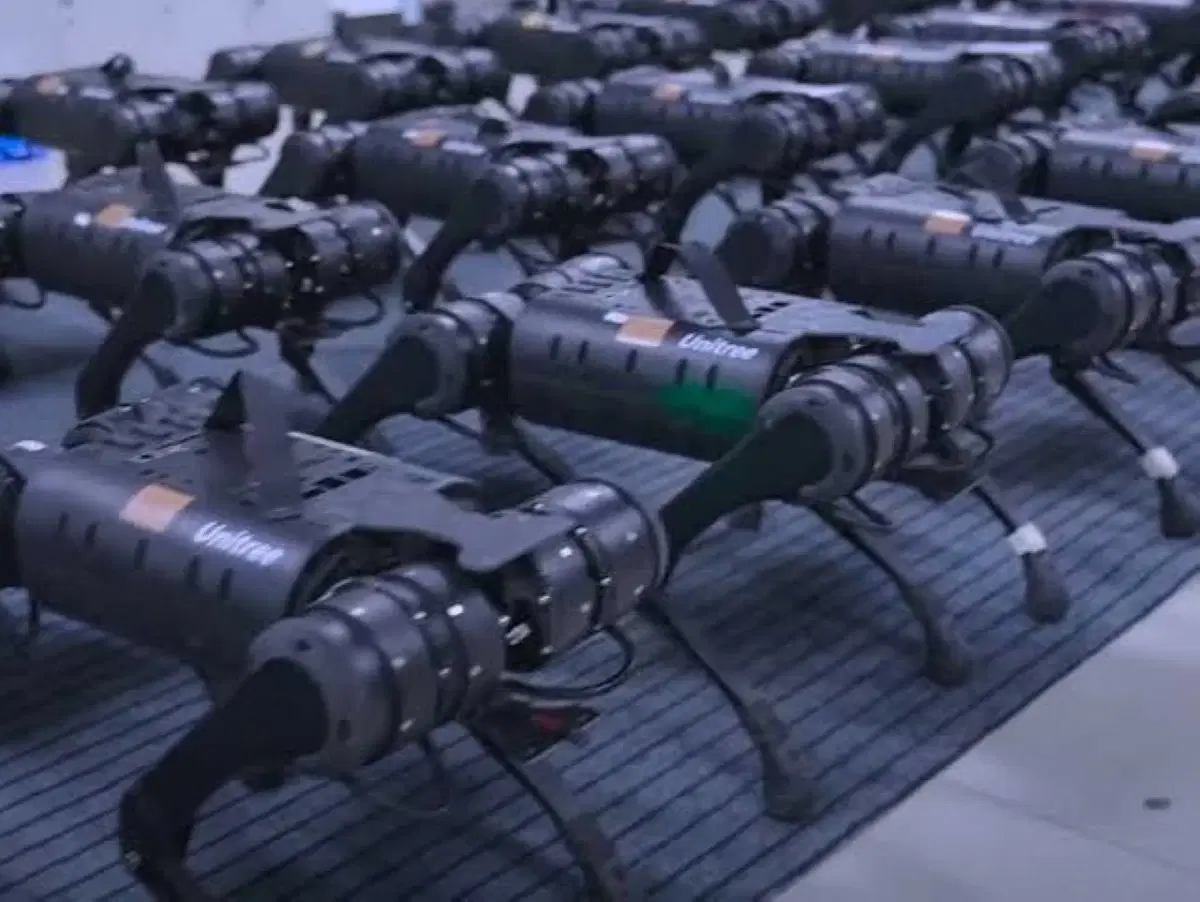
This process previously required soldier intervention to assist the robots in exiting vehicles and reaching their initial positions; however, the new experiment indicates the possibility of executing the mission independently, according to media reports citing the clip.
This is not the first time the company has showcased the capabilities of its military robots. In 2022, it unveiled the Blood-Wing system, which involves transporting an armed robotic dog via a quadcopter drone before deploying and activating it on the ground.
The current experiment, however, focuses on deployment from a ground vehicle, a scenario that could contribute to reducing the need for soldier intervention when deploying robots in operational areas.
These developments are viewed as a step toward integrating robots into combat formations, enabling them to carry out reconnaissance missions, transport equipment, and support military operations, and potentially work within collaborative groups that exchange data and coordinate their movements.
Reports indicate the development of the robotic "wolf pack" concept, which relies on operating multiple robots within a shared network, where each takes on a specific task, such as reconnaissance, carrying equipment, or distracting the adversary, thereby enhancing coordination between automated systems in the field.