Smart marine robot.. two motors and three movement modes
Amman3 min read
Share
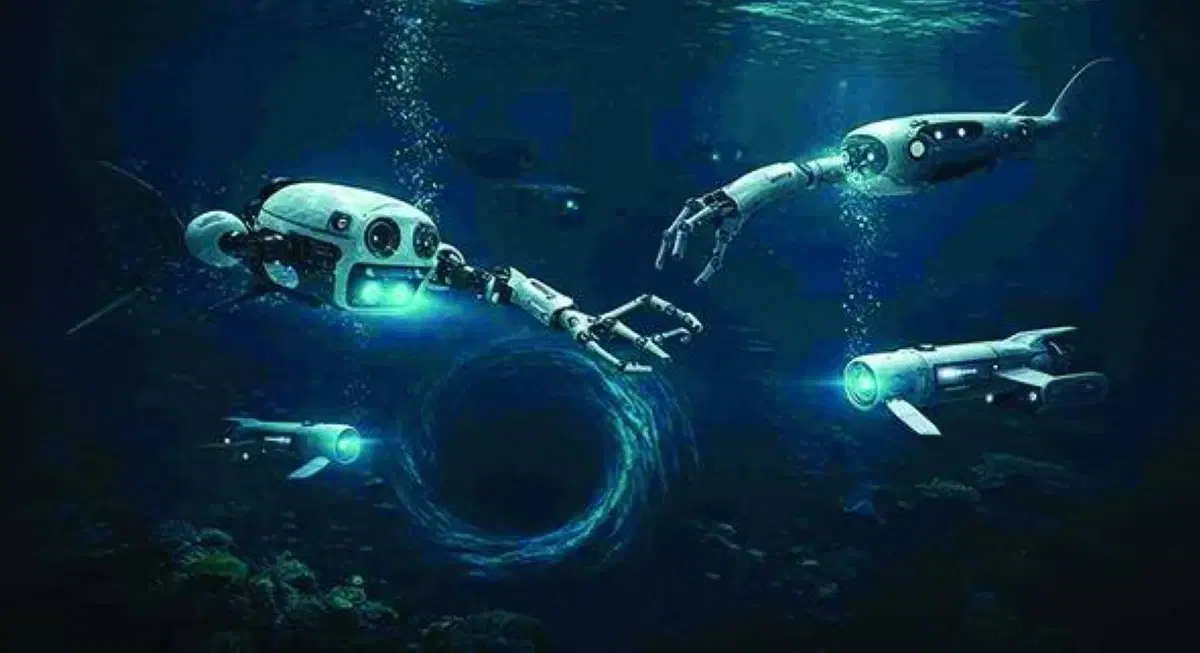
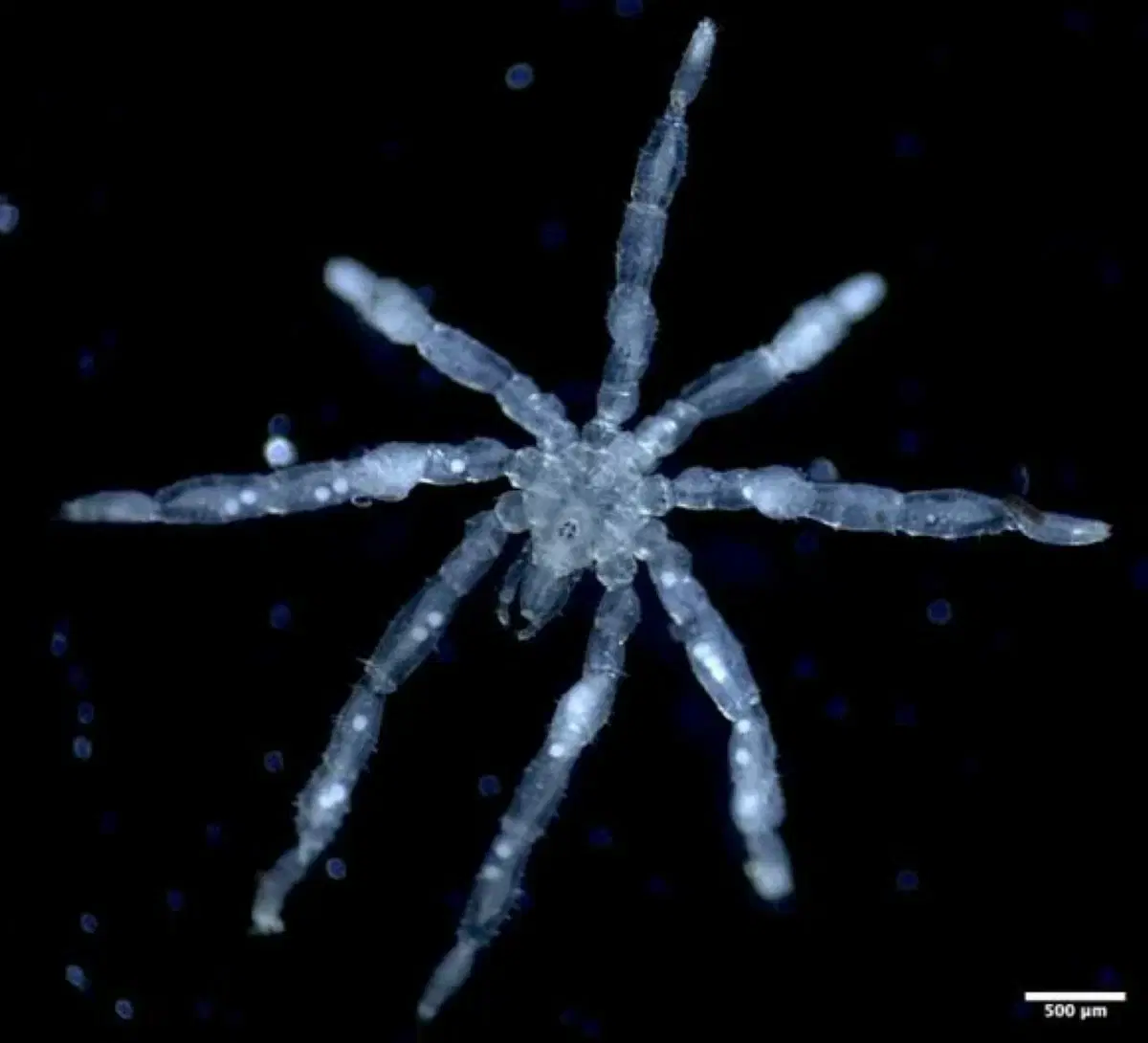
A team of researchers at American universities has drawn inspiration for the design of a flexible aquatic robot from marine organisms known as "feather stars," enabling it to swim and maneuver in three dimensions using only two motors, in an innovation that could open new horizons for deep-sea exploration and marine environment monitoring.
The study results were published in the journal "Science Advances," where researchers presented a design based on a flexible structure capable of coordinating movement without the need for a large number of motors or complex control systems.
Three movement modes with only two motors
The robot features four flexible arms extending from a central disk that houses two motors. The flexibility of these arms, combined with the way the two motors are operated, allows for the execution of three different movement modes.
The first mode is the "jellyfish mode," where the arms move up and down to propel the robot upward or downward, or enable it to hover in the water. As for the "fish mode," it allows it to swim forward or backward by operating only one of the motors, making one of the arms act like a propulsion fin.
In the "rotation mode," rapid switching between the two motors causes the robot to rotate around its axis and change its direction. By combining these modes, the robot can maneuver in various directions within the water.
Mechanical intelligence is the secret of the innovation
The design relies on the concept of "mechanical intelligence," which leverages the flexibility of the structure and the way its parts interact with water to generate coordinated movements, rather than assigning an independent motor to each movement.
According to the research team, the robot's maximum speed reached about 1.64 body lengths per second, while its rotation speed reached about 90 degrees per second, despite its reliance on a simple operating system.
The researchers point out that this approach could help develop lighter and more energy-efficient robots by integrating part of the control tasks into the mechanical design itself.
Horizons for underwater exploration
This technology could be used in the future for monitoring marine environments, underwater inspection, and exploring hard-to-reach areas, in addition to controlling underwater objects individually or collectively.
The researchers have conducted experiments involving monitoring using a camera and controlling objects, while their next step is to develop fully wireless systems.
The team believes that the importance of the innovation is not limited to designing a robot inspired by a marine organism, but extends to providing a new approach in robotics, based on optimizing the body design and its movement mechanism instead of increasing the number of motors and components.