«Blue Gray Hair».. Family Memory When It Passes Pain to Its Children
Amman5 min read
Share
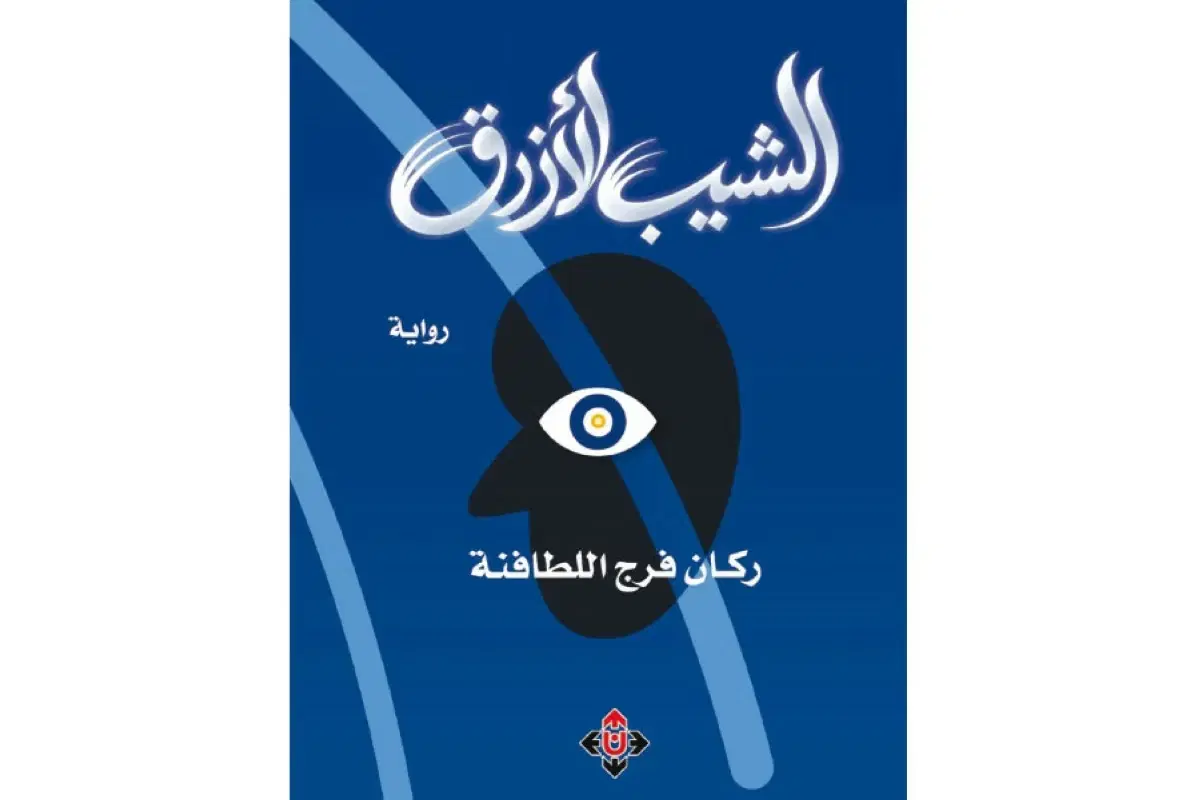
From the stone alleys of As-Salt and its narrow steps, the novel «Blue Gray Hair» by Jordanian novelist Rakan Faraj Al-Latafneh, recently published by «Dar Alan for Publishing and Distribution», sets forth to open questions of memory and family legacy, tracing the effects of pain as it passes from one generation to the next, moving beyond the boundaries of personal narrative to question the relationship between the past and human choice.
In a critical reading of the novel, poet Hussein Galanbo believes that Al-Latafneh presents a work that goes beyond observing the life of a family and its surrounding social, intellectual, and ideological transformations, delving into what he describes as a "deep psychological dissection of the meaning of legacy," where tragedies and deferred questions accumulate to become a burden inherited by generations, with its impacts reflecting on relationships between fathers and sons.
The novel takes As-Salt as a launching point for a narrative world where personal memory intertwines with social and political history, extending its events to Jerusalem, Beirut, Afghanistan, Europe, and the United States. The places do not merely serve as backdrops for events, but rather as spaces carrying questions of belonging, alienation, and loss, revealing the impact of major transformations on individuals' lives and destinies.
Galanbo points out that the story begins with a wound borne by Saleh, following the family's forced migration from Lebanon, then the loss of his wife during childbirth, giving birth from this loss to a series of pains manifested in troubled relationships and conflicts that find no path to apology and reconciliation. Thus, the tragedy does not remain an isolated incident, but transforms into successive cycles of anger, silence, and mistakes that are reproduced within the family.
One of the most prominent paradoxes of the novel is based on the accumulation of tragedies, in what Galanbo describes as an immersion in tragedy, where the reader finds themselves before characters besieged by their losses and memories, facing the effects of a history they did not choose, yet finding themselves forced to live in its shadows. However, this darkness is inseparable from trying to understand the mechanisms that reproduce pain and the characters' relationship with their past and surrounding transformations.
Female characters, including Jalila and Maryam, stand out in confronting a heavy legacy within a world governed by tense patriarchal relations, with their suffering manifesting in patience and sacrifice, and in trying to endure what family and social circumstances impose. In contrast, other characters, including Abdul Rahman, reveal the intertwining of love, disappointment, religiosity, war, and migration, as experiences that entangle in the human journey searching for meaning in what they live.
The novel relies on a broad historical and social background, without making history merely a record of events; political and intellectual transformations are reflected in homes, relationships, and individual destinies, becoming part of the formation of personal and family consciousness. The narrative structure also relies on multiple sections, shifting between times and places, employing letters, folk songs, radio broadcasts, newspaper clippings, and speeches, allowing private memory to intersect with public memory.
As-Salt is present in the text as a spatial and cultural memory, with the details of stone, steps, houses, bread, and popular memory, before the story expands into spaces of alienation. Through this presence, the city transcends its geographical function to become an active element in building the novel, and a vessel for a memory where individual experiences entangle with society's transformations.
As for the title «Blue Gray Hair», Galanbo reads it as an interpretive key to the work, as it is not limited to its sensory connotation, but transforms into a metaphor for accumulated misery, a stigma pursuing family members, and an expression of a legacy that is difficult to shake off even as generations move away from the first place.
The central idea of the novel is manifested in the question it leaves open before the reader: «Did they pass down the curse to us.. or did we repeat the same mistakes?». It is a question that transcends the family's destiny to place the relationship between legacy and responsibility under scrutiny, exploring the distance between what a human receives from their ancestors and what they choose to reproduce in their life.
In this context, Galanbo sees that the novel represents an experience in understanding human helplessness before the inevitability of fate, in contemplating the broken bridges between fathers and sons, and the need for apology and reconciliation before it is too late.
Thus, «Blue Gray Hair» does not merely present a family tale spanning generations, but proposes a literary reading of the relationship between memory, fate, and choice; a person may inherit a wound, but they are not obliged to pass it on, and they may carry the memory of their ancestors, but they remain tasked with the responsibility of determining whether the past will remain a repeating fate, or an experience that can be understood and overcome.