Trump and Gulf Leaders Discuss Post-War Strategy with Iran
Amman4 min read
Share
According to Axios, citing sources, it is expected that US President Donald Trump will meet with Gulf leaders on the sidelines of the UN General Assembly meetings in New York on Tuesday, to discuss the next steps in the war with Iran and the post-war strategy.
According to Axios, the meeting will focus on US ideas about the next phase of the conflict, as Washington seeks to discuss post-war arrangements with regional countries.
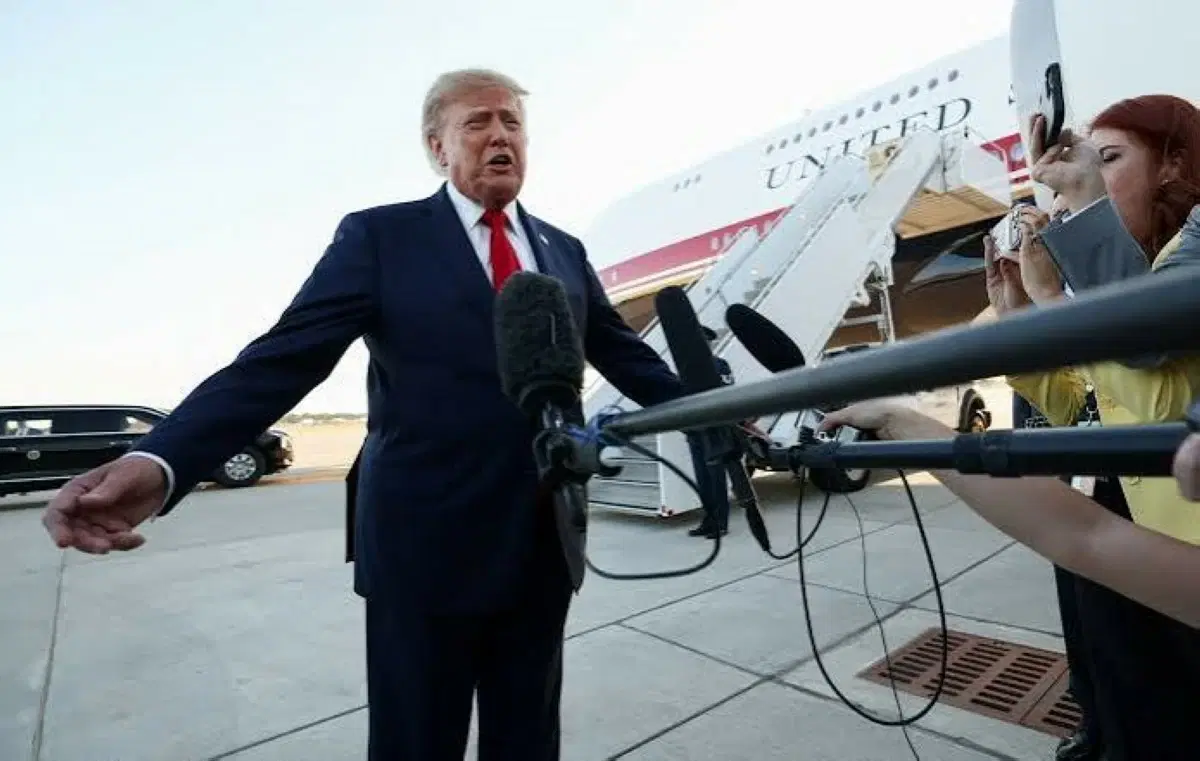
Trump said on Wednesday that he hopes the end of the war against Iran is near, adding to journalists about Iran, "They want to reach an agreement. We'll see how things go," repeating previous statements.
He added that he heard from Iran "directly," without giving details.
The anticipated meeting comes as Trump said the United States has entered the "final stages" of the war with Iran, adding that Tehran "wants to reach an agreement badly."
Trump, in response to a question about the course of the conflict, said, "We are in the final stages of the war with Iran," adding: "They want to reach an agreement badly. We'll see how things go."
Trump made these statements upon his arrival at Charlotte Douglas International Airport in North Carolina, during a tour to support Republican Senate candidate Michael Wattley.
His statements come hours after the US House of Representatives voted on Tuesday by a majority of 220 to 204 on a war powers resolution, a move aimed at limiting Trump's ability to continue military operations against Iran without congressional approval.
Trump had previously spoken about the possibility of ending the war in Iran after the midterm elections, saying that Tehran is seeking to negotiate, while details of any potential negotiation path between Washington and Tehran remain unclear.
In this context, US Vice President JD Vance said the war with Iran will enter a "completely different phase" in two months, indicating that the United States is not currently engaging in offensive operations, and that the focus is on the next phase of the conflict and dealing with the situation in the region.
Vance warned, in an interview with the "All-In Podcast" program, that the US withdrawal from the war and leaving the regional countries to face the crisis alone could threaten the outbreak of a global energy crisis, defending the continuation of the US military role in protecting navigation and oil and gas flows.
He added that the Trump administration is working to protect US assets in the region and ensure the continued supply of oil and natural gas to global markets, while in another interview he said that traffic through the Strait of Hormuz has returned to more than 50% of its usual levels.
The Strait of Hormuz is one of the world's most important energy arteries, through which about 20% of global oil and liquefied natural gas supplies pass under normal circumstances, while the war and restrictions on traffic through it have disrupted energy flows.
According to recent data reported by Reuters, only 4 ships passed through the strait on Tuesday, compared to an average of 18 ships over the previous 10 days, while Brent crude exceeded $100 per barrel in September, amid fears of further disruption to supplies in the Middle East.
In contrast, Iran accuses the United States of starting the war and causing disruption to navigation and energy, and rejects the US narrative regarding its responsibility for the crisis.
Separately, Trump threatened to consider the EU's allowance of Canada to join as an associate member as a "hostile act," threatening to impose further tariffs on Europe.
Trump said that the imposition of tariffs will depend on the intention of European leaders, adding: "If the intention is good, fine. But if the intention is bad, we will impose very high tariffs on Europe," and also threatened to possibly stop trade with Europe in some areas.
Trump described the possibility of Canada joining the EU as "ridiculous," and also described Canada as a "very bad trade partner."
Washington and Tehran had reached a temporary memorandum of understanding in June, but it did not put an end to the conflict, before clashes resumed later, especially against the backdrop of the dispute over the status of the Strait of Hormuz and the mechanism for reopening it to international navigation.