Reuters: US and Iran discuss a phased agreement to reopen the Strait of Hormuz
Amman7 min read
Share
Sources close to the talks between the United States and Iran said that negotiators from the two countries are exploring in New York a gradual path to end the war, which includes Tehran reopening the Strait of Hormuz and Washington lifting the economic sanctions imposed on the Islamic Republic
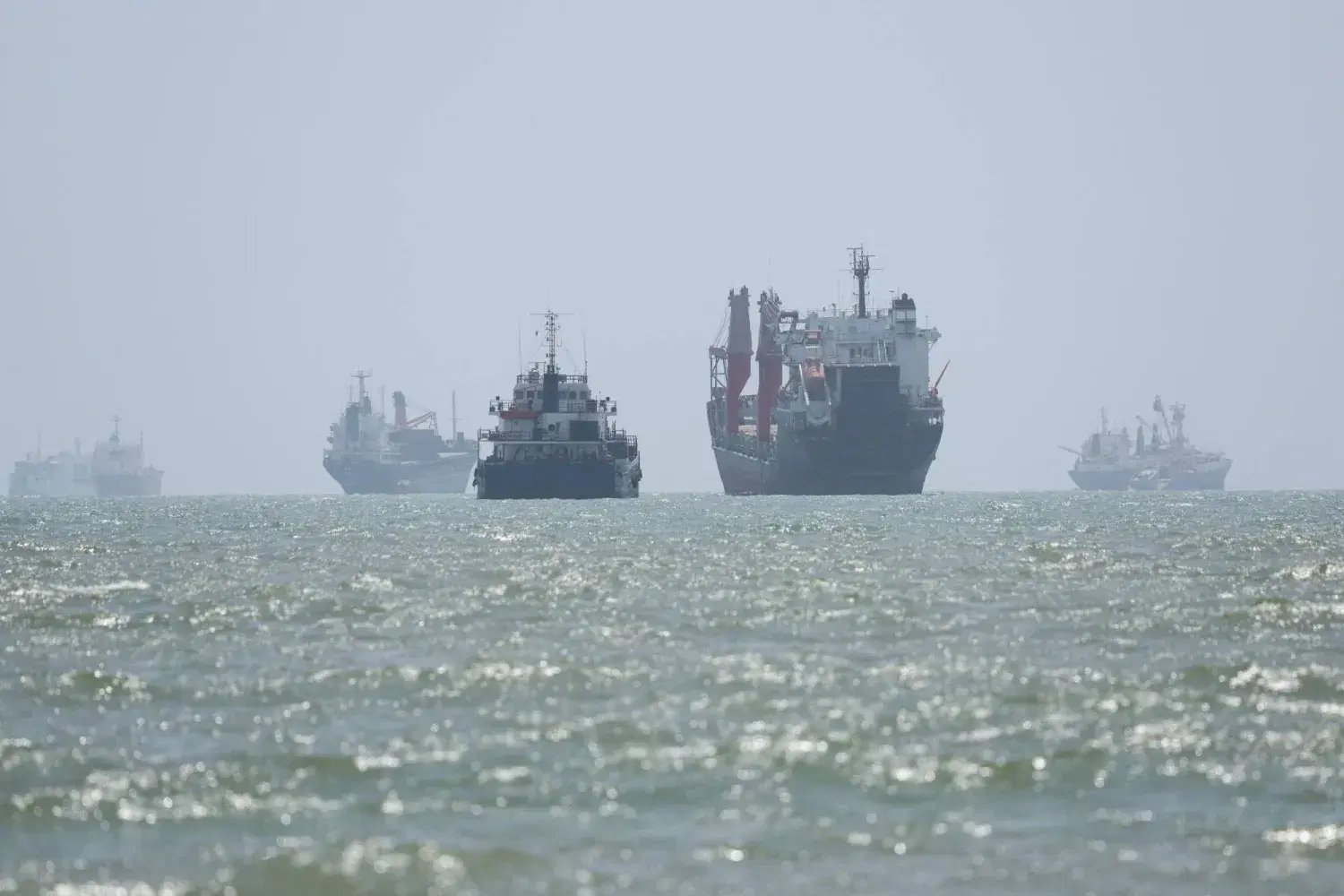
The Strait has become the main bargaining chip in efforts to end the nearly seven-month war between Washington and Tehran, as Iran seeks to get rid of the American blockade that is choking its economy, while Washington wants to ensure the free passage of ships in the global oil supply route that Tehran currently blocks.
Two Iranian sources, two regional officials, and two Western diplomats said that the talks are encountering a major obstacle, which is the unwillingness of either party to be the first to give up its cards, but Iran is aware despite its tough stance of the economic cost of a prolonged confrontation.
A senior Iranian official said that the most realistic way to end this impasse is a gradual arrangement, through which Iran would allow navigation in the Strait of Hormuz in exchange for the United States lifting its economic sanctions, with the possibility of Tehran obtaining frozen assets.
The official added, speaking on the sidelines of the UN General Assembly meetings, "One possible way to move forward is to resolve the crisis in stages, starting with ending the blockade and reopening the Strait of Hormuz"
This would require US President Donald Trump to approve another temporary solution, after a preliminary understanding collapsed in July. Sources say the main challenge facing negotiators is not only outlining an agreement but also ensuring that any concessions are sustainable enough to give both sides confidence.
Trump expressed his belief that the United States and Iran could reach an agreement after the congressional midterm elections scheduled for November 3. A senior European official said that the Iranians "have a very long list of demands"
A White House official said that while "Iran is eager to reach an agreement, President Trump is in control and will make the decision that is best for the United States"
He added that Trump is still "open to dialogue with Iran under the right circumstances," but is not driven by an urgent need to negotiate, noting that the United States is in a "very strong position" due to its control of the Strait of Hormuz and Iran's "crumbling" economy.
The official explained that the "crushing sanctions" and "one of the most successful blockades in history" have crippled the Iranian economy and led to the complete bankruptcy of the Islamic Republic. He pointed out that Trump prefers to let the "inevitable Iranian collapse" take its course rather than allow Tehran to manipulate and deceive.
Former US negotiator Dennis Ross said he believes the chance of reaching an agreement before the elections is no more than 30 percent, but added that the two parties may have stronger reasons to reach an agreement before the midterm elections rather than after.
Ross added, "The blockade is what is actually pressuring the Iranians. It is choking them"
Reaching an agreement before the midterm elections could benefit Trump, as reopening the Strait of Hormuz could reduce tension in the Gulf, limit the rise in oil prices, and help lower gasoline prices in the United States, which is a politically sensitive issue.
Iran's chances of obtaining much-needed economic relief may be stronger at a time when Trump has more political incentive to reach an agreement.
Ross believes that Trump's constraints may diminish after the midterm elections, and he may then be more willing to intensify pressure or even consider military options.
*Do leverage cards pose an obstacle?
The leverage cards, which brought Washington and Tehran back to the negotiating table, can themselves make reaching a settlement more difficult.
Washington has the leverage tools that cause the most damage to Tehran, which in turn controls access to the vital energy corridor. Neither party is willing to give up its leverage without getting something tangible in return.
This means that the midterm elections may not be the end of the deadline for diplomacy in general, but rather a deadline for circumstances that allow diplomatic efforts to continue. If Washington and Tehran fail to turn these leverage cards into an agreement before the midterm elections, the window for diplomatic solutions may narrow and the risk of escalation may increase.
The Iranian official said that while Tehran is seeking a diplomatic way out, it is preparing for the possibility of renewed war with Washington, accusing the United States of using economic blockade and the threat of force as tools of coercion.
The senior Iranian official added, "Our fingers are on the trigger. The Americans know what they have to do, but the chances of resolving the crisis through diplomacy are extremely slim due to their excessive demands"
Regional sources said that Tehran is ready to drop the demand for a fee for crossing the Strait of Hormuz from the main agreement and instead place this demand in a side annex, as ending the blockade has become a more urgent priority.
Gulf countries reject the proposal to pay a fee for crossing. Regional sources pointed out that any arrangement would be temporary and would not be an official abandonment of Iran's position.
The United States is tightening the noose on the Iranian economy by imposing new sanctions in addition to the blockade that has choked its oil exports, which are a vital source of foreign currency.
This month, Washington targeted Iran's remaining commercial airlines and their support networks as part of a campaign aimed at cutting off the economic lifelines of the government and the powerful Revolutionary Guard. Trump warned that the Iranian economy could "rot" without reaching an agreement.
He said, "Iran's primary focus is not on imposing fees in the Strait of Hormuz, but on maintaining administrative control over the waterway." He added, "Iran may be willing to postpone the issue of fees, but it will not give up administrative control over the Strait"
There is a fundamental tension in the ongoing diplomatic efforts in New York. Washington wants to exert pressure to get concessions, while Tehran wants to lift the pressure before making any concessions, and Gulf countries want to resolve the conflict without allowing the strategic waterways in the region to become permanent bargaining chips.
*Fears of an open conflict
Gulf leaders during a separate meeting with Trump in New York sought clarification on Washington's final plan after the midterm elections, including whether the United States would resume military action if Iran refused to return to negotiations.
Regional sources said that they collectively rejected any Iranian control over the Strait of Hormuz, emphasizing the need to restore freedom of navigation and prevent the strategic waterway from becoming a tool of pressure and coercion against Gulf countries.
However, Gulf leaders, along with their warnings about the Strait of Hormuz, strongly pushed for de-escalation and the start of a political process, reflecting the region's determination to distance itself from any further conflict between the United States and Iran.
Ibtisam Al-Katabi, head of the Emirates Policy Center, said, "It is still unclear what Trump's final plan is, or what the alternative to the current pressure campaign is"
She added, "On the contrary, the Iranians know what they want. They are reshaping the regional landscape through the Straits of Hormuz and Bab al-Mandeb with a clear goal, while Washington has not yet defined its roadmap"
The uncertainty also affects Tehran's calculations. Danny Sittenfeld, a regional analyst and former Israeli military intelligence officer, said that the New York talks have not changed the fundamental positions of either party, and it is unlikely that Iran will back down as long as it believes that Trump wants to avoid broader escalation before the midterm elections.
Alan Eyre, a former US negotiator on the Iran file, said, "The blockade is hurting them, but instead of softening their position, it is likely to push them to escalate because they believe that softening their position means their doom"
A Western official familiar with the talks said, "The whole issue is about opening the Strait of Hormuz. We are all under domestic pressure, and the Iranians are aware of that"