Al-Oudat: Dialogue between Political Blocs Enhances the Effectiveness of Parliamentary Work
Amman5 min read
Share
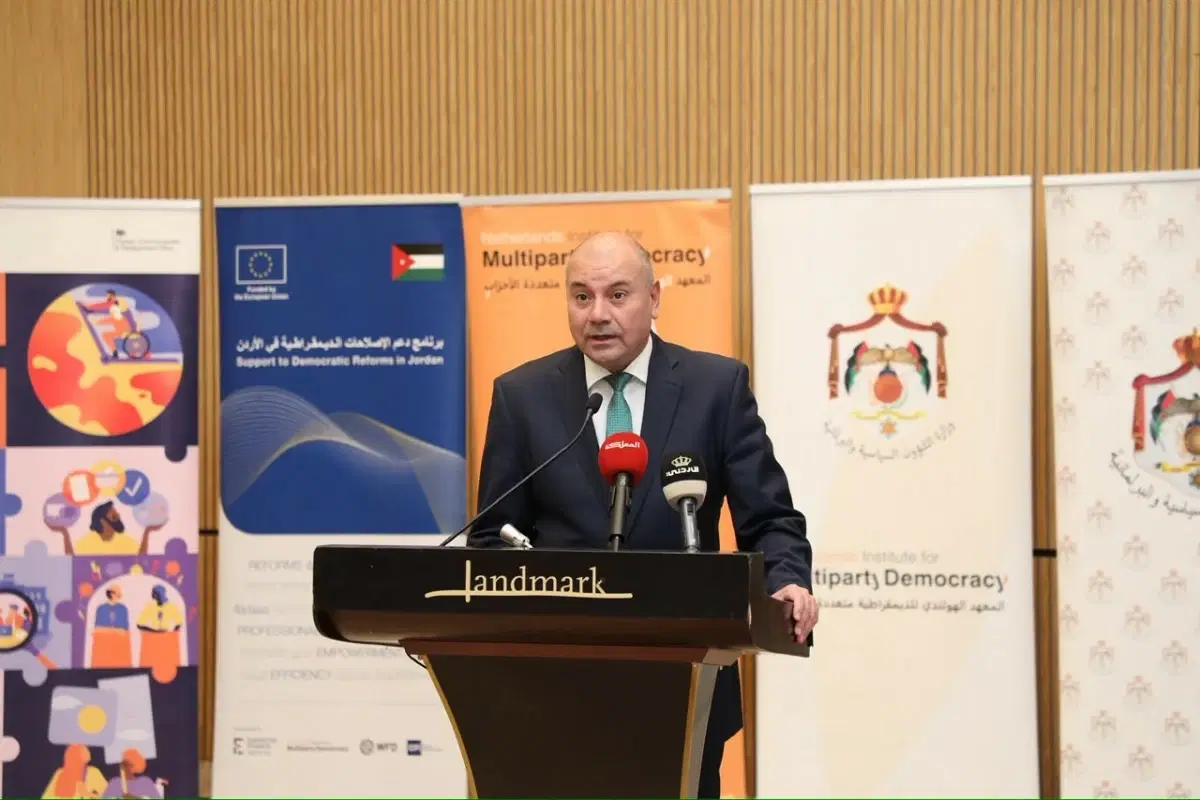
Minister of Political and Parliamentary Affairs Abdul-Moneim Al-Oudat confirmed that launching the dialogue program between parliamentary blocs is an important milestone in the path of political modernization, and contributes to enhancing coordination between parties and their parliamentary blocs, and translating political programs into legislative and oversight positions and practices that serve citizens and the national interest.
This came during his sponsorship today, Tuesday, the launch ceremony of the program, in the presence of a number of members of the House of Representatives and the general secretaries of political parties, which is being implemented by the Ministry in cooperation with the Netherlands Institute for Multiparty Democracy and the Westminster Democracy Foundation, as part of the 'Support for Democratic Reforms in Jordan' program, funded by the European Union, and implemented by the French Expertise Agency 'Expertise France', in cooperation with its partners.
Al-Oudat said that the dialogue meetings bring together political parties and their parliamentary blocs at a time when there is an important shift in Jordanian parliamentary life, with parliamentary seats allocated for party representation, reflecting a transition towards representation based on programs, ideas, and party affiliation.
He added that this shift places responsibility on the parties and deputies to consolidate and develop this approach, explaining that the deputy who reaches the House of Representatives through the party list represents a party and a political program, which requires strengthening the relationship between the deputy and his party and adhering to its organizational frameworks and political program in accordance with the provisions of the Constitution and the law.
He pointed out that the program provides a space for dialogue and exchange of views on ways to develop party and parliamentary work, and enhance coordination between parties and their parliamentary blocs, leading to the construction of more cohesive blocs and clearer programs and political practice based on dialogue, respect, pluralism, and recourse to the Constitution and the law.
Al-Oudat stressed that the success of the political modernization path is not measured by the mere arrival of parties to the House of Representatives, but by their ability to play their role efficiently and responsibly, and build effective party institutions and parliamentary blocs capable of carrying their programs and defending them within the legislative institution.
He pointed to the importance of developing this path gradually, and accumulating experience from one parliamentary session to another, which enhances party and parliamentary life and supports citizen confidence in the political system and its ability to present an advanced model in public work.
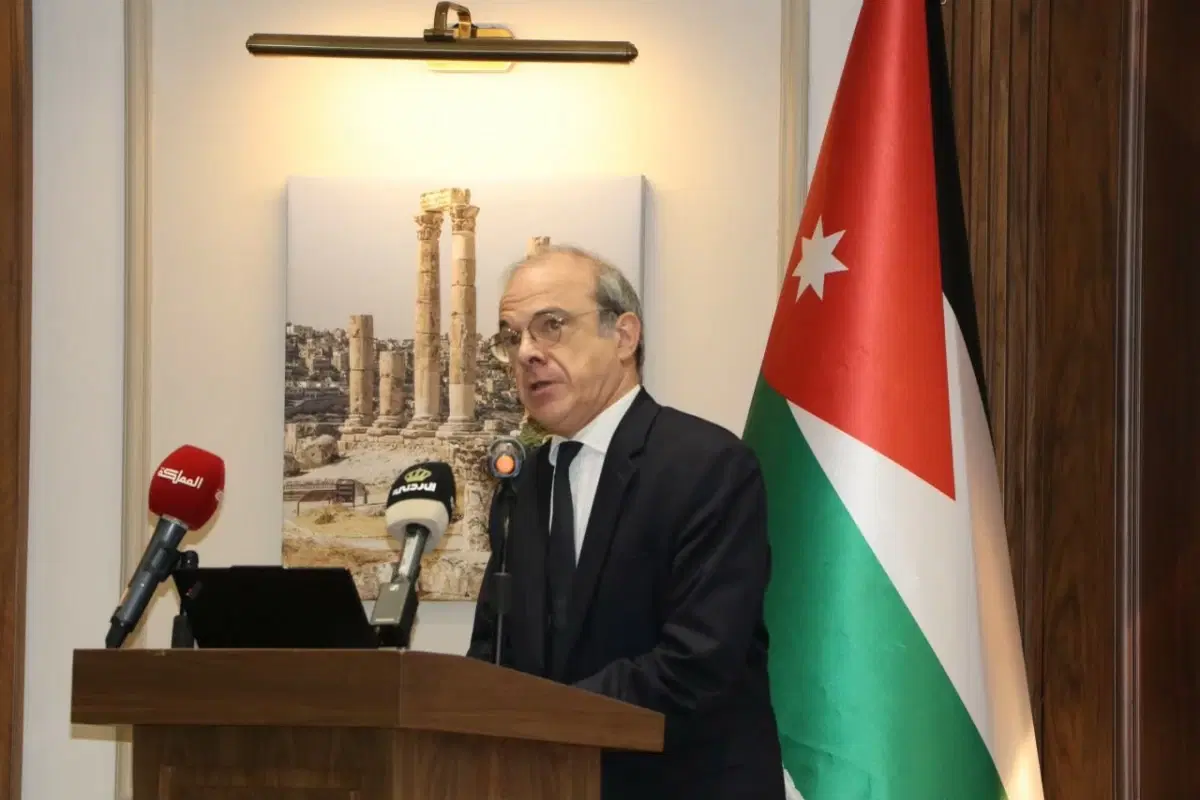
For his part, the European Union Ambassador to Jordan, Pierre Christophe Chatzisavvas, said that the European Union has been supporting democratic reform efforts in Jordan since 2024 through the 'Support for Democratic Reforms in Jordan' program, in close cooperation with Jordanian partners. He added that the launch of this program represents an important step towards enhancing cooperation between political blocs, parties, and government institutions.
He welcomed the continued communication and exchange between the Jordanian and European parliaments, including the current visit of members of the European Parliament to Jordan and their meetings with the House of Representatives, affirming the continued commitment of the European Union to support Jordan's political journey and enhance a political life that accommodates everyone.
For his part, the representative of the Netherlands Institute for Multiparty Democracy in Jordan, Bashar Al-Khatib, emphasized the importance of the European Union's program to support democratic reforms in Jordan, which is being implemented by the French Expertise Agency in cooperation with the Netherlands Institute for Multiparty Democracy, the Westminster Democracy Foundation, and the French Media Support Agency; and its programs and activities that work to support and enhance the path of political modernization, contributing to raising the level of party and parliamentary work and developing the performance of party parliamentary blocs to serve the public interest.
During the session, Rana Qawaar, representative of the Westminster Democracy Foundation Office in Jordan, presented a presentation on supporting the development of the effectiveness of parliamentary party blocs, during which she reviewed the most prominent challenges and needs associated with the work of the blocs in light of the evolution of their role within the path of political modernization and parliamentary life in Jordan.
The presentation addressed the importance of moving from focusing on the presence of the blocs to enhancing their ability to work collectively and systematically, and transforming their political priorities into more effective parliamentary practice, through the development of practical tools in the fields of planning for parliamentary work, coordination among bloc members, technical and informational support, and follow-up and coordination with the General Secretariat of the House of Representatives.
The Westminster Democracy Foundation also reviewed a proposal for developing an institutional system to support the blocs, based on a participatory methodology that includes identifying needs, joint design, experimentation, and development, which allows for the development of practical support tools and mechanisms in cooperation with the blocs and the General Secretariat, while maintaining the political neutrality of the General Secretariat and not imposing a ready-made model on the blocs.
The presentation emphasized the importance of integrating roles among various partners, including the Ministry of Political and Parliamentary Affairs, the House of Representatives, parties and parliamentary blocs, and partner institutions, including the Netherlands Institute for Multiparty Democracy and the Westminster Democracy Foundation, with the aim of moving from fragmented interventions to a more integrated and sustainable support system, contributing to enhancing the effectiveness of parliamentary work and supporting the path of political modernization in Jordan.
The program includes holding dialogue sessions between parties and parliamentary blocs to institutionalize parliamentary work, learn about best practices, and benefit from the experiences of a number of countries.