He added that the growth in capacity embodies the efforts made to develop the educational environment, modernize academic facilities and laboratories, and provide high-quality educational opportunities, while adhering to accreditation and quality assurance standards.
He emphasized that the university is proceeding with the implementation of its development plans to expand higher education enrollment opportunities, especially in technical and applied disciplines, and to prepare qualified human competencies in line with the royal directives, the priorities of the Economic Modernization Vision, and the requirements of the labor market.
He pointed out that the rise in capacity to nearly 105 thousand students reflects the university's ability to undergo deliberate and sustainable expansion, and strengthens its role in the higher education system and national development.
The latest increase came based on the decision of the Accreditation and Quality Assurance Commission Board issued on October 13, which included the continued accreditation and increase in the general capacity for 6 of the university's faculties, namely: the Center faculties, Engineering Technology, Al-Huson University College, Ajloun University College, Zarqa University College, and Aqaba University College.
According to the data, the capacity of the Center faculties increased from 27,014 to 37,498 students, the Faculty of Engineering Technology from 6,546 to 10,164, Al-Huson University College from 6,916 to 9,172, Ajloun University College from 5,551 to 7,755, Zarqa University College from 3,497 to 6,163, and Aqaba University College from 2,507 to 5,737 students.
Thus, the total capacity of the 6 faculties rose from 52,031 to 76,489 students, an increase of 24,458 study seats, while the university's total capacity, including its other faculties and the Jerash Technical College, reached 104,885 students.
For his part, Vice President for Planning and Quality Assurance, Dr. Haitham Al-Shibli, said that the rise in capacity reflects the effectiveness of institutional planning and the efficiency of resource investment, noting that the university's capacity rose from 67,128 students in the 2020/2021 academic year to 78,457 in 2022/2023, then to about 78,909 during the subsequent period, before reaching 104,885 students in the current year.
He explained that the latest increase amounted to 24,458 study seats, with a growth rate reaching 30.4 percent according to the approved comparison, reflecting a noticeable development in the university's institutional capabilities within a short period.
He added that this progress came as a result of integrated efforts that included reviewing the state of academic and educational facilities, analyzing capacity indicators, evaluating the efficiency of infrastructure investment, and following up on accreditation and quality assurance requirements.
He stressed that increasing capacity is not limited to raising the number of study seats, but reflects the evolution of the university's ability to utilize its resources and capabilities efficiently and expand higher education opportunities within a framework of sustainable academic and financial planning.
He pointed out that the university is working to align capacity with admission and academic expansion plans, human resource needs, educational equipment, and institutional performance indicators, contributing to the optimal use of resources, improving spending efficiency, and enhancing institutional and financial sustainability.
He noted that this achievement was the result of continuous support from the university presidency and cooperation and coordination between the relevant faculties, units, and departments, confirming the continued work to develop the planning and quality assurance system, enhance resource management efficiency, and provide an educational environment suitable for expanding academic and technical programs.
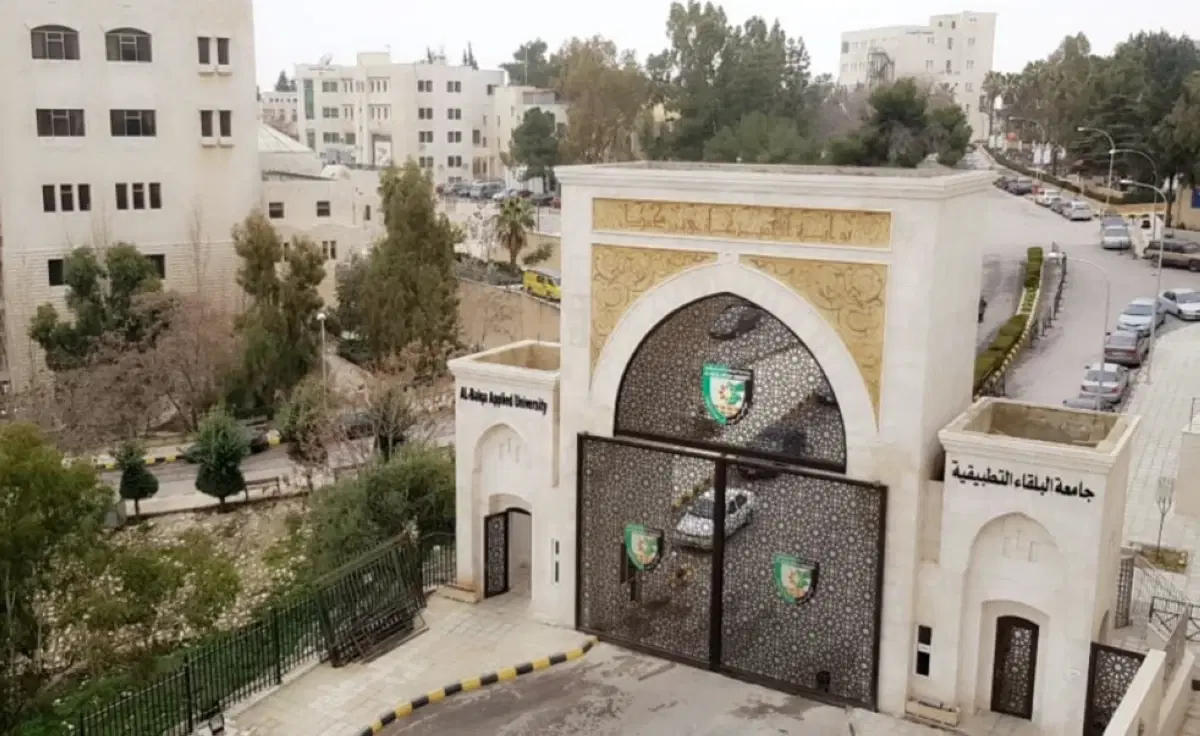
This continuous growth reflects Al-Balqa Applied University's national role in expanding higher education opportunities, enhancing the quality of applied and technical education, and preparing qualified human competencies to contribute to achieving the goals of economic modernization and sustainable development in the Kingdom.