Al-Azhar: Turning Gaza hospitals into mass graves is a stain of shame on humanity
Agencies4 min read
Share
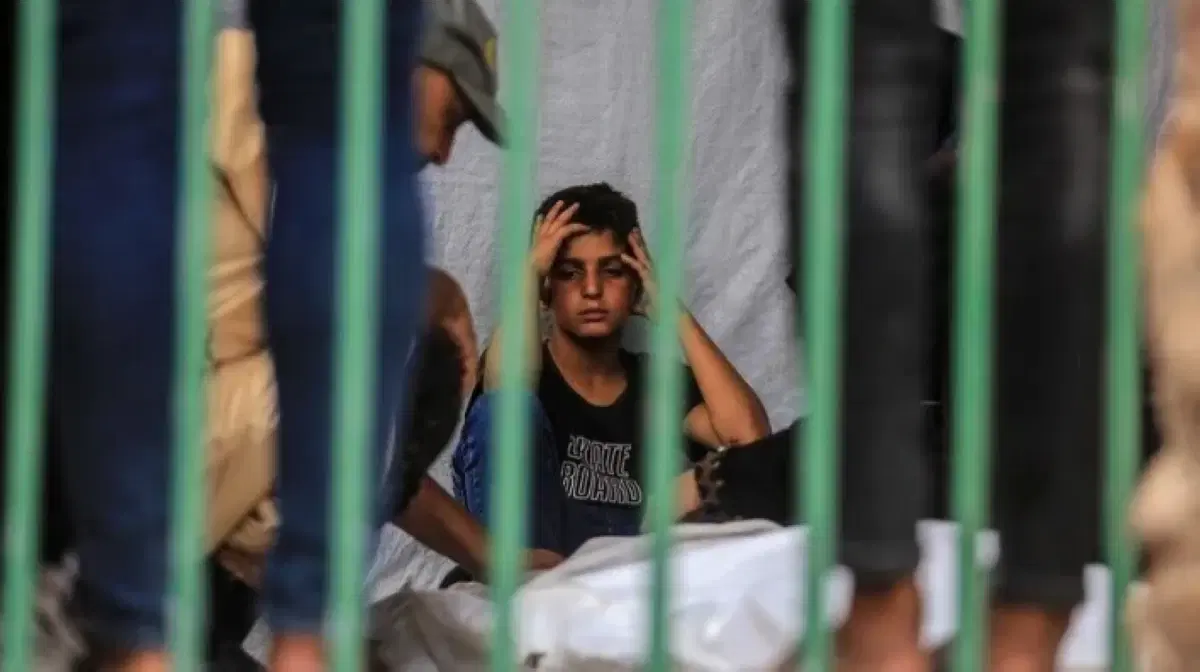
Al-Azhar Al-Sharif warned on Wednesday of "certain death lurking for patients in Gaza Strip hospitals," considering the transformation of hospitals into mass graves a "stain of shame on the forehead of humanity."
It stressed that Israel's "deliberate cutting off of the energy artery to medical facilities represents a collective death sentence for the innocent, and a full-fledged war crime that contradicts all international laws and norms."
Al-Azhar said in a statement that "turning hospitals from life-saving sanctuaries into mass graves is a stain of shame on the forehead of humanity, and explicit complicity that requires urgent international action to compel the occupation to open humanitarian corridors."
Al-Azhar expressed its grave concern regarding the "shocking warnings issued by the Palestinian Ministry of Health regarding the depletion of oil and fuel quantities necessary to operate electric generators in Gaza Strip hospitals."
It added that it warns of an "imminent humanitarian catastrophe and certain death lurking for hundreds of patients, the wounded, and children in intensive care units and neonatal incubators."
Al-Azhar demanded that "the international community and international and humanitarian organizations assume their full responsibilities for the silence in the face of this suffocating siege."
It called on the Arab and Islamic worlds, the international community, and all living consciences around the world to "take urgent action and exert pressure by all means to save the health system in the Strip and break this unjust siege."
Al-Azhar saluted the "steadfastness of the heroic medical staff and ambulance crews in Gaza who are writing the most wonderful epics of sacrifice and redemption in the face of the killing and destruction machine."
Earlier on Wednesday, the Ministry of Health in the Gaza Strip announced the depletion of the oils necessary to operate hospital electricity generators, confirming its urgent need for more than 2,500 liters per month to prevent the collapse of the remaining generators, amid Israeli restrictions on the entry of operational and maintenance supplies.
The ministry warned in a statement that the continuation of the crisis threatens to shut down life-saving medical departments, after it announced on September 16 that 70 percent of hospital generators had gone out of service due to the shortage of fuel, oil, and spare parts caused by the Israeli siege.
It said that the depletion of oils means "immediate mechanical collapse and deterioration" of the remaining generators, which operate under complex engineering and technical conditions.
It explained that operating the generators for long hours increases their oil consumption and need for maintenance, warning that their stoppage would lead to power outages in vital and life-saving departments, without specifying them, while operating rooms and intensive care units are among the most prominent departments dependent on electricity.
The ministry did not clarify whether the depletion of oils had caused the shutdown of medical departments, or the duration during which the generators could continue to operate with the oils inside them, after the depletion of the stock necessary for their replacement and maintenance.
Gaza hospitals have relied on generators as a primary source of electricity to operate operating rooms, intensive care units, neonatal incubators, ventilators, and dialysis machines since Israel cut off electricity supplies to the Strip in October 2023.
On the 11th of the same month, the only power plant in Gaza stopped due to fuel depletion, causing a total power outage, at a time when power lines, cables, and distribution networks were subjected to widespread destruction during the genocide war waged by Israel with American support.
The destruction of the network hindered the restoration of electricity supply to hospitals, forcing them to rely on generators for long hours to operate their medical departments.
The Ministry of Health demanded on Wednesday that the concerned parties assume their humanitarian responsibilities and intervene immediately to ensure the entry of the necessary oils and spare parts to prevent the remaining generators from stopping.
The electricity crisis continues despite the ceasefire agreement in effect since October 10, 2025, amid continued Israeli restrictions on the entry of supplies necessary to rehabilitate the health system in the Strip.