The Palestinian cause is a Jordanian constant that is non-negotiable
Education and investment in human capital are pillars of development
Follow Al Rai

It strengthens trust in institutions and consolidates national unity
The Palestinian cause is a Jordanian constant that is non-negotiable
Education and investment in human capital are pillars of development
Security, stability, and the rule of law are national priorities
Economic and water modernization are at the forefront of the coming phase
The citizen is the focus of government decisions and policies
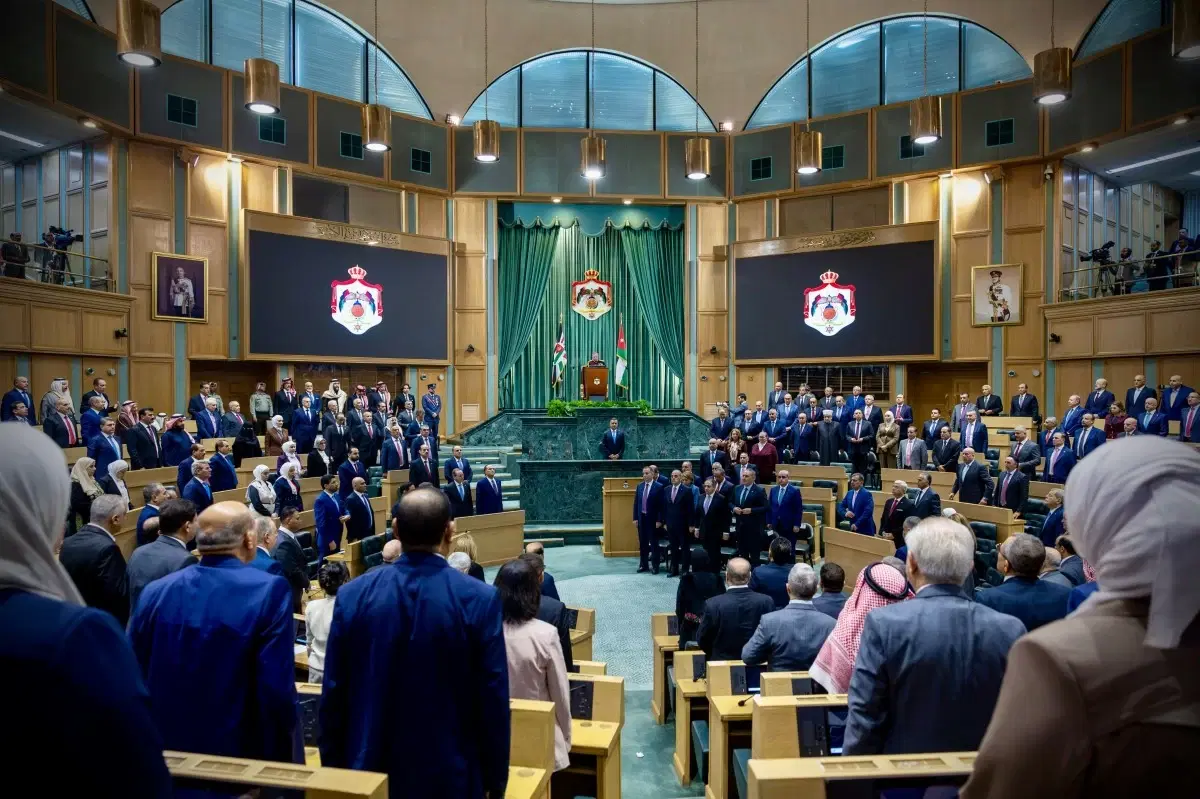
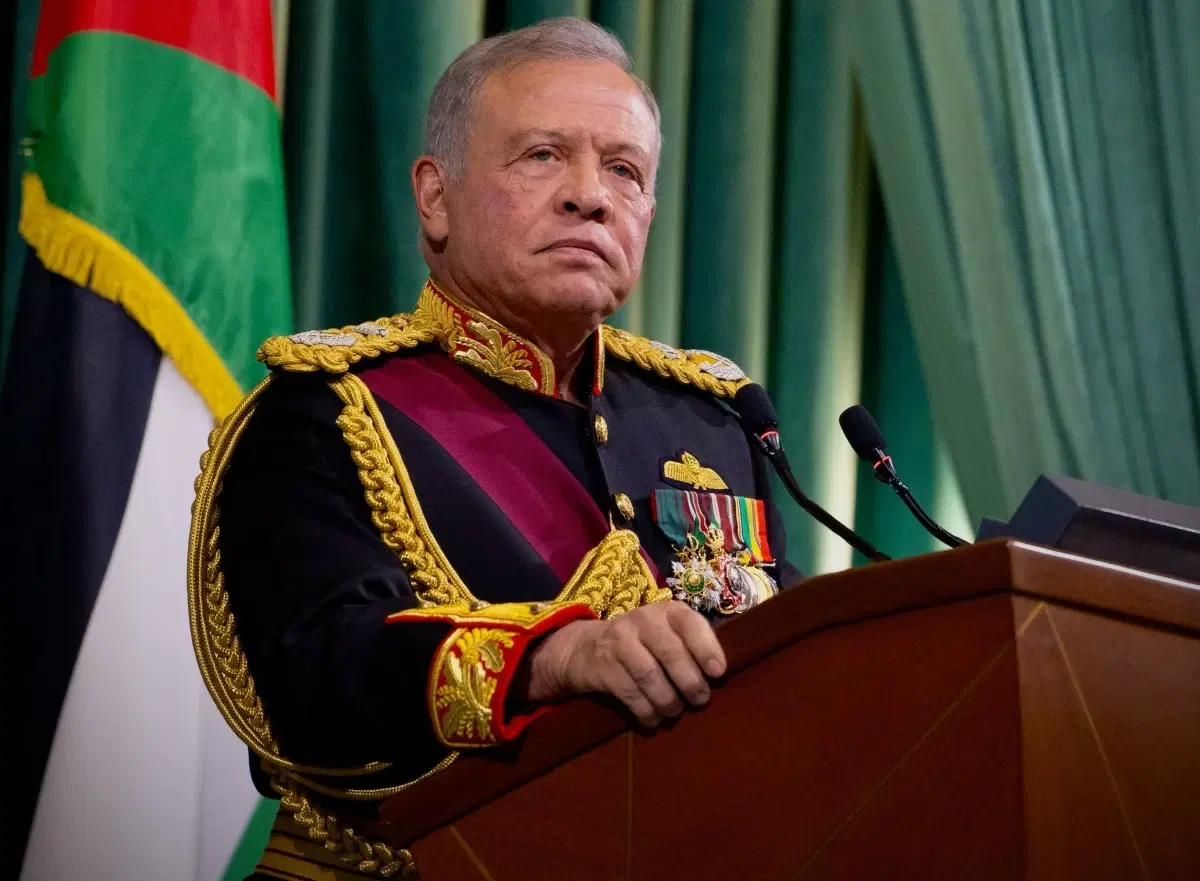
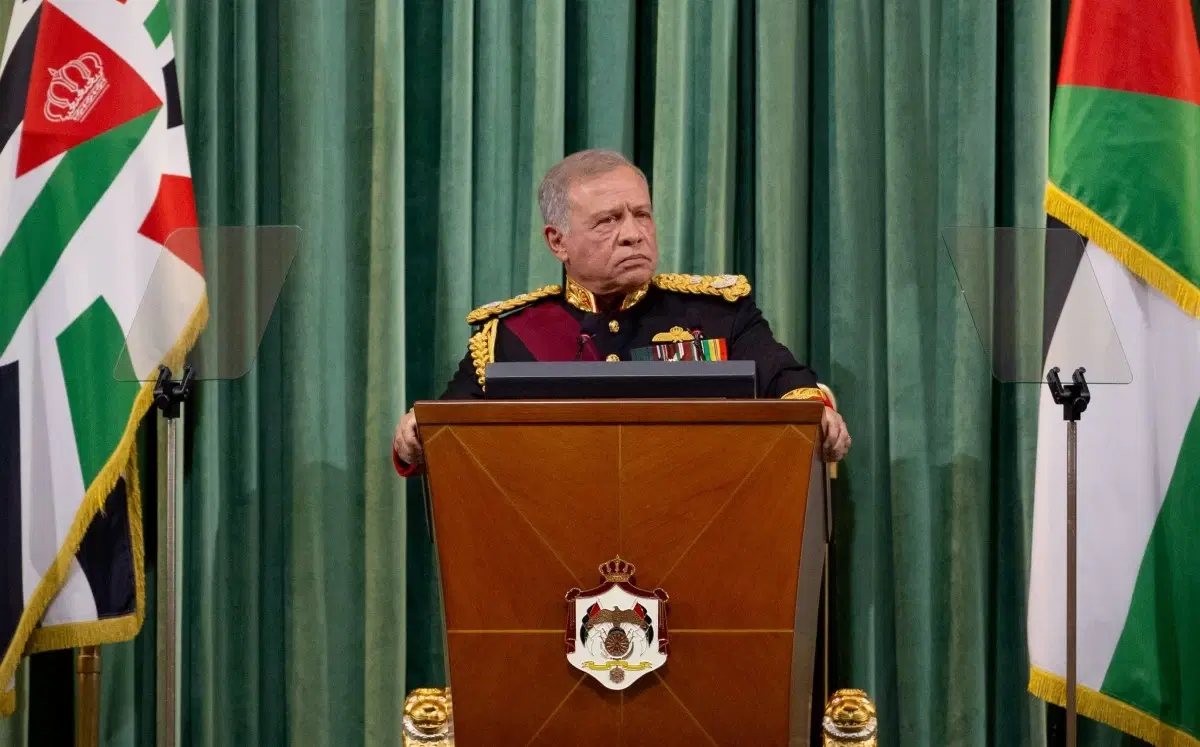
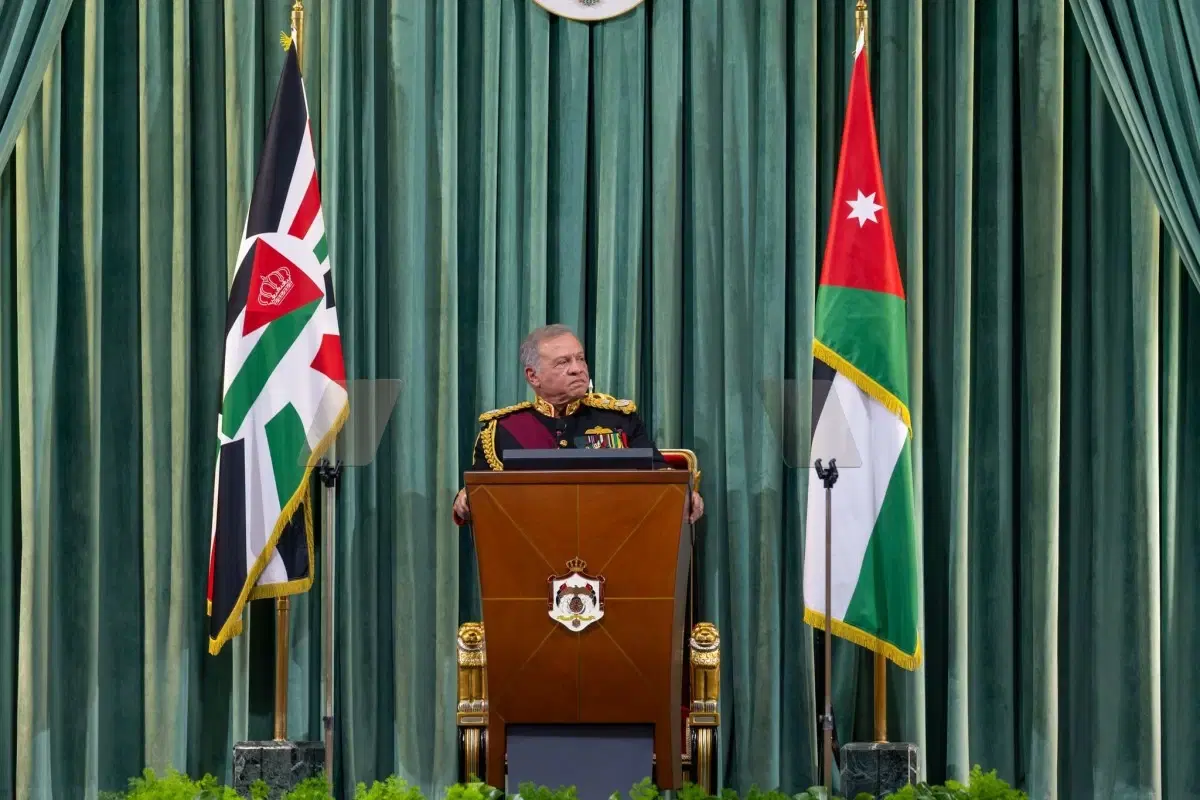
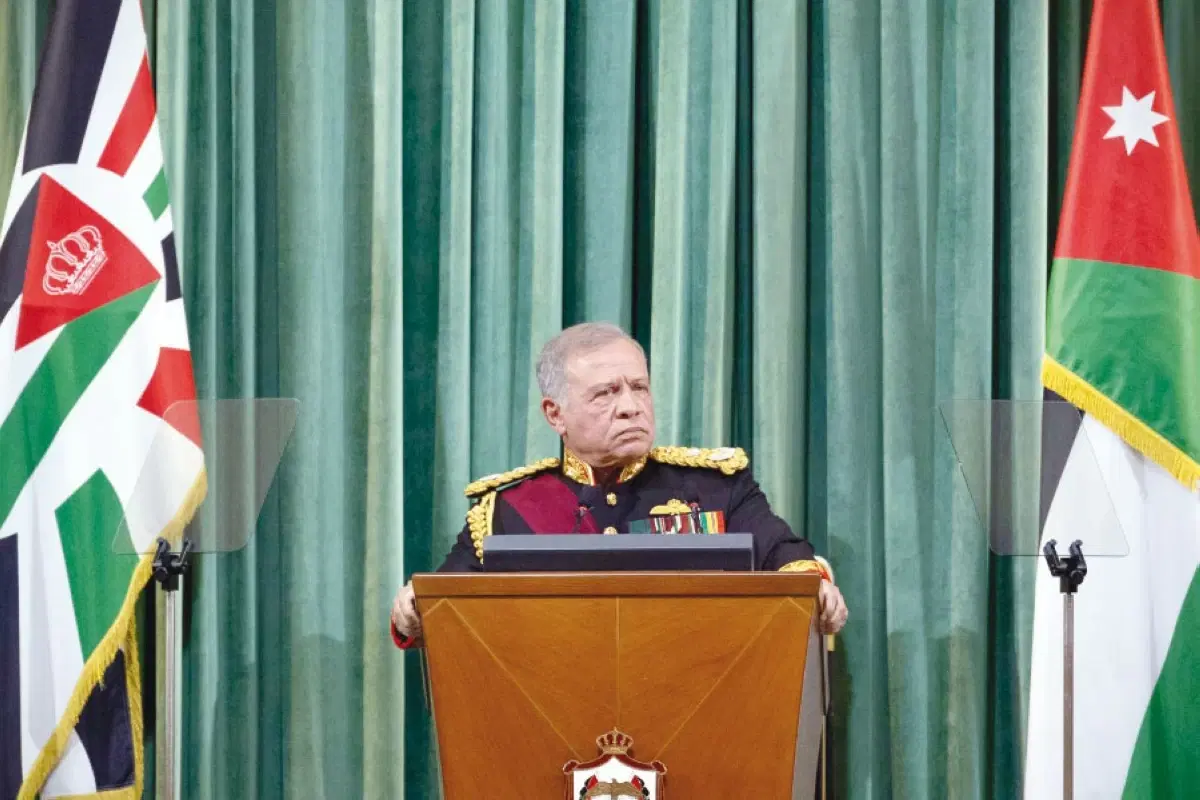
Official, popular, academic, partisan, and professional union figures affirmed that the exalted Speech from the Throne, delivered by His Majesty King Abdullah II at the opening of the third ordinary session of the 20th Parliament, carried important national messages and defined the priorities for the coming phase. Chief among these is protecting Jordan's security and stability, strengthening national unity and the rule of law, and continuing the paths of political, economic, and administrative modernization, in addition to focusing on water security, education, and improving citizens' standard of living.
Jerash Governor Dr. Ahmed Al-Faouri said that the Speech from the Throne affirmed that Jordan's security and stability is a national priority that is non-negotiable, and that confronting terrorism and challenges requires unity of rank and internal cohesion, noting that the remembrance of the Karak martyrs embodies loyalty to the sacrifices of the armed forces and security agencies.
Former Minister Dr. Atef Odeibat affirmed that the speech reaffirmed the rule of law as the foundation of the state's prestige and the protection of citizens' rights, and that accountability and zero tolerance for abuse of power reinforce equality before the law. He pointed to the consistency of the Jordanian position toward the Palestinian cause, the defense of the rights of the Palestinian people, and the rejection of Israeli violations in Gaza, the West Bank, and Jerusalem.
MP Hamzah Al-Hawamdeh said that the Speech from the Throne placed clear responsibilities before Parliament regarding legislation, oversight of government performance, and prioritizing the national interest, stressing the necessity of elevating parliamentary work and respecting differences of opinion in a way that enhances citizens' trust in institutions.
Tafilah Governor, Dr. Sultan Al-Madi, said that the contents of the exalted Royal speech were firm and explicit in emphasizing the protection of the homeland's security and stability, stressing that the people of Tafilah stand behind the Hashemite leadership, the armed forces, and the security services, watching out for the treacherous hand of terrorism that seeks to test the state's resilience.
Al-Madi affirmed that the blood of the Karak martyrs will remain a vow upon everyone's neck, and that Jordan will remain impervious to any aggressor or oppressor, and formidable in the face of anyone who ignores its honorable history.
The head of the Greater Irbid Municipality Committee, Imad Al-Azzam, said that His Majesty the King's speech establishes an important phase and defines the nature of the relationships between Jordanians within the framework of the Constitution, affirming the cohesion of the single Jordanian family and its rejection of anyone who attempts to undermine its unity.
He pointed out that Jordan has not abandoned the Palestinian cause despite the challenges surrounding it, emphasizing the importance of drawing municipal work priorities from the speech and working to establish major projects that support the national economy and facilitate investments within municipal boundaries.
Former media advisor to the Ministry of Education, Ayman Al-Barakat, said that His Majesty the King's interest in education, its advancement, and the improvement of its outputs comes as an extension of a firm royal approach, emphasizing the necessity of keeping pace with scientific and technological developments and focusing on the components of the educational process, especially the student, the teacher, and the classroom environment.
He added that education development requires addressing imbalances in school curricula and the semester system in the General Secondary Education Certificate (Tawjihi), enhancing field follow-up, and restoring the status of the teacher and their professional and educational conditions, stressing the importance of implementing qualitative and applicable programs with the participation of experts and competent individuals.
For his part, educator Ayash Al-Nawaysah said that His Majesty the King's mention of education in the Speech from the Throne affirmed its role as a pillar for comprehensive development and an investment in future generations, rather than just a government service, noting the link between education and economic, health, and social development, and its role in preparing and qualifying the individual to participate in national development paths.
For his part, the President of Tafilah Technical University, Dr. Hassan Al-Shalabi, noted that His Majesty the King’s directives regarding the necessity for disagreement in opinion to be a strength within Parliament, provided that Jordan's interest is the goal, represent an educational and national methodology in the etiquette of disagreement and active citizenship.
Al-Shalabi affirmed the commitment of academic institutions to instill these concepts in youth and direct their minds toward construction and sincere scientific research, praising His Majesty’s affirmation of the constants of the Jordanian position in defending the nation's causes and confronting the Israeli expansionist ambitions that threaten the future of the region.
In turn, the head of the Greater Tafilah Municipality Committee, Dr. Mohammad Al-Karayeen, explained that His Majesty the King's signal to make the Jordanian citizen's interest the primary engine for all decisions and projects obligates all municipal and service councils to redouble field efforts, and to elevate institutional conduct and service discourse to meet citizens' aspirations and enhance their trust in their local institutions.
The Director of the Tafilah Water Administration, Engineer Rabie Al-Amayreh, stated that His Majesty the King's affirmation that water security is a national priority that cannot be held hostage to any circumstance is an exalted royal call to accelerate the pace of executing strategic projects and developing proactive plans to ensure the fair distribution of water and protect water resources in the governorates, especially in areas with special environmental natures like Tafilah.
The head of the Tafilah Chamber of Commerce, Odallah Al-Qataitat, valued His Majesty the King's call for the government to accelerate the completion of major projects, noting that Jordan must benefit from revitalizing commercial movement in the governorates by investing in the presence of a legislative and executive environment that supports medium and small projects, which aim to reduce operational burdens on the local private sector to enable it to create job opportunities and revitalize markets.
In turn, the head of the Busaira Reconstruction Foundation, Saleh Abu Hammam, and the Director of Youth of Tafilah, Hamzah Al-Amareen, stressed that youth and community activities in the governorate draw inspiration from the Speech from the Throne for the values of steadfastness, cohesion, and responsible citizenship.
They affirmed their continued participatory work to serve local communities and to preserve the dignity of the word and the development of the homeland under the wise Hashemite leadership, stressing that a strong Jordan is always the most capable of defending its interests and the just causes of its nation.
Dr. Ibrahim Mashaqbeh, a member of the Labor Party, said that the Speech from the Throne carried important national connotations regarding the necessity of strengthening the unity of the Jordanian rank, affirming that Jordan's true strength lies in the cohesion of its people and their trust in state institutions and their rallying around their leadership, especially in exceptional circumstances that require the highest degrees of responsibility and national awareness.
He added that terrorism does not target security institutions alone, but seeks to strike the stability of societies and incite fear and division, a matter that calls for a unified national position that rejects extremism in all its forms and enhances the values of moderation, tolerance, and belonging.
For his part, Dr. Rashid Hawamdeh affirmed that the royal messages reflect the importance of concerted efforts by Jordanians in protecting national achievements and safeguarding the Kingdom's security, noting that confronting challenges is not limited to the security aspect, but requires societal awareness and cooperation between various official and popular institutions and activities.
In turn, Akram Sharaf Al-Khalidi said that the Speech from the Throne affirmed that Jordan, despite the regional challenges surrounding it, possesses the ingredients for resilience and immunity through the unity of its people and the cohesion of its internal front, noting that standing behind state institutions and security agencies is a joint national responsibility required by this phase.
Social activist Ahmed Olimat said that what His Majesty the King affirmed regarding the strength of Jordanians during times of crisis expresses a deeply rooted truth in Jordanian society, which has demonstrated throughout various stations its ability to overcome difficult circumstances through solidarity, mutual support, and standing as one rank behind the homeland.
For his part, the former mayor of Khalidiyah, Ayed Al-Khalidi, said that the Speech from the Throne placed national cohesion at the forefront of priorities, affirming that Jordan has overcome many challenges thanks to the unity and solidarity of its people, and that the current phase requires strengthening the spirit of responsibility, belonging, and joint work, and not paying attention to attempts to sow doubt or spread discord.
The head of the Governorate Council Committee, Dr. Ziad Al-Rababah, pointed to the importance of making the citizen's interest the focus of decisions and policies, and directing development plans toward projects with a direct impact on citizens' lives and improving services in the governorates, while the head of the Municipality Committee, Mohammad Bani Yassin, emphasized the importance of enhancing the efficiency of municipal work, responding to the needs of local communities, and developing services and infrastructure.
The former Director of Moral Guidance in the Jordan Armed Forces–Arab Army, retired Brigadier General Mukhlis Al-Mufleh, affirmed that the Speech from the Throne embodies a vision that is keen on preserving Jordan, protecting its security and stability, and confronting terrorism and extremism.
He said that His Majesty the King's remembrance of the Karak martyrs carries a clear message that Jordan is impervious to anyone who tries to undermine its security and the cohesion of its people, affirming that the perpetrators of terrorism are not from the Jordanian family, and that the Kingdom's strength is derived from the awareness of its people and their cohesion.
The head of the Political and International Studies Department at Yarmouk University, Dr. Aref Bani Hamad, said that the Speech from the Throne was strong in light of current circumstances, especially after the terrorist events in Karak, affirming that His Majesty the King emphasized confronting extremist ideology through state institutions and security agencies, while betting on the awareness of the Jordanian citizen.
He added that the speech emphasized the necessity of harmony between the legislative and executive authorities, and that differences should be for the benefit of the nation, far from wrangling, pointing to the importance of water security and rejecting the idea of making water resources a hostage in the hands of any party, as well as supporting economic modernization projects and not hindering their implementation.
The head of the Jordan Policy Dialogue Forum, Professor Dr. Hamid Nayef Al-Batayneh, affirmed that the Speech from the Throne carried important national messages, foremost among them the consolidation of the rule of law, justice, and equality, and the emphasis that public office is a trust that may not be exploited for personal interests.
He added that water security is a fundamental pillar of national security, requiring concerted efforts to protect resources and ensure their sustainability, stressing that the Karak crime calls for confronting violence and crime and strengthening the rule of law. He affirmed that the Palestinian cause will remain a national constant, and that Jordan will continue to defend the legitimate rights of the Palestinian people and the establishment of their independent state with East Jerusalem as its capital.
Former MP Mohammad Khalid Al-Radaideh said that the speech reflected His Majesty the King's confidence in the Jordanian people and their ability to overcome challenges and turn them into development opportunities, emphasizing the importance of the integration of authorities and activating the oversight role of the Parliament, and that the supreme interest of the nation should be the primary guide for legislation and decisions.
The President of the Irbid Chamber of Industry and Vice President of the Jordan Chamber of Industry, Hani Abu Hassan, said that the Speech from the Throne combined strengthening stability and national security, consolidating the constitutional role of institutions, and continuing economic modernization and protecting resources, confirming that commemorating the martyrs of Karak embodies the value of Jordanian blood and trust in the Arab Army, security services, and the people's awareness.
Researcher in political and national affairs, Dr. Zohour Gharaibeh, said that the strength of the Jordanian state is based on the awareness of its people, the solidity of its institutions, and the wisdom of its leadership, pointing out that renewing confidence in the Jordanian individual reflects a history of the ability to protect the homeland and distinguish between legitimate disagreement and undermining the constants of the state.
Sheikh Khader Al-Hamaydeh affirmed that the firm language in the Speech from the Throne carries a message that Jordan is strong through the cohesion of its people and their rallying around their Hashemite leadership, and the vigilance of its army and security services, pointing out that Jordanians will continue to stand as one rank behind the leadership, and continue the path of reform and modernization.
President of the Women's Forum, Fayza Al-Zoubi, said that His Majesty the King’s focus on the citizen's interest confirms that development is not plans and promises, but tangible results in daily life, pointing to the importance of major projects, water security, and food security in protecting the rights of future generations and ensuring the sustainability of resources.
In Aqaba, the Commissioner for Financial and Administrative Affairs and Vice President of the Aqaba Special Economic Zone Authority, Karima Al-Dhabit, affirmed that the Speech from the Throne reaffirms the unity of the national fabric and the commitment of state institutions to the path of economic modernization and comprehensive development.
She said that the Authority continues to implement its development projects and programs to enhance Aqaba's competitiveness and its role in the national economy, by developing the investment environment, attracting quality investments, and facilitating procedures for investors.
The head of the Aqaba Governorate Council Committee, Musa Al-Dardasawi, affirmed that the citizen will remain the focus of national and development work, and that tangible achievement is the true standard for the success of institutions, pointing to the responsibility of governorate councils in translating royal priorities into sustainable projects and services, providing job opportunities, and directing financial allocations towards citizens' needs.
The priest of the St. Nicholas Greek Orthodox Church in Aqaba, Father Toma Ziadine, said that the Speech from the Throne affirmed that Jordanians are one family united by love, belonging, and a common destiny, and that Christians are an authentic part of this family and partners in building the nation and safeguarding its unity.
He added that anyone who carries hatred, violence, or extremism does not represent the Jordanian family, confirming that what befell the people of Karak is the affliction of all Jordanians, and renewing confidence in the Armed Forces and security services and their role in protecting the homeland.
The head of the Agricultural Engineers Association branch and president of the Jordan Environment Society in Aqaba, Engineer Khalid Al-Adailah, pointed out that water security represents a fundamental pillar for the sustainability of life and development, emphasizing the necessity of protecting water resources, enhancing their efficiency, facing environmental challenges and climate change, and adopting sustainable solutions that preserve the rights of future generations.
The coordinator of the "All Jordan Youth Commission" in Aqaba Governorate, Dr. Omar Al-Ashoush, said that the Speech from the Throne affirmed that Jordan's security, national unity, and the rule of law are red lines, and that confronting extremism is a shared national responsibility, pointing to the importance of turning plans into tangible achievements, accelerating political, economic, and administrative modernization tracks, and strengthening citizens' trust in state institutions.
The trainer of the Future Stations in Aqaba, Widad Al-Khawaldeh, affirmed that water security is at the top of national security priorities, which requires accelerating strategic projects, protecting resources, and ensuring the rights of future generations, noting that the rule of law and accountability strengthen justice, integrity, and trust between the citizen and state institutions.
In Jerash, the President of Jadara University, Dr. Habis Al-Zaboun, emphasized the importance of education, qualifying youth, and the role of universities in preparing national competencies and developing research skills to keep pace with the labor market and the requirements of economic modernization.
The head of the Change Party branch in the governorate, Dr. Mohammad Al-Atoum, said that His Majesty the King's emphasis on the right of Jordanians to discuss public affairs reflects the importance of expanding political participation and enhancing responsible dialogue, pointing to the role of parties in presenting programs and respecting the opinion of the other.
The head of the Federation of Charitable Societies in Jerash Governorate, Zaid Al-Zaboun, emphasized the importance of placing the citizen's interest at the core of decisions and strengthening the integration of the efforts of charitable societies with official authorities to support the most needy groups, while the President of the General Jordanian Women's Union, Jalila Al-Samadi, pointed to the importance of expanding opportunities for women's participation in economic and social life and development efforts.
Member of the Administrative Body of the Jordan Environment Society, Faryal Al-Nizami, affirmed the importance of protecting water resources, rationalizing their consumption, and supporting proactive plans to ensure their sustainability.
In a related context, the Qalqilya Council affirmed that the Speech from the Throne carried national messages that reflect Jordan's pride, the strength of its state, the constancy of its positions, and its pride in its history, identity, and constants, stressing the wisdom of the Hashemite leadership in facing challenges, safeguarding security and stability, and continuing the path of building and modernization.
The Council renewed its loyalty and belonging to His Majesty King Abdullah II, and its pride in the Jordanian Armed Forces – the Arab Army and the security services, confirming that the unity of Jordanians and the strength of state institutions will remain the source of the Kingdom's immunity and its ability to face challenges.
Member of the Labor Party, Dr. Ibrahim Mashaqbeh, said that the Speech from the Throne affirmed that Jordan's strength lies in the cohesion of its people, their trust in state institutions, and their rallying around their leadership, noting that confronting terrorism requires a unified national position that promotes moderation, tolerance, and belonging, and rejects extremism and division.
Dr. Rashid Hawamdeh affirmed the importance of joining the efforts of Jordanians to protect national achievements and safeguard the Kingdom's security, pointing out that facing challenges requires societal awareness and cooperation between institutions and official and popular actors.
Akram Sharaf Al-Khalidi said that Jordan possesses the ingredients for steadfastness and immunity through the unity of its people and the cohesion of its internal front, emphasizing the importance of immunizing youth against extremist ideas and promoting a culture of dialogue and moderation, as well as the role of the family, school, and religious and cultural institutions.
Social activist Ahmed Alaimat pointed out that Jordanian society has proven its ability to overcome difficult circumstances through solidarity and mutual support, emphasizing the necessity of raising awareness of the danger of extremist ideology and rallying around the security services.
Former Mayor of Khalidiyah, Ayed Al-Khalidi, said that the Speech from the Throne placed national cohesion at the forefront of priorities, emphasizing the importance of partnership between the citizen and state institutions in protecting security and stability and rejecting violence and extremism.
In Ma'an Governorate, popular actors considered that the Speech from the Throne represents a roadmap for advancing Jordan and strengthening its national constants, sovereignty, and the path of reform and modernization, confirming that it placed the government and national institutions before their responsibilities, and stressed the importance of Parliament as the voice of the people and the source of legislation.
They pointed out that His Majesty the King’s emphasis that there is no place for terrorists and saboteurs in Jordan embodies the protection of sovereignty and national unity, praising the sacrifices of the nation's martyrs and the efforts of the Armed Forces and security services.
The actors affirmed the importance of the rule of law, accountability, and the lack of immunity for anyone who abuses their position, as well as the constancy of the Jordanian position towards the Palestinian cause and the rejection of Israeli violations, in addition to supporting economic modernization projects, water security, and protecting the nation's resources and the rights of future generations. The tribes of Ma'an Governorate in cities, villages, rural areas, and deserts expressed their pride in the Hashemite leadership and their standing behind His Majesty the King in protecting Jordan's interests, security, and stability.
Director of Administrative and Financial Affairs, Dr. Etemad Al-Jaafreh, said that Jordan's strength lies in its people, their awareness, cohesion, and trust in their national institutions, affirming that commemorating the martyrs of Karak carries the responsibility of maintaining the security and unity of the homeland.
She added that His Majesty the King's emphasis that public office is a responsibility and service to the citizens, and that the law does not know a name, position, or influence, calls for commitment to integrity, transparency, and justice, and developing administrative performance and improving services, pointing to the necessity of making the citizen's interest the focus of the work of official institutions.
The Director of the Karak Center for Excellence at the Institute for Family Health, one of the King Hussein Foundation institutes, Dr. Munther Al-Kharasha, said that the Speech from the Throne affirmed the role of constitutional institutions in strengthening political life and consolidating the principle that the nation is the source of powers, pointing to the importance of developing parliamentary practice and enhancing oversight and legislation.
He added that difference of opinion represents a source of strength as long as the national interest is the goal, while the Dean of the Faculty of Sports Sciences, Dr. Amjad Al-Madani, emphasized the importance of investing in the Jordanian people and preparing generations capable of keeping pace with changes and contributing to building the national economy, pointing to the role of universities in building a balanced personality and strengthening the values of citizenship, belonging, and teamwork.
Retired Lieutenant Colonel Maher Al-Hourani said that His Majesty the King's affirmation of the role of the Armed Forces and security services embodies their national status and sacrifices in protecting Jordan, noting that confronting extremist ideology requires security readiness, societal awareness, cooperation between institutions and citizens, and not being drawn into rumors and rhetoric aimed at inciting strife.
On the economic and water front, Dr. Mohammad Ayoub Al-Tarawneh said that placing the citizen's interest at the core of decisions represents the essence of the development vision, confirming that the success of economic modernization is linked to providing job opportunities, stimulating investment, raising productivity, and improving living conditions.
He added that accelerating the implementation of major projects requires integration between government institutions and the private sector, noting that His Majesty the King's emphasis on the priority of water security and the repetition of the phrase "water, water, water" reflects the scale of the challenge facing the Kingdom, and calls for protecting resources, accelerating strategic projects, reducing water loss, and rationalizing consumption, considering water security an essential part of national security and economic and social development.
The Jordan Environment Society valued the contents of the Speech from the Throne regarding water security, and its Chairman of the Board of Directors, journalist Ali Azbi Freihat, said that protecting water resources is a shared national responsibility that requires the integrated efforts of official institutions, the private sector, and civil society organizations.
He added that the royal directives call for protecting water sources from pollution, reducing waste, enhancing the efficiency of their use, and supporting sustainable projects, in addition to spreading a culture of rationalizing consumption and expanding environmental awareness programs in schools, universities, and local communities.
Al-Hussein Bin Talal University affirmed that the Speech from the Throne constitutes a comprehensive national document that embodies the constants of the state and its positions on national and Arab issues, and reflects His Majesty the King's vision in safeguarding Jordan's security and stability and promoting comprehensive modernization and the rule of law.
University President Dr. Atef Al-Kharabsheh said that His Majesty the King has set a roadmap for Jordanians and state institutions to continue building and achievement, affirming that Jordan's security and national unity are a red line, and that the sacrifices of the nation's martyrs will remain a trust on the shoulders of all Jordanians.
Know more about this story?Send us a tip
Ask about this report — answers stay grounded in its text.