- Al-Shoul: The King's visit to China provides an opportunity to benefit from the Chinese experience and develop relations between the two countries
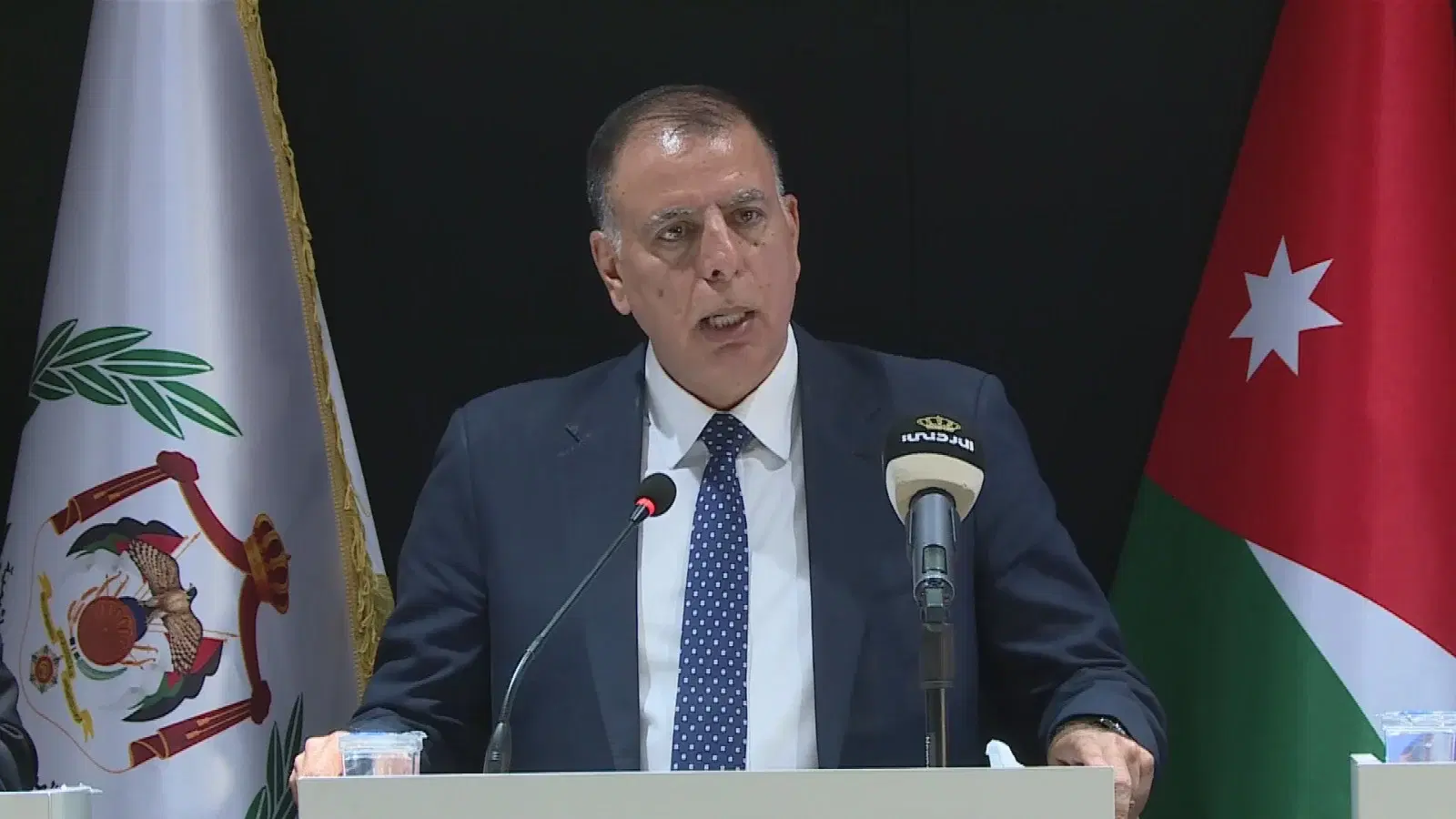
The National Action Committee at the Professional Unions Complex - Irbid organized a political seminar on Sunday evening entitled "Jordanian-Chinese Partnership and its Impact on Jordan", with the participation of former Minister of Industry, Trade and Supply Dr. Tariq Al-Hammouri and former Minister of Information and Chairman of the Board of Directors of the Jordanian Constitution Al-Fisal Al-Shoul, and moderated by Dr. Haneen Abbadeyat, in the presence of a number of those interested in political, economic and international relations.
The seminar shed light on the rapid transformations taking place in the international system, the changing balances of power and areas of influence and alliances, and the rise of China as a global economic and technological power, in addition to discussing the future of the Jordanian-Chinese partnership and its impact on Jordan, and the Kingdom's strategic relations with the United States, Europe and China.
Dr. Al-Hammouri said that Irbid is characterized by the size of the cultural and intellectual interaction, pointing out that the governorate is constantly witnessing events and seminars discussing various issues, which reflects the cultural and intellectual activity it is characterized by.
Al-Hammouri explained that the composition of power in the world is witnessing clear changes, indicating that the United States, China and India have become major economic powers, while Europe, especially Germany, enjoys economic and military weight, which has led to a change in the features of power in the world and the reshaping of the nature of international relations and alliances.
He pointed out that the ongoing transformations are not limited to the economic aspect, but extend to areas of influence, projects and alliances, pointing to the Indian-Chinese competition, the competition for projects in the region, and the formation of new alliances linked to political, economic and strategic interests.
Al-Hammouri touched on the projects and regional movements taking place in the region, referring to the Turkish project, the Israeli project for expansion, Iranian expansion, and the accompanying change in areas of influence and the repositioning of powers and alliances.
He confirmed that economic interests have become a fundamental factor in international relations, and that major powers are working to build arrangements and alliances to protect their interests, pointing to the overlap of interests between the United States and China, despite the great competition between them at the international level.
Regarding Jordan, Al-Hammouri confirmed that the Kingdom enjoys good relations and friendships with various countries around the world, stressing the need to look at the strengths and weaknesses and strengthen relations with allies and partners within the framework of strategic relations that serve Jordanian interests.
Al-Hammouri said that China is becoming more concerned with the region, and that Jordan must strengthen its relations with it and take advantage of the opportunities it provides, stressing that strengthening the partnership with China does not mean canceling existing alliances and relations with other parties, but rather falls within the framework of diversifying partnerships to serve Jordanian interests.
He said that China has become an economic partner for Jordan, and that developing the relationship with it can open new horizons for the national economy, pointing out that the development of Jordanian-Chinese relations can gradually reflect on the economic aspect without affecting Jordan's relationship with the United States.
Al-Hammouri addressed the Chinese position on the Palestinian issue, pointing out that China supports the two-state solution, the establishment of a Palestinian state, and Jerusalem as its capital, as well as its positions in the Security Council related to the ceasefire, confirming that China affirmed in its meetings with the Jordanian side the Jordanian constants and the Hashemite custodianship.
For his part, Al-Shoul confirmed that Jordan historically enjoys many advantages, foremost of which are stability, security and relations with various countries around the world, indicating that these elements formed a basic pillar in the Kingdom's ability to deal with regional and international changes.
Al-Shoul addressed China's journey and its transformation into a global power, pointing out that China went through difficult historical and economic stages before starting the major transformation phase in 1978, and gradually transitioning to building a strong economy and a wide technological presence.
He pointed out that China has gone through crises and famines in its recent history that left a large number of victims, before starting the economic transformation phase that contributed to its transfer to an advanced global position, confirming that China has become today an economic and technological power that the world has never seen at this size, and has wide international alliances and relations.
Al-Shoul said that China's position on the Palestinian issue coincides with the Jordanian position, pointing out that China has become an influential power in the international economy, technology and politics, and its rise has become a source of concern for some countries around the world.
He explained that one of the points that can be considered in the relationship with China is that, according to his vision, it does not have ambitions for direct intervention in the affairs of countries around the world, which can be one of the important factors when considering the nature of the partnership with it.
Al-Shoul said that China, after the Russian-Ukrainian war, the Gaza war and the war that the region witnessed with Iran, was one of the most benefiting countries at the global and political levels, in light of the transformations taking place in international relations and the repositioning, confirming that Jordan can benefit from its relations with China in light of these changes.
He pointed out that there is a clear rapprochement between the Chinese and Jordanian positions towards the Palestinian issue, which constitutes an important basis for strengthening relations between the two countries, pointing to the importance of His Majesty King Abdullah II's recent visit to China and his meeting with the Chinese President, and what the visit carried of an affirmation of the importance of developing relations and partnership between the two countries.
Al-Shoul explained that the King's visit to China included visiting a number of factories and major industrial cities, which provides a real opportunity for Jordan to benefit from the Chinese experience and develop relations between the two countries on various levels, especially in the economic, industrial, technological and investment fields.
Regarding Jordanian-Chinese relations, Al-Shoul said that there is an existing partnership between the two countries, stressing the need to develop it and expand its fields to achieve the interests of the Kingdom and enhance its economic benefit.
Al-Shoul emphasized that Jordan has strategic partnerships with the United States, Europe and China, and that the Kingdom is capable of building balanced relations with various international powers, in a way that serves its interests and preserves its political and economic options.
He stressed that Jordan, despite the devastation and turmoil surrounding it, has remained steadfast and stable through the efforts of King Abdullah II, confirming that Jordanian stability represents a basic base for preserving the Kingdom's status, international relations and strengthening partnerships with various powers.
The seminar witnessed a wide discussion about the future of Jordanian-Chinese relations, China's economic and technological rise, transformations in the international system, changes in alliances and areas of influence, in addition to opportunities to benefit from new partnerships while maintaining existing strategic relations.
The interventions emphasized that Jordan is moving in a highly complex regional and international environment, and that diversifying partnerships and expanding economic and political relations with international powers, along with maintaining stability and national constants, constitutes an important path in dealing with the rapid transformations in the global power map.
For her part, Dr. Haneen Abbadeyat confirmed that the seminar's topic opens a wide space for discussion on a number of political, economic and strategic issues, in light of a world witnessing rapid transformations and reshaping of relations, alliances and centers of power.
She said that these transformations call for an accurate reading of Jordan's position in international changes, and taking advantage of available opportunities in a way that serves national interests, especially in light of the rise of new economic and political powers and the changing nature of international relations and alliances.