31 film projects receive support from the Jordan Film Fund
Amman4 min read
Share
The Royal Film Commission - Jordan announced support for 31 film projects as part of the 11th cycle of the "Jordan Film Fund" for 2026, marking the highest number of projects supported by the fund in a single cycle since its establishment in 2011, with a 24 percent increase compared to the previous cycle.
The announcement came after an independent jury comprising a select group of cinematic experts from Jordan and around the world reviewed the shortlist of 41 film projects across various categories and recommended supporting the selected projects.
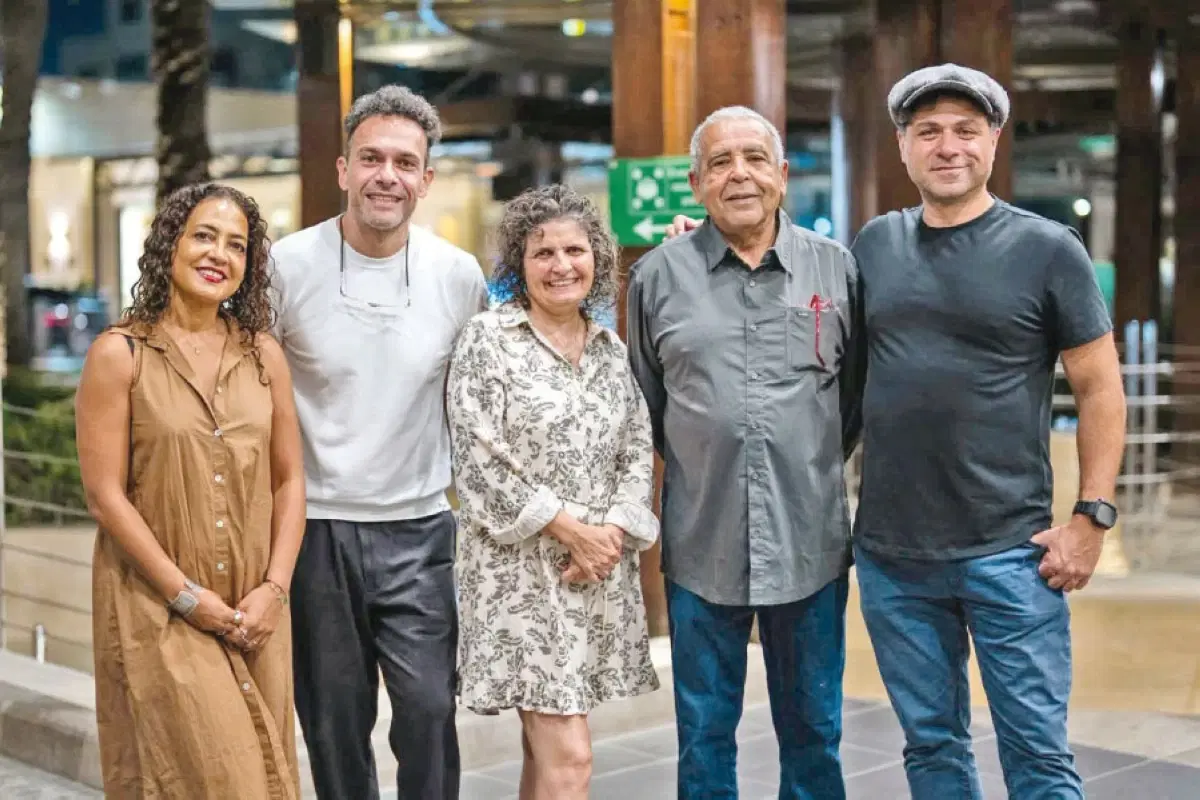
The jury included Jordanian writer and director Amin Matalqa, Mozambican producer, film expert, and consultant Pedro Pimenta, Moroccan producer Lamia Chraibi, Lebanese producer Sabine Sidawi, and Egyptian writer, director, and producer Tamer El Said.
The jury emphasized that the submitted projects demonstrated an outstanding technical and creative level, along with a diversity in subjects, approaches, and cinematic styles, noting that the selection process was challenging given the close scoring of a large number of projects and their promising potential.
The jury also pointed to the importance of several projects that bring together filmmakers, artists, and creators from various artistic fields, considering that these partnerships open the door to new visions and creative potentials that will enrich the Jordanian cinematic landscape.
Mohannad Al-Bakri, Managing Director of the Royal Film Commission - Jordan, stated that supporting 31 projects this year—the highest number since the fund's inception—reflects the continuous development of the film industry in Jordan and the fund's commitment to expanding the base of beneficiaries, noting that the support reaches 36 new beneficiaries this year.
He added that the commission continues to support Arab cinema, promote regional cooperation, and consolidate Jordan's position as a destination for film production, thereby providing opportunities for local crews, talents, and cinematic services, and supporting diverse cinematic voices and stories to reach audiences locally, regionally, and internationally.
The supported projects were distributed across a number of categories, including development, production, post-production, marketing, and distribution grants, alongside feature documentary and narrative film projects, short narrative, animation, and experimental films, as well as co-production projects with Arab countries.
Development grants included three feature documentary projects: "Rafeeq" by Ahmad Al-Zoubi and Zaid Laham, "May All Beings Be Happy" by Dalia Al-Nimer and Dina Naser, and "Haya" by Kholoud Al-Maqadmeh and Hadeel Abu Shqeir.
In the feature narrative film category, the projects "Everything About Khalil", "Umm Sulaiman", and "Nearsighted" received development grants, while the project "Abbas's Law" received a post-production grant in the feature documentary category, and the project "Mafraka" received a post-production grant in the feature narrative category.
Production grants for feature documentaries also included the projects "Jerusalem Diaries", "On the Margin", "Under the Air", and "No Time for Grief", while the commission supported three feature narrative projects to be filmed in Jordan: "6 to 1", "Dead Scent", and "Women's Gratitude".
Within the framework of co-productions for Arab feature narrative films, the supported projects included "Shentian" (a joint Jordanian-Palestinian production), "Tigris" (a joint Jordanian-Iraqi production), and "The Sacred Herb" (a joint Jordanian-Iraqi production).
The film "Owl" received the marketing and distribution grant for Jordanian feature narrative films, while production grants for short narrative films included nine projects: "Gaza Olive", "The Trace", "The Girl Who Screamed: Bulldozer", "Light Guest", "Remontada", "Red Night", "Pneumonia With You", "Ishaq's Workshop", and "Nail".
The commission also supported two projects in the short animation category: "A Letter to a Flamingo" and "Job Interview", in addition to the short experimental film project "Without Any Breath".
The Jordan Film Fund, established in 2011, comes within the framework of the Royal Film Commission's efforts aimed at developing a Jordanian cinema industry capable of competing regionally and internationally, supporting filmmakers, and providing opportunities to develop and produce diverse cinematic works.