Abu Al-Kheir: The 1980s trend is a soft psychological protest against the rhythm of modern life
Shahin: We are facing a phenomenon that can be called «digital contagion engineering»
Follow Al Rai

Abu Al-Kheir: The 1980s trend is a soft psychological protest against the rhythm of modern life
Shahin: We are facing a phenomenon that can be called «digital contagion engineering»
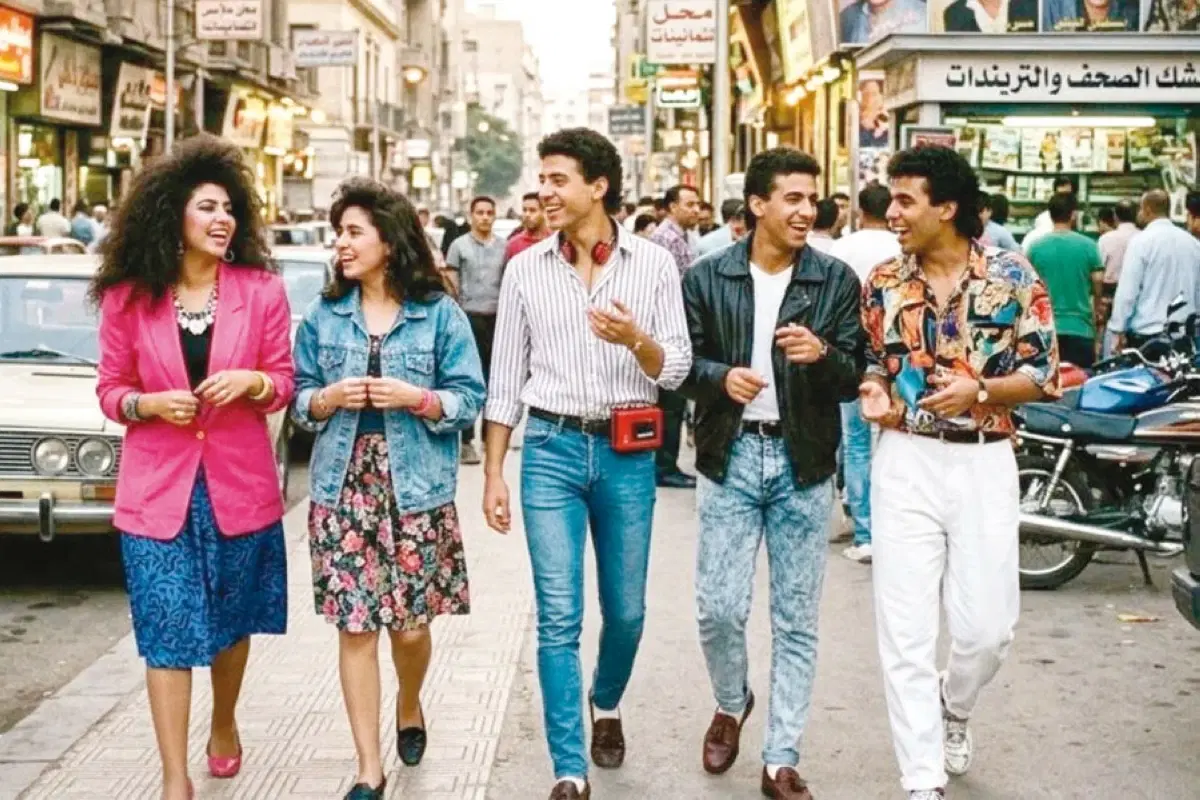
As soon as you browse social media platforms, images of people reliving the «1980s» in their own way unfold before you; modern pictures with the features of that era, from hairstyles and flamboyant clothing to phrases and songs that bring back memories of a bygone time. In contrast, others share real pictures they took in that decade, accompanied by heartfelt words and memories that are still present.
This wide interaction with an era that passed more than four decades ago raises a question that goes beyond the mere spread of a new trend: Why the 1980s specifically? And are we facing nostalgia for the past, or a search for something we miss in our present? In light of artificial intelligence's ability to reshape images and memories, have these technologies contributed to reviving nostalgia, or have they become part of the trend industry itself and the direction of public attention?
For her part, Dr. Fida Abu Al-Kheir, Associate Professor of Clinical Psychology at Jordan University of Science and Technology, believes that the question regarding the 1980s trend perhaps should not be «Why do we miss the 1980s?», but rather: «What is missing from our present that we have come to beautify the past in this way?».
Abu Al-Kheir explains in a statement to Alrai that memory in psychology is «not a neutral recording of events», as humans reconstruct the past and may retain positive feelings and images more than disturbing details, a phenomenon associated with what is known as «rosy retrospection», which is the tendency to see the past as more bright than it actually was.
However, what is striking about the 1980s trend, according to Abu Al-Kheir, is that some of those attracted to it never even lived through that era, which raises a deeper question: What are they nostalgic for?
She says that we may be facing here what is sometimes called «nostalgia for a time we did not live through», where a person creates in their imagination a psychological meaning for a phase they did not personally experience, rather than recalling a real memory from it.
She adds: «We do not necessarily miss cassettes, blurred pictures, and old clothes, but perhaps we miss what these things symbolize in our minds: a slower life, less distracted attention, less ostentatious relationships, greater privacy, and a world where humans were not required to be present, available, and comparing themselves to others all day long».
Abu Al-Kheir believes that nostalgia can be a form of emotional regulation, because it gives a person a sense of continuity, warmth, and meaning when the present seems fast or unstable. However, nostalgia can turn, according to her, into a form of psychological avoidance when we are not content with enjoying the past, but begin using it to constantly condemn the present through phrases like «Back in the day people were more honest», «Back in the day life was simpler», and «Back in the day we were happier».
She points out that the past itself was full of fear, loss, pressure, and problems, but humans do not recall it entirely, rather recalling «the version their minds can tolerate».
Based on that, Abu Al-Kheir believes that the 1980s trend may be, at least partially, «a soft psychological protest against the rhythm of modern life».
On the other hand, Dr. Rami Shahin, Chairman of the Global Artificial Intelligence Award, believes that explaining the rise of past trends, including the «1980s» trend, as merely a preference by algorithms for short-form content, overlooks a deeper transformation happening in content creation and its spread.
Shahin says in a statement to $ that we are facing a new phenomenon that can be called «digital contagion engineering», explaining that artificial intelligence has not only made content production faster, but has also enabled the ability to «manufacture the probability of virality» as well.
He explains: «Imagine I want to launch a trend; instead of making one video and waiting for my luck, I can use artificial intelligence to create within hours 500 versions of the same idea: with a different face, different first two seconds, different music, a different sentence, varying levels of provocation, and even different dialects».
He continues: «Then I publish a small group of them, and monitor which version achieves the highest rates of viewer retention, re-watching, sharing, and comment speed. After that, I kill 490 versions and double the production of the ten versions that succeeded».
Shahin points out that the audience itself has become part of the content development and selection process, saying: «We use the audience as an environment for content selection, every version is a mutation, the platform is the selection environment, interaction is the criterion for success, and the winning version multiplies».
According to Shahin, the trend has thus become close to the concept of «natural selection», but at machine speed, following a path starting from the idea, then generating multiple versions via artificial intelligence, testing them on a limited scale, then the algorithm selecting the most successful versions, reproducing and developing them, leading to the dominance of the most viral version.
He adds that it is not limited to form, as artificial intelligence can target the psychological motives behind sharing; people, according to Shahin, «do not share something just because it is beautiful, but what makes them need to tell others: watch this».
Shahin considers this short phrase to represent the essence of viral spread, noting that viral content often includes one or more triggers, such as a surprise that breaks expectations, an information gap that makes the brain want to know the end, an element that touches identity, a disagreement that prompts commenting, or a simple template that others can mimic and reproduce.
He warns of an upcoming shift with what he calls «independent trends», where an AI agent can monitor what is happening, discover micro-trends, generate multiple ideas, test them, then adjust content and republish the most successful versions.
He concludes that the competitive advantage in the future will not be in producing the best video alone, but in the ability to conduct the highest number of experiments on audience attention and learn from them before others.
He says: «Some trends of the AI era look as if they appeared suddenly and from everywhere at the same time; because what you see is not necessarily a single idea that became widespread, you might be facing an idea that learned how to become widespread».
Between the nostalgia that Abu Al-Kheir sees as a search for feelings we miss in the present, and the spread that Shahin links to the ability of artificial intelligence to test and develop content, the 1980s trend seems to stand at the intersection of human and technology; we do not recreate the past as it was, but rather reimagine it in the way we need today, while algorithms turn this individual nostalgia into a cross-platform collective phenomenon.
Know more about this story?Send us a tip
Ask about this report — answers stay grounded in its text.