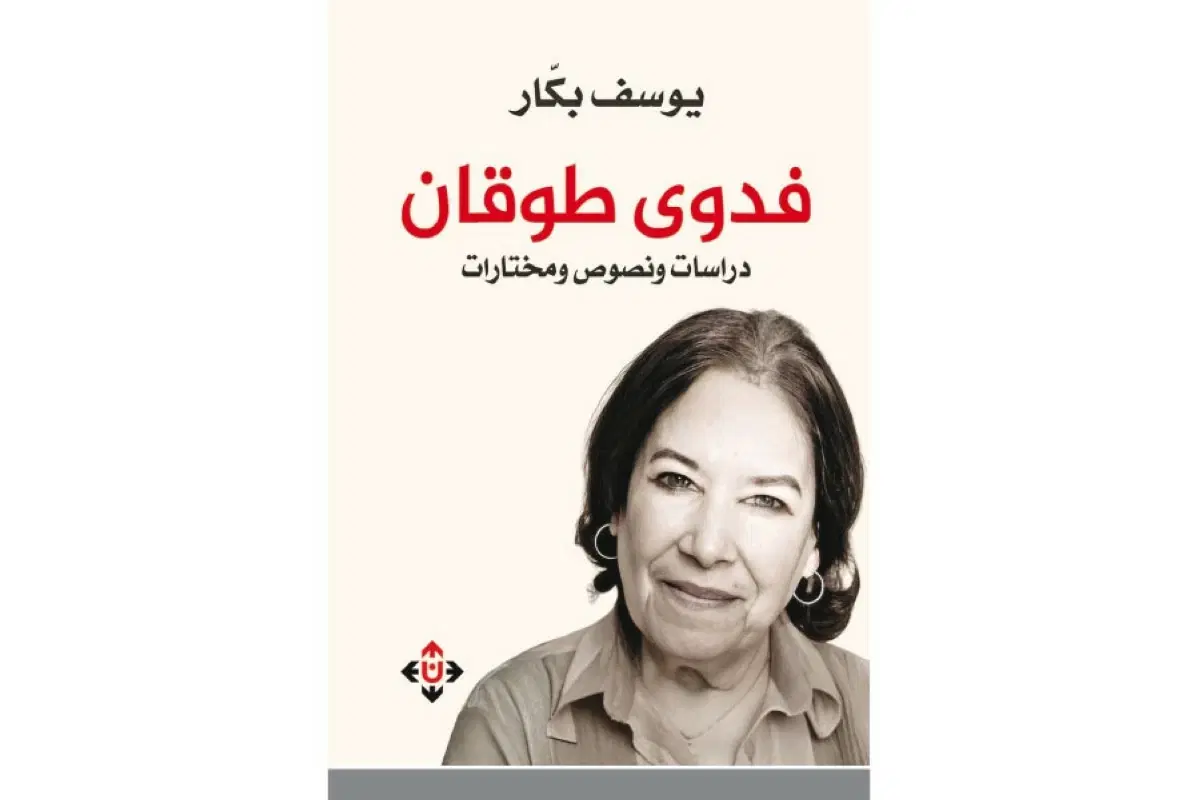
Bakkar begins the book with an introduction outlining the most prominent milestones in the poet's life, from her birth in Nablus in 1917 until her death there in 2003, highlighting the role played by her brother, the poet Ibrahim Touqan, in nurturing her literary talents during her formative years.
The author notes that his interest in Fadwa Touqan and her poetry spans nearly four decades, and that this interest deepened after completing his previous book on her creative formative stage.
The book is divided into three sections: the first includes five studies addressing milestones and issues in her poetic experience, including two readings of her collections "In Front of the Closed Door" and "The Night and the Knights," a study on her presence in resistance literature, another on the phenomenon of "artistic return" in her poetry, and a study titled "Fadwa and Jerusalem."
The second section features poetic and prose texts by the poet, including the poems "The Cannon's Speech" and "Mercy," dating back to 1947, alongside poems written in later stages such as "The Big Question" (1998), "This Planet Earth" (2001), and "Desolation" (2003).
This same section includes a number of prose texts written by Touqan after the publication of the two parts of her autobiography, "A Mountainous Journey, A Difficult Journey" and "The Most Difficult Journey," as well as two speeches—one delivered at the opening of the "Palestinian House of Poetry" in 1998 and the other during the Jerash Festival for Culture and Arts in 2001.
In the third section, Bakkar dedicates about twenty texts of what he describes as "forgotten poetry," selected from various stages of Touqan's experience, starting from the period before the publication of "Alone with Days," through her subsequent diwans, and up to "The Last Melody."
Among the selections are "Yearning for Ibrahim," "About Me and the Torturers!," "My Father," and "My Heart Yearned for You." The author believes these texts allow readers to trace aspects of the poet's life and the evolution of her experience in theme and artistic structure.
The book also includes a testimony about Fadwa Touqan written by her sister Hanan Touqan, and a handwritten letter from the poet addressed to the author, adding a documentary dimension to the critical and literary aspect that illuminates facets of her biography and creative journey.