Yemen: Violent battles in Taiz and government forces advance in Al-Jawf
Anadolu7 min read
Share
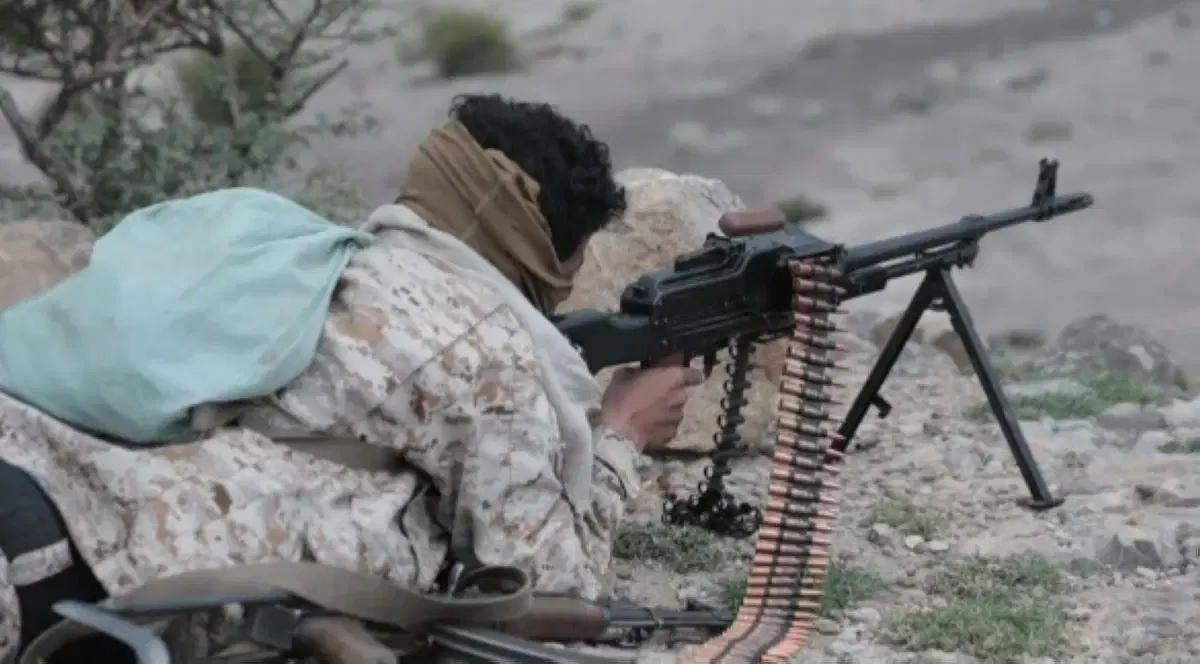
Yemen witnessed a military and field escalation on several fronts on Saturday, with the army announcing the completion of its control over a strategic mountain range in Al-Jawf Governorate following battles with the Houthi group, coinciding with the outbreak of clashes on the Al-Aqrod front in Taiz Governorate.
In the latest field developments, a field commander in the Yemeni army announced the completion of control over the Huwaishian mountain range east of Al-Hazm city, the center of Al-Jawf Governorate (north), following battles with the Houthi group.
The field commander in the army in Al-Jawf Governorate, Colonel Rabie Al-Qurashi, said in statements to Anadolu Agency that army forces were able to complete their control over the mountain range after confrontations with the group's militants.
He added that the field advance was supported by warplanes, which he said destroyed dozens of Houthi vehicles, noting that the military operation is still ongoing.
Al-Qurashi explained that the importance of these heights lies in their strategic location, as they serve as the first line of defense for the city of Al-Hazm, the center of Al-Jawf Governorate, which remains under Houthi control.
According to local Yemeni media, controlling those heights would enable government forces to cut off Houthi supply lines in the governorate, in addition to overseeing important locations for the group near the city of Al-Hazm.
Government forces had engaged in clashes with the Houthis in the area on Friday and managed to take control of parts of the mountain range before completing their control over it on Saturday, according to an Anadolu reporter.
Al-Jawf is one of the strategically important governorates in Yemen, due to its land border with Saudi Arabia and its proximity to the governorates of Saada, Amran, and Sana'a, which are under Houthi control, as well as its borders with the governorates of Ma'rib and Hadhramaut.
Military control in the governorate is divided between government forces and the Houthis, as the group controls the city of Al-Hazm and other areas, while government forces exert their influence over parts of the governorate.
In Taiz Governorate (southwest), government forces announced on Saturday the killing and wounding of dozens of Houthis while thwarting a large-scale attack launched by the group on their positions on the Al-Aqrod front in the south of the governorate, which lasted more than nine hours.
The media center of the Al-Aqrod front (affiliated with the Yemeni army) said in a statement that "the forces were able to repel the Houthi attack that targeted several field axes."
It added that "after the attack failed, the group resorted to indiscriminate artillery and tank shelling that targeted residential villages in the area, causing damage to citizens' homes and casualties (it did not specify the number)."
It continued that "field sources spotted military vehicles belonging to the Houthis passing through the area loaded with dozens of dead and wounded from the group's elements who fell during the clashes."
There was no immediate comment from the Houthi group regarding what was reported by the government forces.
In contrast, the military spokesman for the Houthi group, Yahya Saree, announced on Saturday that the group monitored 66 airstrikes and missile attacks in several Yemeni governorates during the past hours.
Saree claimed, in a statement, that the raids "targeted areas in Sana'a and the governorates of Al-Jawf, Taiz, Saada, Hajjah, and Lahj, and resulted in dead and wounded, including women and children."
He mentioned that the airstrikes were carried out by "F-15" and "Typhoon" aircraft, which took off from the Saudi bases of Khamis Mushait and Taif, while he said the missile attacks were launched from the Najran region in the southwest of the Kingdom.
He added that the total number of airstrikes and missile attacks since the start of the escalation reached 3,755 attacks.
There was no immediate Saudi comment regarding these accusations.
In a related context, the Siege Affairs Office of the local authority in Taiz Governorate announced on Saturday that a child was wounded by shrapnel from a mortar shell fired by the Houthi group, which brings the total number of victims to one dead and 6 injured during the day.
The office said, in a statement published on its Facebook page, that the child Huthaifa Mohammed Abdo Yahya (two years old) was wounded by shrapnel in the head following Houthi shelling that targeted his home in the Najd Al-Arous area in the south of the governorate.
The office had announced on Friday that a woman was killed and 5 other civilians, including a child, were wounded as a result of shelling and sniping carried out by the Houthi group in various areas of the governorate.
There was no comment from the Houthi group regarding what the government office stated.
Taiz has been witnessing continuous clashes for weeks between government forces and the Houthis on several fronts, amid ongoing government accusations that the group is targeting residential neighborhoods, which has caused civilian deaths and injuries.
Politically, Yemeni Foreign Minister Afrah Al-Zouba discussed on Saturday with her Egyptian counterpart Badr Abdelatty the developments of the situation in Yemen and the region, and ways to enhance coordination and consultation regarding common challenges.
This came during a meeting held by the two ministers on the sidelines of the "Manama Dialogue 2026" forum, held in the Kingdom of Bahrain, according to the official Yemeni News Agency "Saba".
According to the agency, "the two sides exchanged views on developments in the Red Sea, and emphasized the importance of preserving the security of maritime navigation in international corridors, and intensifying regional and international efforts to contain tensions in a way that preserves the security and stability of the region."
During the meeting, Al-Zouba reviewed "the repercussions of the military escalation of the terrorist Houthi militias supported by the Iranian regime, including the continued siege of the city of Taiz and the targeting of airports in Yemen and Saudi Arabia."
She pointed to "the danger of these attacks on civilians, civil aviation, and regional security."
She stressed "the necessity of ending the siege imposed on Taiz, and ensuring freedom of movement and access to basic needs and humanitarian aid."
The Houthi group closes most of the roads leading to areas under the control of the government in Taiz Governorate, according to human rights and humanitarian organizations in Yemen.
These organizations accuse the Houthis of imposing a siege on the city of Taiz, which is under government control, since the outbreak of the Yemeni conflict in 2015, and preventing humanitarian relief convoys from reaching the residents and those affected by the war, which the group denies.
For his part, Abdelatty reiterated during the meeting "his country's firm position supporting the unity, sovereignty, and territorial integrity of Yemen, and supporting efforts aimed at restoring security and stability, in a way that meets the aspirations of the Yemeni people and preserves the state's capabilities," according to the agency.
These developments are part of a military escalation that began in July 2026, which is considered the widest since the relative calm that Yemen witnessed after the truce that began in April 2022.
Since October 5, the "Dawn of Yemen" military operation has been ongoing, which the Chairman of the Presidential Leadership Council, Rashad Al-Alimi, said aims to restore state institutions from the Houthis and take control of the capital, Sana'a.
Yemen has been witnessing a war since the Houthis took control of the capital, Sana'a, and several governorates in September 2014, before an Arab coalition led by Saudi Arabia intervened in March 2015, in support of the internationally recognized Yemeni government.