Yemen: Houthi escalation extends from Taiz and Marib to Aden
Amman8 min read
Share
Yemen witnessed a remarkable military escalation on Thursday as the scope of confrontations expanded from traditional battlefronts in the governorates of Taiz and Marib to the interim capital, Aden, where the Ma'ashiq Presidential Palace was hit by a missile attack, the first since the military escalation resumed in early July.
This comes at a time when the United Nations has warned of the worsening humanitarian repercussions of the conflict, announcing the displacement of more than 232,000 people since the return of hostilities, amid ongoing battles, shelling, and growing fears of the conflict widening and its impact on civilians in several parts of the country.
Meanwhile, the Yemeni government called on the European Union to play a more effective role in curbing the repercussions of the ongoing military escalation.
Aden Attack
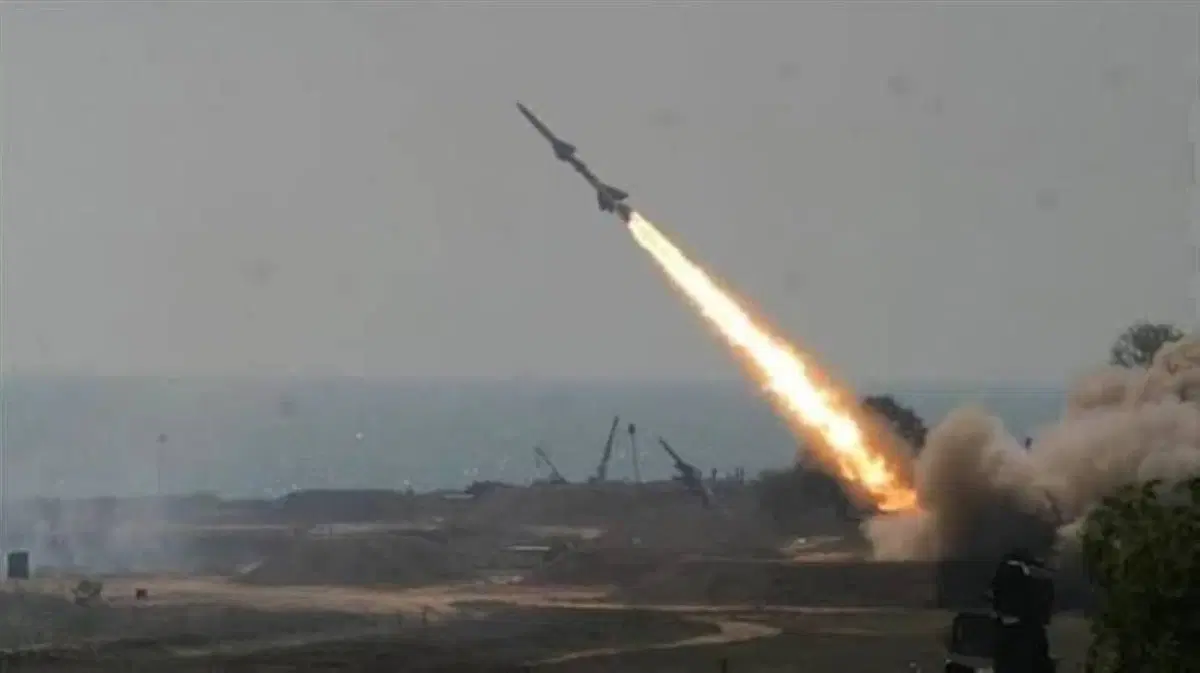
On Thursday afternoon, the Houthi group targeted the Ma'ashiq Presidential Palace in the Sirah district of Aden with a number of ballistic missiles, according to a government source and eyewitnesses.
The government source, who requested anonymity, told Anadolu Agency that the Houthi group targeted the Ma'ashiq Presidential Palace with 5 ballistic missiles, adding that a number of Yemeni government members were inside the palace at the time of the attack.
The source indicated that the attack resulted in the death of 3 soldiers from the Ma'ashiq Presidential Palace guard in an initial toll, while Yemeni Minister of Information Muammar Al-Eryani said in a post on the American platform "X" that "Prime Minister Ahmed Awad bin Mubarak and members of the government are safe."
In contrast, the Houthi group said in a brief statement published by its "Al-Masirah" channel website that its forces targeted a war operations headquarters in the Ma'ashiq Palace, which it claimed was run by Saudi officers, in addition to weapons depots belonging to them, according to what the "Saba" news agency in its version affiliated with the group reported, citing a military source.
This targeting is considered the first of its kind that the palace has been subjected to since the resumption of confrontations between the Houthi group and the internationally recognized Yemeni government last July.
Government forces announce breaking Houthi attacks in Taiz
In Taiz Governorate (southwest), government forces announced that they had thwarted large-scale attacks launched by the Houthi group on a number of fronts, with the support of the Popular Resistance and warplanes.
The Armed Forces Media Center said in a statement that the army forces forced the attackers to retreat after inflicting human and material losses on them, noting that the fronts west of Taiz city and south of the governorate witnessed the most violent confrontations over the past hours.
It added that airstrikes targeted Houthi gatherings, military convoys, and positioning sites, resulting, according to the statement, in dozens of deaths and injuries and the destruction and disabling of a number of military vehicles.
Earlier, the Yemeni army announced that it had thwarted a Houthi attack on the strategic Jabal Han located west of Taiz city.
The Deputy Head of the Moral Guidance Division of the Taiz Military Axis, Colonel Abdul Basit Al-Bahr, said that the army forces repelled the attack after hours of violent confrontations, accusing the Houthis of shelling Jabal Han, the western front, and the surrounding residential neighborhoods with heavy artillery and shells.
The military official did not provide a toll for the human or material losses resulting from the battles, while there was no immediate comment from the Houthi group.
Jabal Han holds great strategic importance as it overlooks the Al-Dhabab road, which is the vital artery connecting Taiz city to Lahj Governorate and from there to the interim capital, Aden, and it also overlooks a number of the city's western neighborhoods.
Ballistic missiles target Marib
In another field development, the Yemeni army announced that the Houthi group targeted the city of Marib with several ballistic missiles.
The Armed Forces Media Center said in a brief statement that "the terrorist Houthi militias are targeting the densely populated city of Marib with several ballistic missiles."
The statement did not provide additional details about the extent of the damage or the number of potential casualties, and there was no immediate comment from the Houthis.
Marib is considered one of the most prominent strongholds of the Yemeni government, and it houses the headquarters of the Ministry of Defense and the General Staff, in addition to the most important oil and gas fields in the country.
Accusations of widespread violations in Taiz
On the humanitarian front, the Yemeni Network for Rights and Freedoms, a non-governmental organization, announced that it had documented 219 violations in Taiz Governorate within 48 hours.
The network said that seven civilians were killed and nine others were injured in incidents that included the shelling of homes, landmine explosions, and run-over incidents by Houthi military vehicles.
It added that the group raided, searched, and looted more than 130 homes in the areas of Al-Turbah, Al-Shamayatayn, and Jabal Habashi, and also kidnapped and forcibly disappeared 26 people, including children, the elderly, and the sick, and transferred them to the governorates of Ibb and Dhamar.
It pointed out that Houthi forces fired about 377 projectiles towards Taiz city, which caused damage to 29 homes and 18 private vehicles and sparked a widespread state of fear among the residents.
The network also accused the group of continuing to impose a tight siege on the governorate and preventing the entry of food, petroleum products, and medicines, warning of the worsening humanitarian situation.
There was no comment from the Houthi group on what was stated in the human rights network's report.
Preparations to facilitate the entry of aid into Taiz
In parallel, the local authority in Taiz Governorate announced its readiness to provide all necessary facilities to ensure the arrival of humanitarian aid and basic supplies to the residents.
The official Yemeni News Agency "Saba" reported that the Emergency Committee in the governorate, headed by Governor Nabil Shamsan, discussed the repercussions of the siege on the supply situation and the stock of food, petroleum products, and domestic gas.
The committee welcomed the efforts of the International Committee of the Red Cross aimed at bringing supplies and basic materials into the city, including fuel shipments destined for Taiz that are currently in Lahj Governorate.
Governor Shamsan confirmed that the closure of roads represents the main obstacle to the flow of supplies, pointing to continued contacts with the International Committee of the Red Cross to facilitate the passage of aid and waiting for the Houthis' response regarding opening the roads and allowing them to enter.
The committee also stressed that all crossings under the control of the local authority are open to the movement of goods and aid, accusing the Houthis of continuing to close main roads and obstructing the arrival of basic needs.
United Nations: More than 232,000 people displaced
In an indicator of the widening humanitarian repercussions of the escalation, the United Nations High Commissioner for Refugees (UNHCR) announced that more than 232,000 Yemenis have been forced to leave their homes since the return of military operations last July.
The commission said in a statement that more than three-quarters of the displaced families from Taiz Governorate were displaced within the same governorate, calling for the protection of civilians and ensuring the arrival of humanitarian aid to those in need.
It confirmed that thousands of displaced families are in urgent need of support and basic aid in light of the deteriorating living conditions and the continuation of hostilities.
Government demands a more effective role from Europe
Politically, the Yemeni government demanded that the European Union take a firmer stance towards the Houthi group to curb the repercussions of the military escalation.
This came during a phone call between Yemeni Foreign Minister Afrah Al-Zouba and the European Union Ambassador to Yemen, Gabriel Munuera Viñals, according to a statement by the Ministry of Foreign Affairs.
The two sides discussed the military developments in Taiz Governorate and their security and humanitarian effects, in addition to their repercussions on international navigation and regional security.
Al-Zouba said that more than four million people in Taiz are directly affected by the ongoing attacks and the siege imposed on the city, warning of shortages of food, water, medicine, and fuel, and the worsening conditions of the displaced.
For his part, the ambassador affirmed the European Union's support for the Yemeni government and continued coordination with international and regional partners in order to alleviate the humanitarian crisis and strengthen stability efforts.
These developments are part of a military escalation that began last July, which is the broadest since the relative calm that Yemen witnessed thanks to a truce that began in April 2022.
Yemen has been witnessing a war since the Houthis took control of Sana'a and several governorates in September 2014, before an Arab coalition led by Saudi Arabia intervened in March 2015 in support of the Yemeni government.
The Houthis control most of the northern and western governorates, including Sana'a, Saada, Amran, and Dhamar in the north, Hodeidah in the west, Ibb in the southwest, and Al-Mahwit and Raymah in the northwest, and they exercise partial control in Hajjah, Al-Bayda, Marib, Al-Jawf, Al-Dhale'e, and Taiz.
In contrast, government forces and their allies control the interim capital, Aden, and the governorates of Al-Mahra, Hadramaut, Shabwa, and Abyan, and the majority of Lahj and Al-Dhale'e, and parts of Taiz, Marib, Al-Jawf, Hajjah, and Saada.