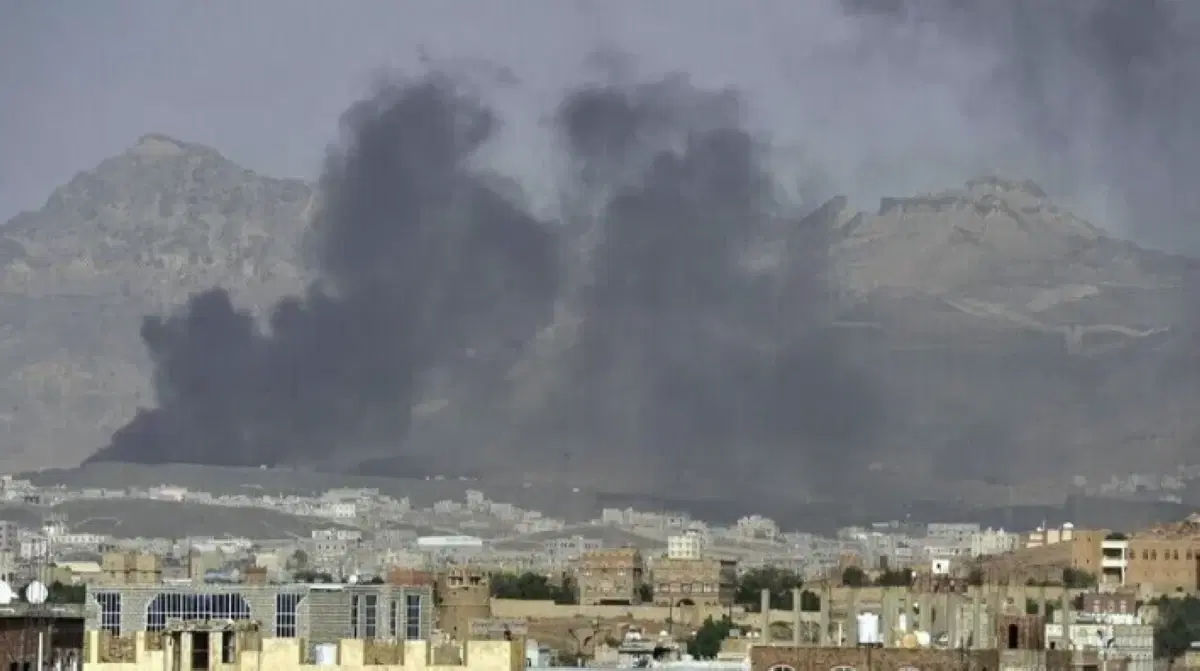
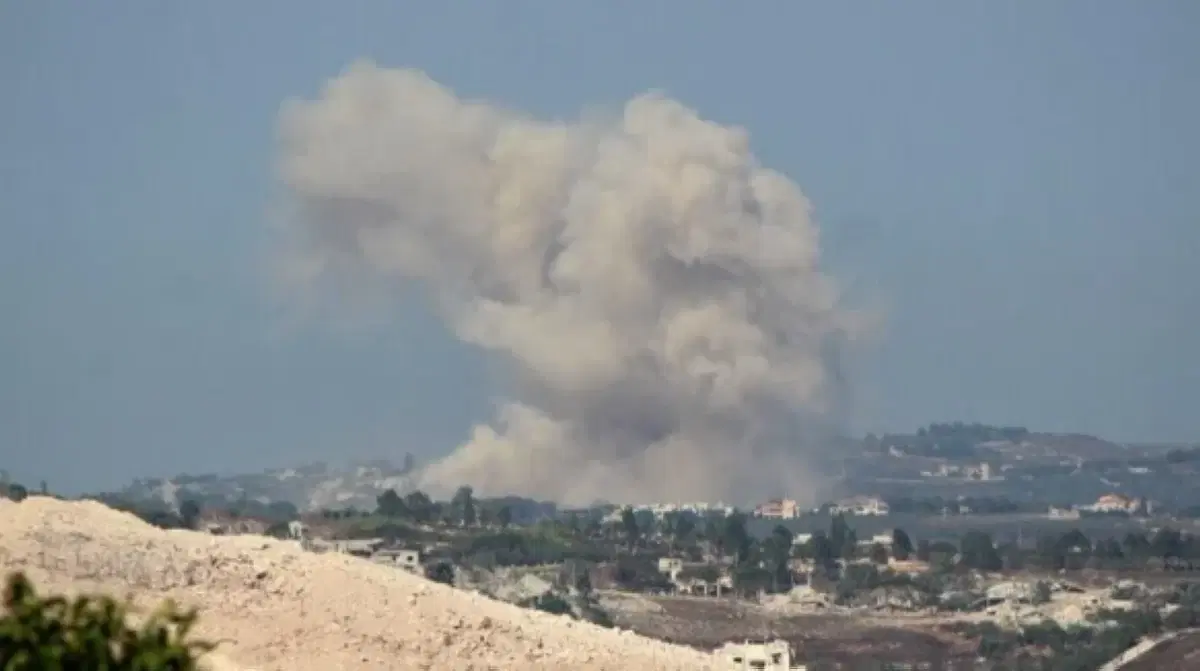
In the second days of 'Dawn of Yemen'.. Military operation in Taiz and the recapture of mountains in Marib
Anadolu6 min read
Share
The Yemeni government forces announced, on Tuesday, the launch of a military operation in Taiz province in the southwest of the country, and the recapture of mountain ranges and strategic sites in Marib in the center of the country, on the second day of the 'Dawn of Yemen' operation, while the United Nations announced the displacement of more than 28,000 people over 8 days due to the escalation.
In contrast, the Houthi group announced targeting what it said were Saudi forces' mobilizations in Al-Jawf and Marib, and spoke of its sites being subjected to 66 airstrikes in the past 24 hours.
On Monday, the President of the Yemeni Presidential Leadership Council, Rashad Al-Alimi, announced the launch of the 'Dawn of Yemen' operation, with the aim of'restoring state institutions, liberating the capital Sanaa, and ending the Houthi coup'.
On the same day, the government forces announced the recapture of the city of Al-Mukalla on the Red Sea, which was controlled by the Houthis since early September, and the strategic Bab al-Mandab area in the southwest of the country, amid Houthi denial.
These developments are part of a military escalation that began in July, the largest since the relative calm in Yemen thanks to a truce that began in April 2022.
The pace of fighting accelerated in September, when the Houthis took control of vital centers in the provinces of Al-Hudaydah and Taiz, including Al-Mukalla, reaching Mayun Island overlooking the Bab al-Mandab Strait.
Yemen has been at war since the Houthis took control of Sanaa and several provinces in September 2014, before the intervention of a Saudi-led Arab coalition in March 2015 in support of the government.
The government forces and their allies control the temporary capital of Aden in the south, the provinces of Al-Mahra and Hadhramaut in the east, Shabwa and Abyan in the south, most of the provinces of Lahj, Taiz, and Dali in the southwest of the country, parts of Marib in the center of the country, and the provinces of Al-Jawf, Hajjah, and Sa'dah in the north.
The government's 'Shield of the Homeland' forces announced, in a statement, the launch of a 'large-scale' military operation to liberate the Al-Wazi'iyah district in Taiz province, as part of the 'Dawn of Yemen' operation.
It said it had taken control of the strategic hills overlooking the Mansoura area, adding that the operation witnessed a 'mass exodus' of Houthi group elements.
In the same province, the Taiz Military Axis of the army announced, in a statement, that 'the armed forces and the popular resistance have liberated the mountains of Al-Manzhara, Al-Ashraf, and Dhiban in Hayfan in southern Taiz', without further details.
These mountains overlook vital areas in Hayfan district, including Al-A'bus, Al-Khazza, and Al-Hukum, and their control allows for fire superiority, surveillance, securing surrounding areas, and supply lines.
On Tuesday morning, the axis announced the killing of about 100 Houthi elements and the injury of 150 others, and the downing of 5 drones, during Monday's operations.
It explained that its forces, supported by the popular resistance, carried out 5 offensive operations on the first day of 'Dawn of Yemen', including the Al-Arba'in front north of Taiz city, Al-Aqroud in the south, Al-Anayn and Jabal Hubshi in the west, and Al-Birin on the outskirts of the Al-Kadha front.
It added that the operations also resulted in the destruction and disabling of 6 combat vehicles and a tank.
Taiz is a vital link between the northern and southern provinces of Yemen, overlooking the Bab al-Mandab Strait through the port of Al-Mukalla on the Red Sea, and is the largest province in the country by population, with about 12 percent of the total population.
In Marib, the army announced its advance on the southern front of the province and the recapture of mountain ranges and strategic sites from the Houthis, for the second consecutive day.
The media center of the armed forces, in a statement, quoted an unnamed military source, that the forces had recaptured large areas, most notably the mountains of 'Thamd', 'Al-Qayimah', and 'Al-Maqilaat', and the areas of Al-Qayimah and Al-Rasid, and the surrounding desert areas.
The source added that the battles resulted in the fall of dozens of Houthi elements, dead, wounded, and captured, the destruction of 3 machine guns and the disabling of combat vehicles, and the killing and injury of elements on board.
It pointed to the downing of a Houthi drone by the army's air defenses on the same front.
As of 19:30 (GMT), the Houthi group had not commented on the Taiz axis' announcement regarding the field developments in the province.
In contrast, Houthi military spokesman Yahya Saree said, in a Tuesday statement, that the group's forces had carried out dozens of strikes against what he described as 'Saudi enemy mobilizations' in the eastern province of Al-Jawf in northern Yemen.
He claimed that the strikes resulted in a large number of deaths, injuries, and the burning of vehicles, without providing specific figures.
He also announced the targeting of what he said were Saudi forces' mobilizations in eastern Raghwan in Marib province, claiming casualties and the burning of vehicles.
The available text did not include a comment from Saudi Arabia or the Saudi-led coalition supporting legitimacy in Yemen on these statements.
Saree also spoke of the Houthi group's sites in the provinces of Al-Jawf, Taiz, Marib, Al-Hudaydah, Hajjah, and Sa'dah being subjected to 66 airstrikes in the past 24 hours, bringing the total number of airstrikes since the escalation began, according to him, to 1,642 air and missile strikes.
Humanely, the United Nations' International Organization for Migration announced, on Tuesday, the displacement of more than 28,000 Yemenis over 8 days due to the military escalation.
It said, in a statement, that the displacement tracking matrix recorded between September 27 and October 3 the displacement of 21,798 people, representing 3,633 families, at least once, an increase of 26 percent compared to the previous week.
It added that 6,474 people, representing 1,079 families, were displaced on October 4 alone, bringing the number to more than 28,000 people over 8 days.
It explained that the violent fighting led to the displacement of more than 184,000 people between August 1 and October 4, most of them since the beginning of September.
The Executive Unit for the Management of Camps in Yemen estimates the number of displaced people since July to be about 198,000 people.