Yarmouk hosts a symposium on "Agriculture in the Face of Climate Change: Adaptation Challenges and Sustainability Opportunities"
Amman5 min read
Share
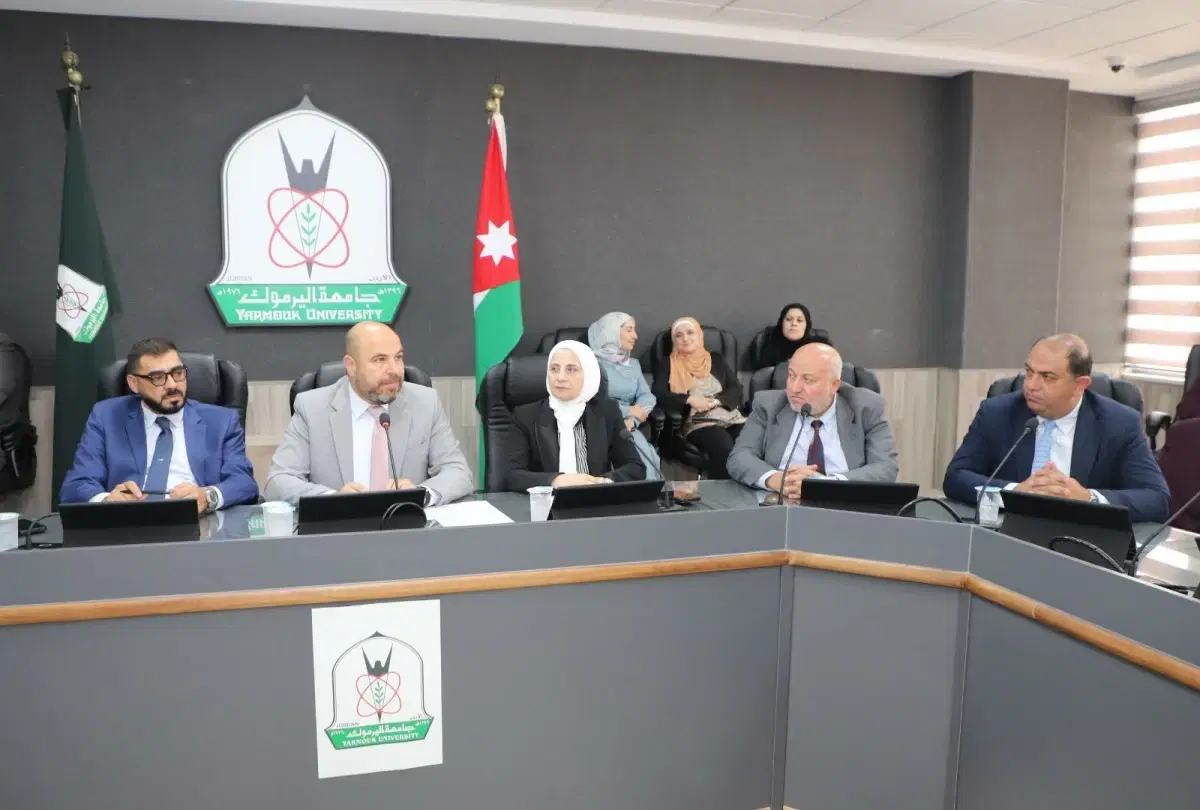
Yarmouk University President, Prof. Dr. Malak Al-Sharairi, patronized the opening of the symposium "Agriculture in the Face of Climate Change: Adaptation Challenges and Sustainability Opportunities," organized by the University's Center for Sustainable Development Studies in cooperation with the Irbid Governorate Environment Protection Directorate and the Irbid Environmental Flowers Association. The event saw the participation of parliamentarians, academics, specialists, and representatives from official institutions and the local community to discuss the impacts of climate change on the agricultural sector, ways to enhance its adaptive capacity, protect natural resources, and achieve sustainability.
In his opening remarks, Al-Sharairi emphasized that sustainability issues are linked to the various scientific and knowledge fields hosted by Yarmouk University, as a comprehensive university with scientific, health, and humanities disciplines. He pointed out that facing future challenges, primarily climate change, requires the integration of scientific disciplines, the consolidation of research and institutional efforts, and the development of innovative solutions based on specialized knowledge and expertise.
He added that climate change is no longer just an environmental issue, but a developmental, economic, and social challenge that affects water and food security, the sustainability of natural resources, and the livelihoods of farmers and local communities. He stressed the importance of strengthening partnerships between universities, national institutions, environmental bodies, local associations, and the public and private sectors, contributing to the utilization of scientific research to serve society and respond to its needs.
Al-Sharairi pointed out the importance of the symposium's deliberations leading to practical recommendations that support climate-smart agriculture, increase water use efficiency, encourage agricultural innovation and technology, and preserve natural resources, in addition to empowering farmers and involving youth and women in developing sustainable solutions and initiatives.
For her part, the Director of the Center for Sustainable Development Studies at the university, Prof. Dr. Hanan Malkawi, confirmed that climate change has become a reality whose effects are manifested in the decline of water resources, fluctuating rainfall, and rising temperatures. This imposes increasing challenges on the agricultural sector and water and food security, especially in Jordan, which suffers from limited water resources.
She stressed the importance of linking scientific research to the needs of society and strengthening cooperation between academic and official institutions, the agricultural sector, and civil society organizations, while involving youth and women in innovation and fieldwork, contributing to building a more resilient and sustainable agricultural sector.
For his part, the Director of the Irbid Governorate Environment Protection Directorate, Engineer Mustafa Al-Zyoud, emphasized that facing the effects of climate change requires an integrated approach based on knowledge-based planning, sustainable management of water and soil resources, aligning efforts with sectoral plans and programs, and enhancing cooperation between entities concerned with the environment, agriculture, water, academic institutions, and the local community.
He pointed out the importance of transforming expertise and scientific knowledge into practical measures that contribute to increasing water use efficiency, protecting agricultural lands, and enhancing farmers' ability to adapt to climatic changes, confirming that protecting the environment is a shared responsibility that requires the integration of roles to ensure the sustainability of natural resources and enhance the resilience of the agricultural sector.
In turn, the President of the Irbid Environmental Flowers Association, Engineer Ashraf Abu Khalil, emphasized the importance of supporting the Jordanian farmer and enhancing their role in protecting the environment and conserving natural resources, as they are a key partner in facing climate challenges and maintaining the sustainability of agricultural production.
He explained that the decline in rainfall, the increase in drought waves, and the degradation of agricultural lands require intensifying national and institutional efforts to provide applicable solutions, noting that cooperation between government and academic institutions and environmental associations allows for the exchange of expertise and the employment of scientific knowledge in the service of farmers.
The symposium included two scientific sessions. The first session addressed a group of specialized working papers, as Engineer Shorouq Bani Atta from the Irbid Environment Directorate presented a paper on "Policies, Legislation, and Climate Finance: The National Climate Change Strategy and its Relationship to the Agricultural Sector."
MP Dr. Hamzah Al-Hawamdeh also presented a paper titled "Sectoral Interconnectivity and Climate Action to Enhance the Kingdom's Ability to Adapt to the Impact of Climate Change and Achieve More Sustainable Management of National Resources," while the Dean of the Faculty of Arts, Prof. Dr. Khaled Al-Hazaymeh, presented a paper titled "Technology, Innovation, and Scientific Research: Precision Agriculture and Remote Sensing in Water Stress Management."
In the second session of the symposium, Prof. Dr. Ziad Al-Ghazawi from the Jordan University of Science and Technology presented a paper titled: "Integrated Water Resources Management and its Role in Agricultural Sustainability and Adaptation to the Impact of Climate Change," while the President of the Human and Environmental Development Association, Dr. Ahmad Al-Shuraideh, presented a paper that addressed "Climate Change Adaptation and Disaster Risk Reduction in Food Value Chains: Ancient Olive Trees in Jordan as a Model," while the Director of the EKSAB Center for Sustainable Development, Engineer Mazen Abu Qamar, presented a paper titled "Adaptation Strategies in the Agricultural Sector - Climate-Smart Agriculture."
At the end of the symposium, an extensive discussion took place regarding the ideas and viewpoints included in the two sessions concerning change and sustainability opportunities.