Suleiman: Protecting the environment is a shared national responsibility
Amman5 min read
Share
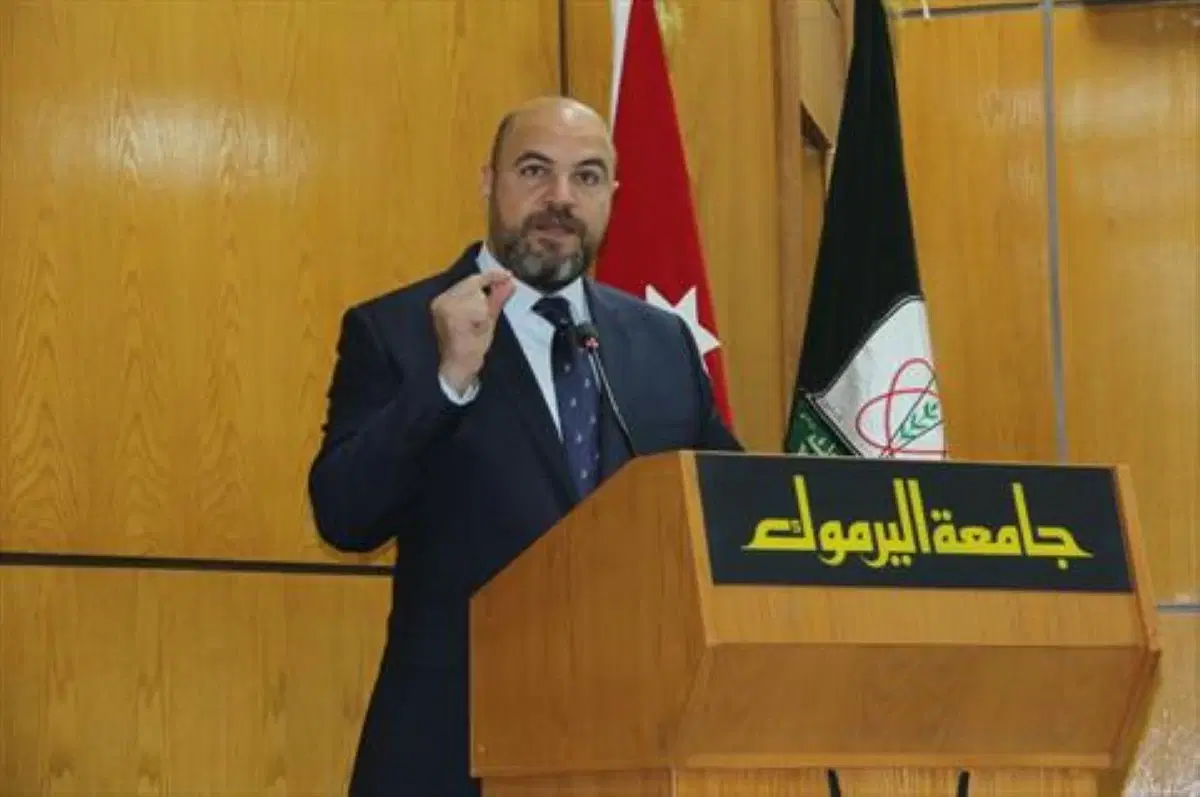
Minister of Environment Dr. Ayman Suleiman, in the presence of Yarmouk University President Dr. Malik Al-Sharairi, sponsored the opening of the environmental conference titled "Sustainable Solid Waste Management: From Challenge to Investment," organized by the Faculty of Science in cooperation with the Rawabi Hawran Association for Environment and Sustainable Development.
In his opening remarks, Suleiman emphasized that protecting the environment and maintaining cleanliness are a shared national responsibility, contributing to the preservation of natural resources, the improvement of quality of life, and the consolidation of positive environmental practices in a way that achieves sustainable development goals.
He added that universities play a pivotal role in supporting national trends regarding environmental protection through scientific research, innovation, the preparation of specialized competencies, the development of technical solutions, and linking academic knowledge to the needs of society and the labor market. He expressed his pride in the role of Yarmouk University and its academic and research expertise in supporting national efforts to protect the environment, looking forward to strengthening cooperation with it in the fields of environmental studies, developing practical solutions for waste management, encouraging green entrepreneurial projects, and involving students in voluntary and awareness-raising initiatives that promote responsible environmental behavior.
Suleiman continued: The partnership between universities and environmental associations represents an important opportunity to transfer research results from a theoretical framework to practical application, implement initiatives that serve local communities, and support the goals of the executive program for the cleanliness strategy and the reduction of random waste dumping. He praised the role of environmental associations in raising environmental awareness, building partnerships with the public and private sectors, and transforming initiatives into sustainable projects with tangible impact.
For his part, Al-Sharairi emphasized that the university's hosting of this conference, coinciding with its golden jubilee celebrations, embodies its role in employing knowledge and scientific research to serve national and developmental issues, and strengthening the partnership between academic institutions, government agencies, and environmental associations, in a way that contributes to developing practical solutions to environmental challenges and turning them into investment opportunities with tangible impact.
He stressed the importance of directing scientific research toward applied projects that respond to environmental and societal needs, calling on researchers, faculty members in the Faculty of Science, and the university's partners to develop implementable entrepreneurial proposals and projects, and to enhance communication with international donors and supporting institutions to provide the necessary funding for them, ensuring the transition from ideas and studies to practical, sustainable initiatives.
Al-Sharairi explained that sustainable waste management is based on a set of integrated principles, starting with reducing production at the source, moving through reuse and recycling, and reaching the application of the concept of reverse logistics, which addresses the recovery of materials and products after consumption and their repurposing, within the circular economy system aimed at reducing waste and achieving optimal use of resources.
In turn, the conference chairman, Dr. Faisal Awawdeh, emphasized that solid waste represents a growing environmental and economic challenge, but at the same time, it contains promising investment opportunities if handled properly and if the treatment, recycling, and resource recovery system is developed.
He explained that estimates and figures indicate that the volume of waste globally exceeds two billion tons, while the average per capita waste production in Jordan is about one kilogram per day, compared to rates that may reach two kilograms in some developed countries. He called for moving from theoretical planning to actual implementation by turning strategies into applicable projects and enhancing integration to allow for the investment of opportunities and the achievement of tangible results in the field of sustainable waste management.
For his part, the head of the Rawabi Hawran Association for Environment and Sustainable Development, Engineer Khaled Al-Bashabsheh, stressed the importance of integrating roles between the government, universities, the private sector, and civil society institutions in facing environmental challenges, noting that proper waste management, based on scientific knowledge and modern technology, allows for its transformation into economic resources and investment opportunities that contribute to creating job opportunities.
He expressed his hope that the conference would form a platform for scientific dialogue and the exchange of expertise and experiences, and result in practical, implementable recommendations that contribute to developing the solid waste management system, enhance societal awareness and environmental responsibility, and open new horizons for environmental investment in Jordan.
The conference sessions covered a number of specialized themes, including the role of artificial intelligence and digital transformation in mitigating the challenges facing municipalities in waste management, the relationship between solid waste and environmental, health, and economic risks, and the role of research centers and universities in developing concepts of sustainable management and recycling.
The sessions also discussed legislation and policies regulating solid waste, smart city applications in sustainable waste management, as well as investment models and success stories in managing this sector and enhancing investment opportunities in it.