A day for "FAO" on the occasion of World Food Day 2026 under the theme "Innovating for Today, Food for Tomorrow"
Under the patronage of Her Royal Highness Princess Basma bint Talal
Amman6 min read
Share
The Food and Agriculture Organization of the United Nations (FAO) organized a day, on the occasion of World Food Day 2026 under the theme "Innovating for Today, Food for Tomorrow," under the patronage of Her Royal Highness Princess Basma bint Talal, President of the National Alliance for Combating Hunger and Malnutrition (NAJMAH).
Her Royal Highness Princess Basma bint Talal, President of the National Alliance for Combating Hunger and Malnutrition (NAJMAH), affirmed that this year's World Food Day carries great hope, yet it places before us a responsibility that calls on us to rethink the ways we produce, transport, and share our food.
In a speech during her patronage of the event held by the Food and Agriculture Organization of the United Nations (FAO) this Sunday, on the occasion of World Food Day 2026 under the theme "Innovating for Today, Food for Tomorrow," Her Highness emphasized the importance of innovation for the real improvement it brings to people's lives, leading to opportunities, healthier dietary patterns, more stable livelihoods, investing in people as much as we invest in technology, and preserving the natural resources upon which our food systems depend.
Her Royal Highness stated that the suffering of millions of people around the world from hunger, despite producing enough food to feed everyone, lies in ensuring it reaches those most in need, affirming that hunger is not an inevitable fate, but rather shaped by the choices we make and the preservation of the resources entrusted to us.
Her Highness indicated that innovation is not limited to laboratories and technology, but combines science, new ideas, knowledge, and expertise inherited by rural communities across generations, noting that drought-resistant seeds will not make a difference unless the woman who tills the land can access them and they are within her reach.
Her Highness pointed to the increasing challenges imposed by wars, conflicts, and climate change on global food supplies, particularly in our region, and their direct impact on families and communities already struggling to secure their basic needs.
For his part, Secretary-General of the Ministry of Agriculture, Engineer Mohammad Al-Hiyari, in a speech delivered on behalf of the Minister of Agriculture, Dr. Saeb Al-Khreisat, affirmed Jordan's commitment to accelerating efforts to modernize the agricultural sector and build a more resilient agricultural and food sector through innovation, adopting technology, and establishing strategic partnerships. He also reviewed the ongoing national efforts to enhance food security, improve resource use efficiency, and support farmers in adapting to climate challenges and market fluctuations.
Al-Hiyari added, during the event held in partnership with the Ministry of Agriculture and national partners to highlight the role of innovation in building sustainable agricultural and food systems, that Jordan has taken important institutional steps to enhance food security, most notably the establishment of the Higher Council for Food Security chaired by the Prime Minister, the adoption of a national action plan for the years (2025-2027), the updating of the national strategy in line with the Economic Modernization Vision, the launch of a national food security information management system including 22 indicators, and the implementation of a national survey to identify gaps and the most needy groups.
He revealed that the results of the 2026 Global Hunger Index showed the Kingdom's progress to 48th place out of 122 countries compared to 54th place in 2025, confirming that this year's theme "Innovating for Today, Food for Tomorrow" holds special importance for Jordan, and that innovation includes scientific research, extension, value chain development, and empowering farmers.
He pointed out that the agricultural sector achieved the highest growth rate among economic activities in the first and second quarters of 2026, with growth in the second quarter reaching 7.8 percent, agricultural exports growing by 14 percent during the first half, while the self-sufficiency rate reached more than 61 percent with a production surplus in 28 agricultural commodities.
He noted that the Ministry launched in December 2025 the first national food waste index, estimated at about 81 kilograms per capita as a baseline to instill a culture of responsible consumption, expressing his appreciation to FAO, the World Food Programme, farmers, and those working in food chains.
In turn, the FAO Representative in Jordan, Dr. Thaer Yassin, said that about 645 million people in the world in 2025, equivalent to 7.8 percent of the world's population, faced overlapping food challenges, while 2 billion and 700 million people could not afford the cost of a healthy diet, and 2 billion and 100 million people suffer from severe food insecurity.
Yassin added that Jordan, despite water scarcity, provides a global model of resilience, as the prevalence of undernourishment decreased from 17.9 percent in 2023 to 12.2 percent in 2025, and adult obesity rates decreased from 38.5 percent to 35.4 percent.
He pointed out that FAO programs in Jordan align with the Economic Modernization Vision, noting Jordan's participation as a leading country among 191 countries in the Rome celebration on October 16, its presentation of a package of agricultural investment opportunities at the investment forum within the "Hand-in-Hand" initiative from October 13 to 16, and its distinguished participation in the "From Seeds to Food" exhibition from October 8 to 12 in Rome.
He emphasized that, in light of the continued suffering of more than 733 million people around the world from hunger, innovation is no longer an option but has become a necessity. Innovation goes beyond technology to include new partnerships, traditional knowledge, community solutions, and smarter ways to produce, process, and consume food.
He noted that by investing in innovation today, we can build more efficient, inclusive, resilient, and sustainable agricultural and food systems, ensuring better production, better nutrition, a better environment, and a better life for all, leaving no one behind.
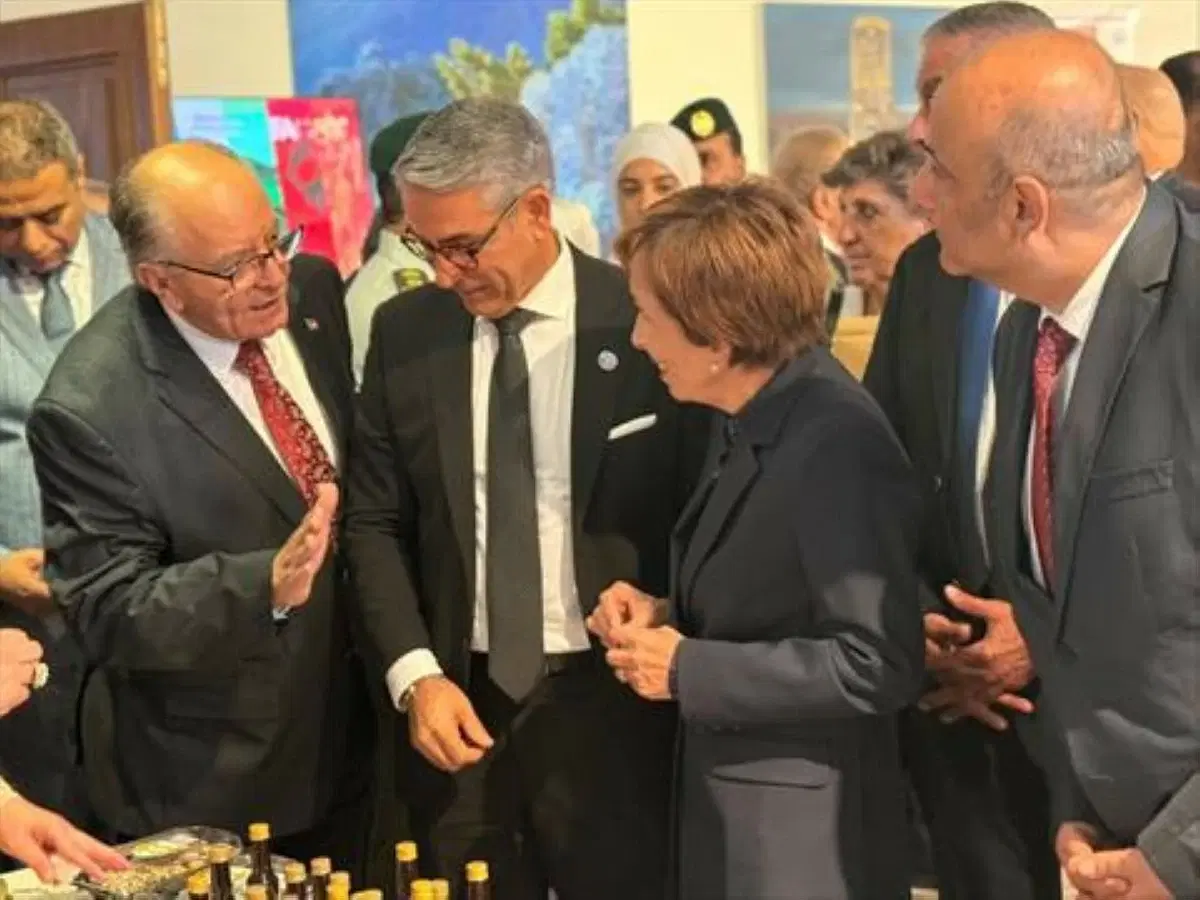
The event included the World Food Day Innovation Exhibition, which showcased innovative solutions from across Jordan that contribute to building more sustainable and resilient agricultural and food systems. It brought together researchers, farmers, cooperatives, youth initiatives, women's associations, and private sector innovators, providing practical models of how to employ creativity and technology to address the most prominent challenges facing agriculture and food systems today.
The event also included the World Food Day drawing competition, organized in cooperation with the Ministry of Education and Human Resources Development, which encouraged school students from across the Kingdom to express their vision for food security, sustainable agriculture, and healthy food through art. The six winners were announced and honored in recognition of their creativity and contribution to spreading awareness about the importance of building a more sustainable food future.
The event was attended by representatives of the government, development partners, academic institutions, innovators, farmers, entrepreneurs, youth, women's associations, and the private sector.