United Nations: Gaza faces the worst economic crisis in the world
Life hanging in the balance under a deadly blockade
Amman5 min read
Share
92% of the Strip's economic facilities have been damaged or destroyed
The United Nations Conference on Trade and Development (UNCTAD) has warned of the rapid collapse of the economy in the Gaza Strip, describing the situation as "the worst recorded economic crisis in the world." Meanwhile, the organization's Acting Secretary-General, Pedro Manuel Moreno, affirmed that the Palestinian economy has lost developmental gains accumulated over decades, turning the Strip into an unprecedented catastrophic epicenter.
UNCTAD data showed that 92% of economic facilities in Gaza have been damaged or destroyed since October 2023, while per capita GDP did not exceed $212 during 2025—about 58 cents per day—equivalent to only 17% of its level in 2022.
In the labor market, unemployment reached 78%, while more than 90% of the working-age population was out of employment, with hundreds of thousands of jobs lost and billions of dollars in accumulated labor income.
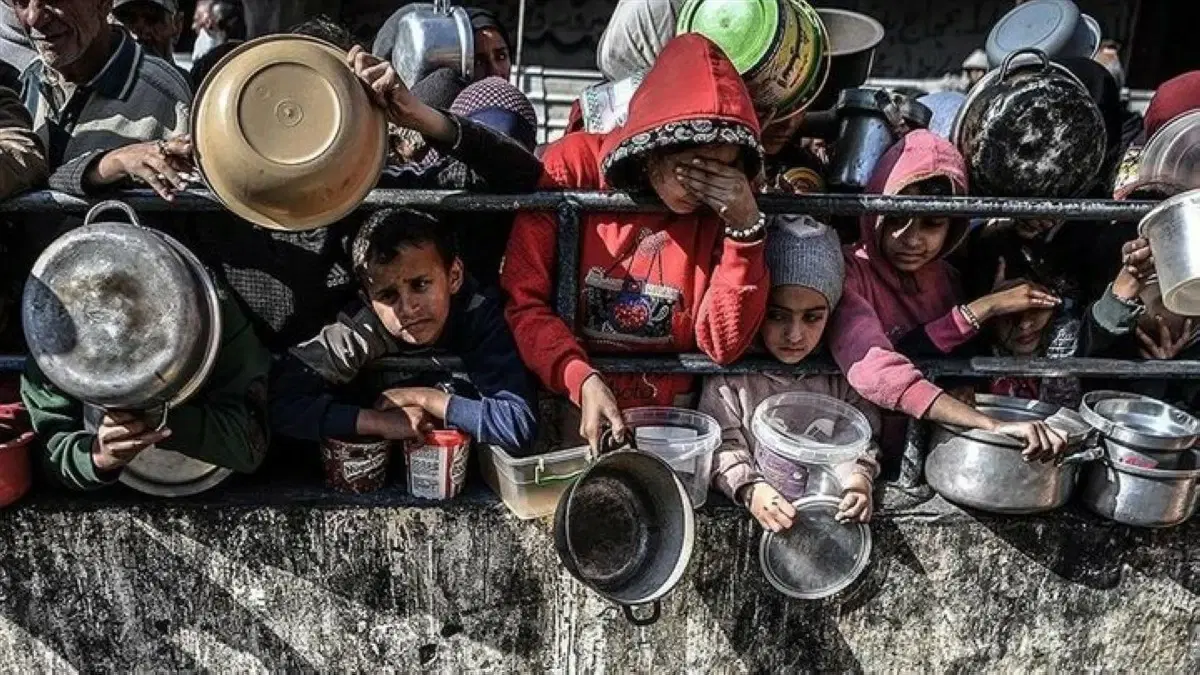
No major productive sector has escaped the collapse; agricultural and industrial production declined by 94% each, while the construction sector contracted by 99% compared to 2022 levels. No more than 1.5% of agricultural land in the Strip remains available and undamaged, deepening the population's reliance on humanitarian food aid.
This was accompanied by a sharp rise in prices, as the general price level in Gaza during 2025 remained 274% higher compared to 2022, while the prices of a number of basic goods, including potatoes and cooking gas, exceeded their previous levels manifold.
UNCTAD estimated the recovery and reconstruction needs in the Gaza Strip at about $71.5 billion, amid widespread destruction affecting infrastructure, productive sectors, and basic services. Material damages to infrastructure reached approximately $35.2 billion, while economic and social losses were estimated at $22.7 billion, with expectations that costs will rise if additional damage continues to be recorded.
The organization stressed that restoring the Palestinian economy requires large-scale intervention to rebuild the agriculture, industry, construction, energy, and technology sectors, alongside protecting the banking system and securing Palestinian revenues.
In contrast, the "Peace Council" plan appears on paper more ambitious than its current capacity for implementation; it includes $400 million for temporary housing, $275 million for rubble removal and unexploded ordnance, $50 million for hospital rehabilitation, $30 million for road repairs, as well as $885 million for security projects, including $275 million to establish a permanent site for the international stabilization force in Rafah and $120 million for the Palestinian police.
However, these allocations remain limited relative to the scale of destruction and needs. Estimates indicate that material damages in Gaza amount to $35.2 billion, and that full recovery and reconstruction will require about $71.4 billion over a decade. Even the initial amount of $2.45 billion has not been fully secured; despite participating countries pledging about $18 billion, less than $300 million has been transferred so far.
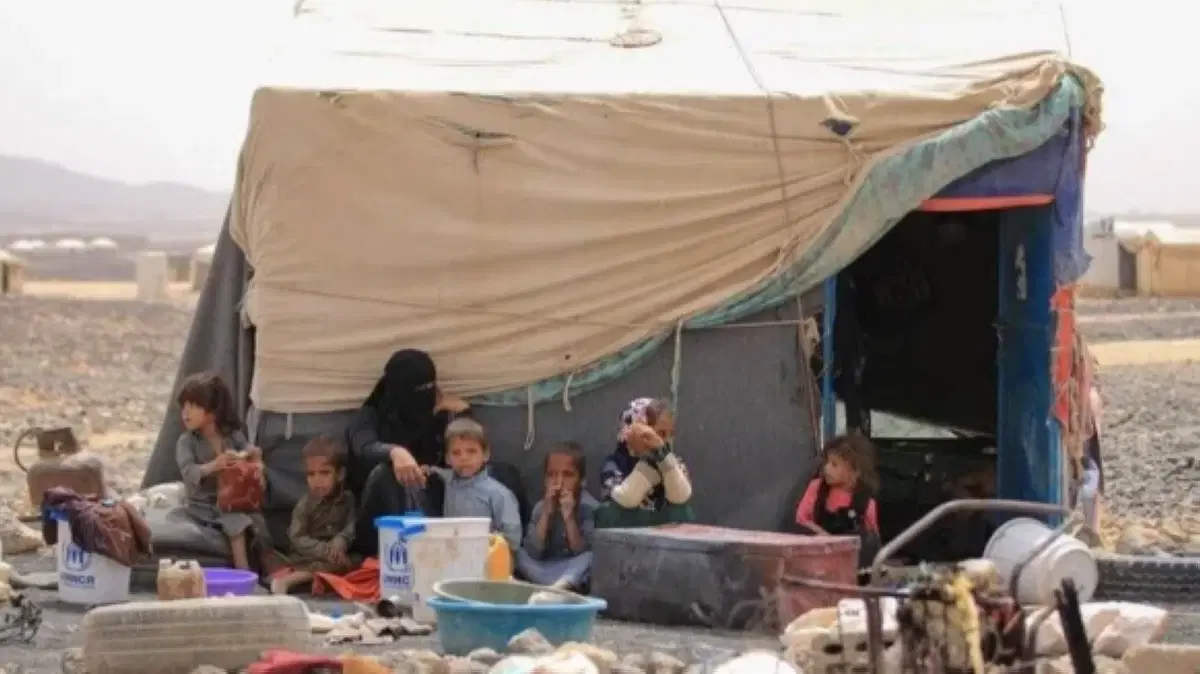
The International Organization for Migration (IOM) confirms that basic toolkit groups, sandbags, water pumps, and building materials such as timber and panels still face entry restrictions into Gaza, despite the urgent need for them to repair shelters and enhance their capacity to cope with rain and floods. Since last October, the organization has sent more than one million pieces of shelter equipment, yet they do not provide adequate protection from floods.
Amnesty International also documented thousands of tents and temporary shelters being flooded by heavy rainwater and the collapse of a number of buildings, considering that the continued ban on the entry of necessary equipment and supplies for infrastructure rehabilitation increases the severity of the humanitarian catastrophe.
The crisis is further complicated by the continued Israeli control over about 60% of the Strip's territory, according to data in the report, which has reduced the living space available to the population to about 100 square kilometers.
Israel conditions any withdrawal or the start of reconstruction operations on the complete disarmament of Hamas, while Hamas has accepted, in principle, disarmament in exchange for a gradual Israeli withdrawal from areas controlled by Israeli forces.
This situation places the reconstruction plan before a complex political and security dilemma; the absence of an agreement on withdrawal and disarmament hinders the stabilization of security arrangements, while the lack of an effective Palestinian police force makes it difficult for the international stabilization force to begin its work, thereby delaying the implementation of reconstruction projects.
At the same time, 77% of families in Gaza live in a state of displacement, while thousands of residents find themselves facing the choice of staying in damaged buildings or living in tents, which are not available in sufficient numbers.
Ahmed Arafat says, standing in a rubble-covered street: "We don't have money to go anywhere else, and we can't buy tents like others." As for Alam Zaqout, who lives with his family in a damaged building, he says that residents are forced to stay in these places due to the lack of alternatives: "No tents, and no basic necessities. Tell me, where am I supposed to go? I own nothing except this house."
Shaina Low, spokesperson for the Norwegian Refugee Council, says that many residents prefer to stay in damaged buildings because "the idea of living in a tent is worse," amid the acute shortage of shelter supplies. She warns that these buildings could collapse at any time, and their danger increases during bad weather, with rainwater leaking through cracked concrete and exposed reinforcing bars.
These facts summarize the predicament Gaza is experiencing today: an economy with the majority of its parts destroyed, unemployment reaching 78%, families displaced in massive numbers, and agricultural lands of which only a limited usable portion remains.
While plans for reconstruction and recovery exist, their implementation remains contingent on three interrelated conditions: providing funding, allowing the entry of materials and equipment, and reaching political and security arrangements that allow the reconstruction process to begin on the ground rather than remaining trapped in plans and promises.