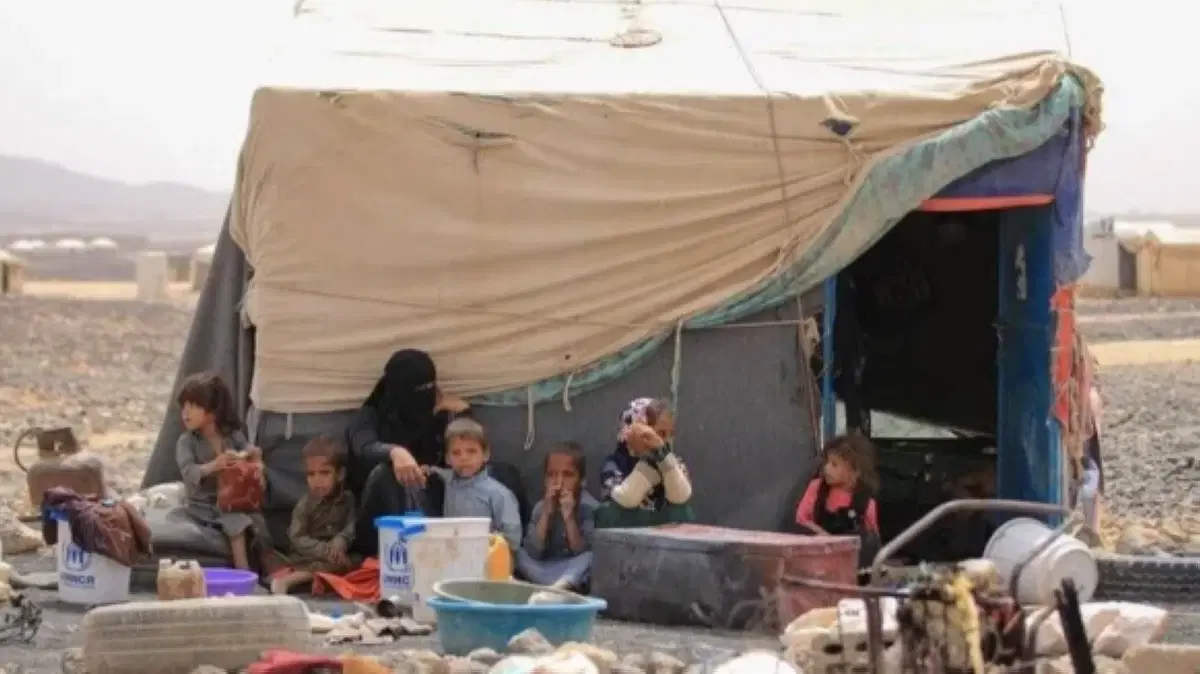
UN Coordinator: Road closures in Taiz threaten the lives of millions of Yemenis
Agencies3 min read
Share
The United Nations Humanitarian Coordinator in Yemen, Julien Harneis, warned on Tuesday that the closure of roads in the southwestern governorate of Taiz "threatens the lives of millions of residents."
Taiz Governorate has witnessed intermittent clashes between government forces and the Houthis for years, while local authorities and human rights organizations accuse the group of closing main roads leading to the city and imposing restrictions on the movement of residents and supplies.
Harneis said in a statement reviewed by Anadolu Agency: "I am deeply concerned about the rapid deterioration of the humanitarian and economic situation in Taiz."
He added that "road closures and insecurity are preventing the delivery of vital supplies, including fuel, to the city (Taiz) and surrounding areas, threatening the lives of millions who are now unable to access essential services and goods."
He warned that "the health system in Taiz is on the verge of collapse, while the shortage of energy supplies needed to operate hospitals and the availability of medical oxygen threaten the lives of hundreds of patients."
He revealed that the prices of remaining food items and fuel have more than doubled, compounding the pressure on families already struggling to meet their basic needs.
The UN official cautioned that of particular concern is the difficulty hundreds of thousands of families face in accessing water, as water production in the city has been halved and available alternatives are exhausted.
He pointed out that the United Nations and its partners continue to do everything in their power to support those in need in Taiz and assist in bringing essential goods, services, and medical supplies into the city.
The UN Coordinator called on "the Houthi de facto authorities to urgently open safe corridors to allow the entry of essential goods, food, medicine, and all humanitarian aid into the city of Taiz and to the most vulnerable groups, without any obstacles."
He stressed that "safe and unhindered access for humanitarian aid is critical to maintaining vital services and reaching affected communities before hunger, preventable diseases, and injuries claim more lives."
Harneis emphasized the necessity of protecting civilians and civilian infrastructure at all times, and the obligation to respect international humanitarian law.
Earlier on Tuesday, the World Health Organization warned that fuel stocks in 12 hospitals in the Yemeni city of Taiz are sufficient for only about 4 days, while the United Nations Children's Fund (UNICEF) announced that more than 52,000 children screened in Taiz this year are suffering from acute malnutrition.
This came during a weekly press briefing at the UN office in Geneva, in which WHO spokesperson Tarik Jasarevic and UNICEF Representative in Yemen Achim Iyer participated.
Since July 2026, Yemen has witnessed a military escalation between the Houthi group and government forces, which is the most extensive since the relative calm that followed a truce that began in April 2022.
In recent days, the intensity of clashes and shelling has escalated in a number of Yemeni governorates, coinciding with Houthi attacks using missiles and drones on sites inside Yemen and Saudi Arabia, and military responses from government forces and the Coalition to Support Legitimacy in Yemen.
Yemen has been witnessing a war since the Houthis took control of the capital, Sanaa, and several governorates in September 2014, before a Saudi-led Arab coalition intervened in March 2015 in support of the internationally recognized Yemeni government.