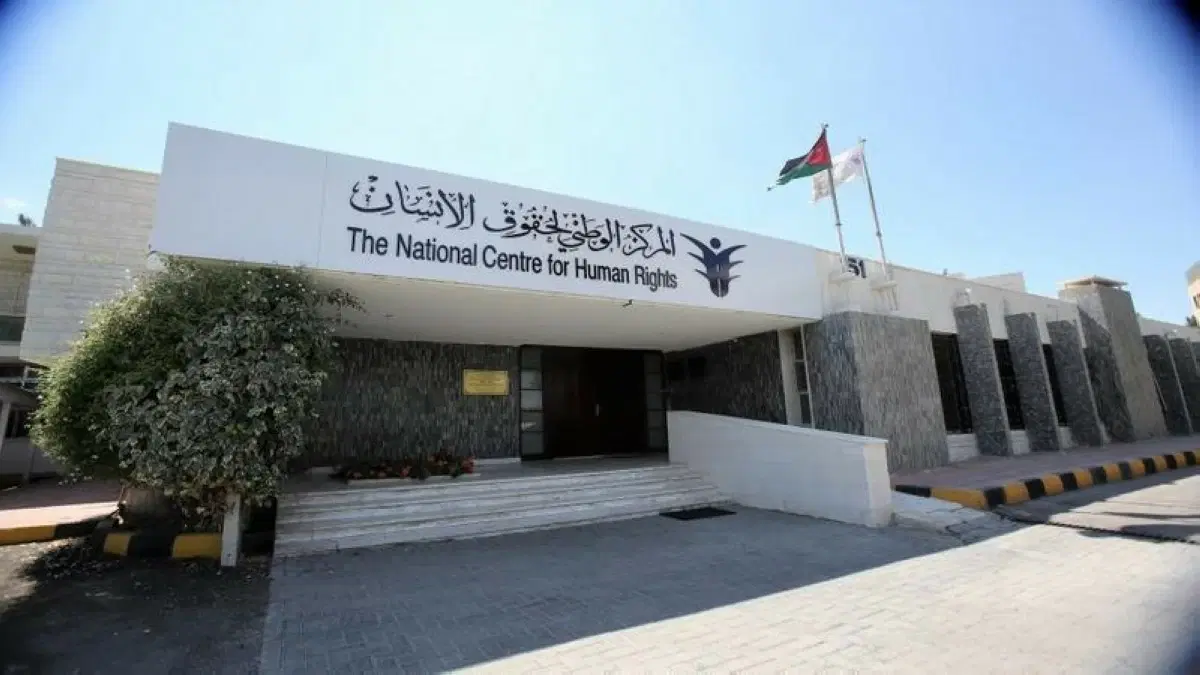
During the event, the Center reviewed the methodology of preparing the report and its main results, providing an assessment of the state of human rights in the Kingdom during 2025 based on field monitoring, receiving and following up on complaints, and analyzing legislation, public policies, and practices.
The report addresses the system of civil and political rights, economic, social, and cultural rights, and the rights of the most vulnerable groups, in addition to emerging human rights issues such as digital rights and artificial intelligence, and environmental issues related to climate change.
Samar Al-Haj Hassan, Chair of the Board of Trustees of the Center, emphasized that the Center's reports constitute a national document that diagnoses the state of human rights and highlights positive developments and the most significant challenges, leading to specific recommendations that are measurable, applicable, and followable.
Jamal Al-Shammaile, the Commissioner General for Human Rights, pointed out that the report's indicators confirm the importance of transitioning from fragmented sectoral interventions to integrated protection and empowerment policies, based on clear performance indicators and greater effectiveness between legislation, public policy, and implementation.
Nael Al-Kabariti, a member of the Council, said that the report allows the transformation of monitoring and documentation results into practical inputs for public policy-making, by identifying gaps and deficiencies, and providing indicators and recommendations that help decision-makers review legislation, programs, prioritize, and monitor the impact of decisions taken year after year.
The discussions highlighted issues related to the southern region and the importance of integrating local experiences and needs into the national dialogue on human rights.
The report reflects the field monitoring work carried out by the Center in the southern region during 2025, which included monitoring visits to detention places and rehabilitation centers in Aqaba and Ma'an.
The report also noted positive aspects related to records, healthcare, ventilation, and lighting, alongside challenges that require follow-up, including facilities for people with disabilities, maintenance of some facilities, and the challenge of overcrowding in the Aqaba Rehabilitation and Reform Center.
The Center indicated that the full version of the report and its annexes are available through the National Center for Human Rights.