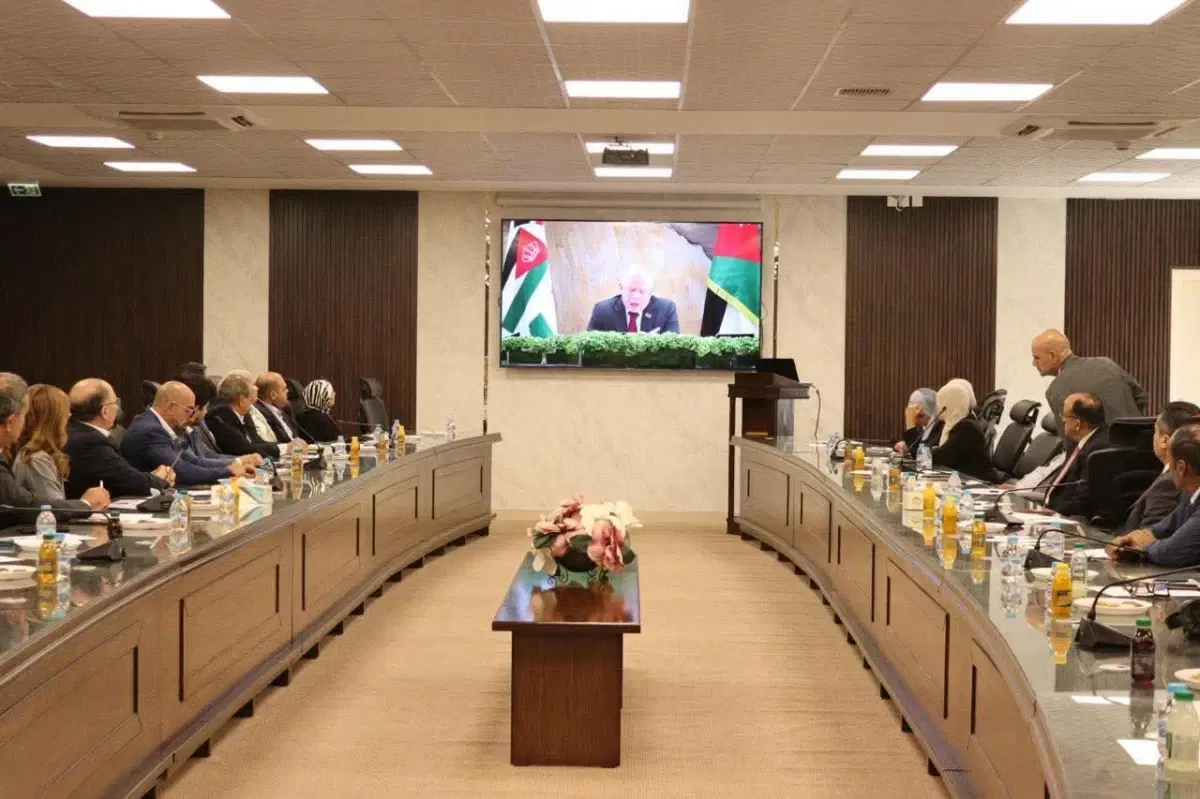
She praised the efforts made by the Aqaba Governorate in establishing the rule of law, pointing to the importance of achieving a balance between the enforcement of the law, the care of public freedoms, and ensuring developmental and economic stability.
She pointed out that the Center, within its operational plans and based on its independent legal and supervisory mandate, carried out 35 field monitoring and inspection visits in the southern region, including Aqaba Governorate, to assess the reality of public services in the health, education, and environmental sectors.
For his part, Al-Awaishah emphasized the importance of the visit in enhancing institutional dialogue and reviewing the frameworks of joint cooperation, noting that human rights in Jordan represent an integral part of the state's approach based on the rule of law, justice, and the protection of human dignity, rights, and freedoms.
He said that the governorate is aware of the importance of balancing its responsibilities in maintaining public security and order and promoting social stability, with the protection of rights and freedoms, achieving a balance between the rule of law and the requirements of security on the one hand, and the protection of human rights and dignity on the other.
He pointed to King Abdullah II's emphasis on the rule of law, the protection of citizens' rights, and the achievement of justice and equality among them, forming the basis of a resilient and civil state, and the importance of benefiting from the expertise of institutions working in the field of human rights in the development of national state institutions.
Al-Awaishah affirmed that the governorate views the National Center for Human Rights as a national partner in enhancing the human rights system and developing institutional performance, welcoming the Center's observations and recommendations as an opportunity for review, correction, and development.
During the meeting, the governor and the relevant officials listened to questions and inquiries from the Board of Trustees members, and answers and clarifications were provided on a number of issues related to the governorate's work, the services provided to citizens, and the mechanisms for enforcing the law and protecting rights and freedoms.
The two sides also discussed mechanisms to enhance communication and coordination in the coming phase, and to benefit from the Center's observations and recommendations in developing institutional performance and improving services, emphasizing the importance of continuing field meetings between the Center and national institutions to enhance partnership and integration and to open the way for dialogue, review, and development.