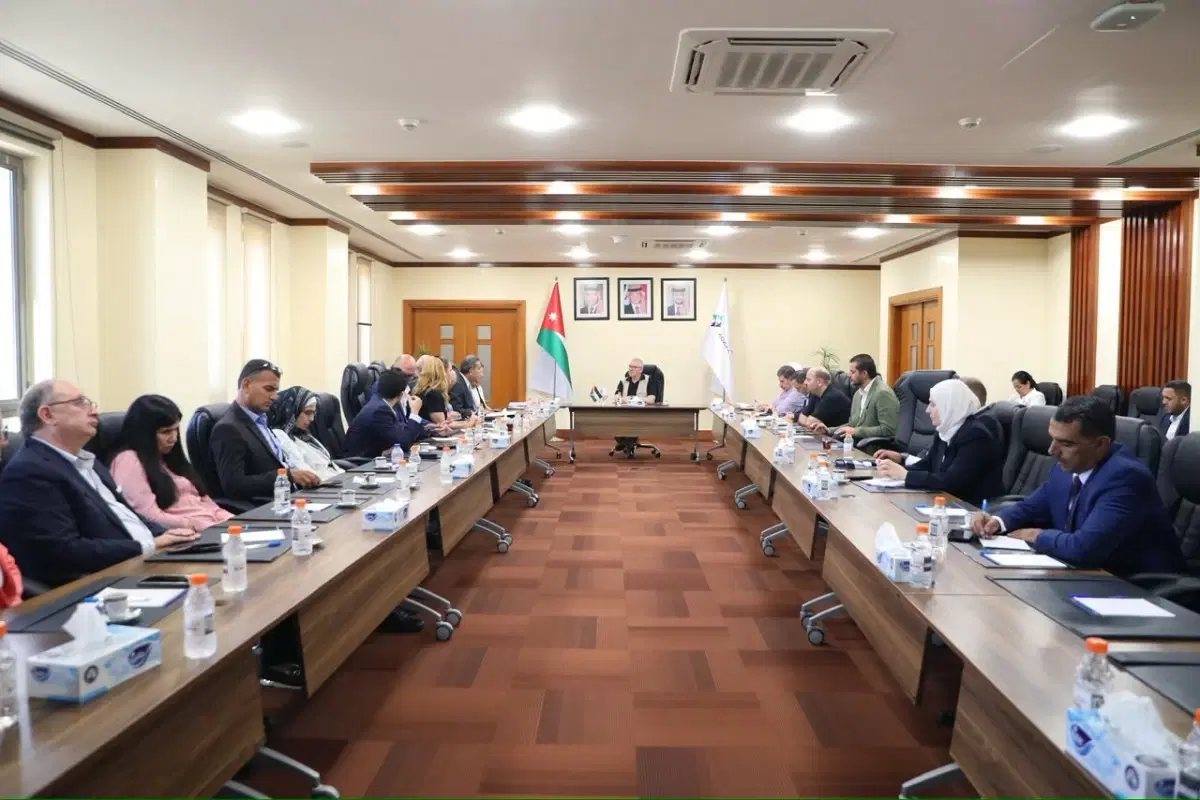
The meeting comes within the framework of the Center's approach to enhancing field access to various governorates of the Kingdom, institutionalizing direct dialogue and partnership with national institutions and local communities, and listening to issues and challenges related to the enjoyment of rights and freedoms.
The meeting reviewed a number of programs and efforts implemented by the Aqaba Special Economic Zone Authority in the developmental, environmental, and youth fields, alongside initiatives directed at various segments of society, and discussed ways to enhance cooperation with the Center on issues related to human rights.
The President of the Board of Commissioners of the Aqaba Special Economic Zone Authority, Shadi Al-Majali, emphasized the Authority's keenness to develop the city of Aqaba and enhance the quality of life in it, and to work to make it an accessible and inclusive city that meets the needs of various segments of society.
For her part, the President of the Board of Trustees of the Center, Samar Al-Haj Hassan, emphasized the importance of enhancing cooperation with the Aqaba Special Economic Zone Authority in protecting the rights of the most vulnerable groups, stressing the importance of the right to a healthy environment, and enhancing accessibility and facilitating arrangements for persons with disabilities, which contributes to making Aqaba an accessible and inclusive city for all.
She pointed out that the Center, based on its legal mandate, attaches importance to field monitoring and direct communication with institutions and local communities, and benefiting from the results of monitoring and recommendations in developing policies and practices and strengthening the human rights protection system.
Members of the Board of Trustees of the Center and the General Commissioner discussed with members of the Board of Commissioners a number of issues related to human rights, particularly the rights of persons with disabilities, environmental protection, youth empowerment, and enhancing the participation of the most vulnerable groups, alongside the role of institutions in integrating human rights principles within development plans and programs.
Both sides emphasized the importance of continuing communication and coordination during the coming phase, benefiting from the Center's observations and recommendations in developing institutional performance, and enhancing partnership in programs and initiatives related to human rights, which contributes to establishing the principles of justice, equality, and the protection of human dignity.