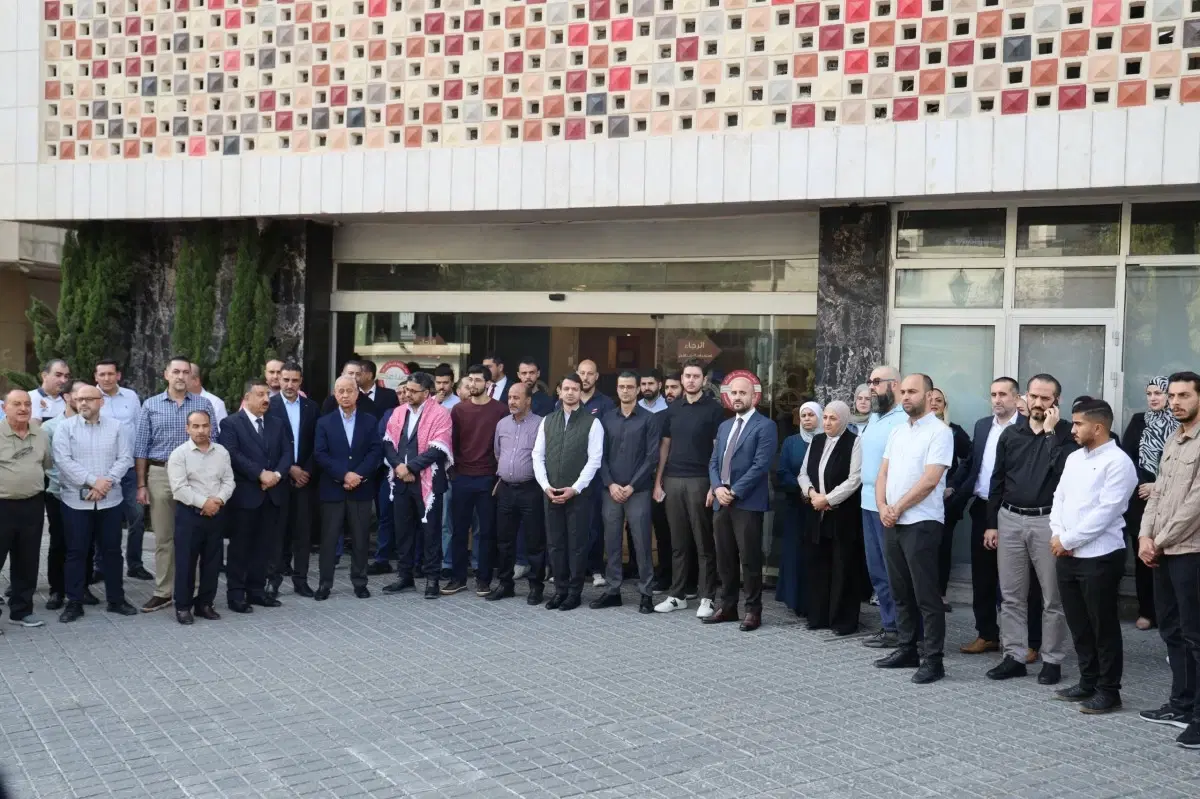
Industrialists: Karak is a national and economic pillar.. and its developmental opportunities are promising
Jordan's security and societal cohesion are the basis of trust and investment
Amman7 min read
Share
Industrialists affirmed that Karak Governorate represents a fundamental corner of the Jordanian national identity, with its history full of sacrifices and positions of pride and dignity, pointing out that the cohesion of its social fabric and the trust of its people in institutions constitute an important asset to enhance stability, which is considered one of the most important pillars for protecting economic activity and consolidating investment confidence.
They said in statements to (Al-Rai) that Karak, with its economic, industrial, and tourism potentials, plays an important role in supporting the national economy and providing job opportunities, stressing the importance of continuing to support development and investment in the governorate.
The President of the Jordan and Amman Chambers of Industry, Engineer Fathi Al-Jaghbir, said that Karak is not just a Jordanian governorate, but rather a title of pride, dignity, and steadfastness, and a fortress among the nation's fortresses whose history is witnessed by the national positions, courage, and sacrifices of its people.
He pointed out that Karak, which throughout its history has been known for the cohesion of its social fabric and the values of fraternity and coexistence among its people, will remain impregnable against attempts to compromise its unity or undermine its security and stability.
Al-Jaghbir emphasized that the people of Karak, like all the people of the nation, have proven that Jordan's true strength lies in the unity of its people and the cohesion of its institutions, and that what brings Jordanians together is greater and stronger than any attempt to sow division or destabilize stability.
He pointed out that standing by the people of Karak is a national duty, and that recent events will not undermine the determination of the governorate's people and their insistence on continuing the march of work and building, indicating that Karak has been and will remain a model of steadfastness and national belonging and a fundamental pillar of Jordan's strength and resilience.
Al-Jaghbir renewed his pride in the Arab Army and security agencies, their efforts and sacrifices in protecting the homeland and safeguarding its security and stability, stressing that the unity of Jordanians and their solidarity behind their Hashemite leadership will remain an impenetrable dam in the face of anyone trying to tamper with Jordan's security and the safety of its people.
He added that pride in Karak and its people is not limited to its national history and honorable positions, but extends to its role in the march of building and development; it is a governorate known for the giving of its people and the industries, investments, and economic resources it embraces that have contributed to enhancing the national economy and providing job opportunities.
He expressed his confidence in Karak's ability to continue its national and economic role, relying on the determination and solidarity of its people, to remain a land of giving and production and a towering fortress among the nation's fortresses, praying to God to protect Jordan and its people, perpetuate the blessing of security and stability upon it, and have mercy on the martyrs.
For his part, Engineer Faris Hamoudeh said that Karak Governorate is distinguished by a clear social and economic diversity, as it has hosted over the years touristic, educational, cultural, and economic hubs that contributed to enhancing its status at both the national and regional levels.
Hamoudeh pointed out that the name of Karak has been associated with many national symbols, foremost of which is Mutah University, which has graduated thousands of Jordanians who contribute today to building the state in various sectors, pointing out that the university represents a distinguished experience for embracing a military wing that teaches military sciences alongside other academic specializations.
He added that the contribution of mining and extractive industries to the national economy is manifested in the activities of companies operating in the extraction of potash salts and Dead Sea salts, which contribute to enhancing national exports and providing important inputs for local industries.
Hamoudeh explained that Karak Industrial City has recently attracted a number of important industries in various sectors, and the governorate also hosts food industries, most notably the poultry industry by major global companies, alongside major Chinese investments in the Al-Qatranah area that were recently inaugurated.
He pointed out that these industrial and investment activities contribute to providing job opportunities for the people of Karak and the Kingdom in general, and enhance the economic role of the governorate.
Hamoudeh stressed that Karak will remain a symbol of sacrifice and redemption through its martyred sons, pointing out that recent events will only make Jordanians more resilient and united under the Hashemite leadership. He added that this incident constituted a test for societal solidarity and showed the solidarity of Jordanians from various origins and backgrounds.
The representative of the garment and textiles sector at the Jordan Chamber of Industry, Engineer Ehab Qadiri, said that Karak Governorate represents in the Jordanian consciousness a historical model of steadfastness, firmness, and national belonging; from its towering fortress to the stations of its national history, its name has been associated with courage, cohesion, and the ability to face challenges and preserve identity.
He pointed out that the condemned terrorist attack recently witnessed by the governorate confirms that Karak's strength lies not only in its stones and walls, but in its people, their unity and solidarity, and in the values that made it an authentic part of the history and identity of the Jordanian state.
Qadiri explained that this asset of stability, societal cohesion, and trust in institutions represents a real economic value; security is not just a condition for protecting economic activities, but rather one of the most important foundations upon which investor confidence, business continuity, and the movement of tourism and trade are based.
He added that experiences have proven that societies that maintain their unity in the face of crises are more capable of protecting their economic gains and restoring their activity, which gives Karak's steadfastness an economic dimension no less important than its national and historical implications.
He pointed out that Karak, with its historical legacy, geographical location, and natural and human resources, is qualified to play a larger economic role; it embraces prominent touristic and historical sites, possesses a diverse agricultural extension, and is linked to mining sectors and industries associated with them, in addition to educational institutions and human competencies capable of contributing to the development of the governorate's economy.
He indicated that the challenge does not lie in listing these potentials, but rather in turning them into integrated economic value chains; so that tourism goes beyond visiting archaeological sites to accommodation, services, small projects, and local products, agriculture develops from a primary activity of limited return to food processing, storage, and marketing, while mining and industrial activities contribute to expanding employment and training opportunities for the governorate's people and local institutions.
Qadiri stressed that real development in the governorates is not achieved merely by the availability of resources or the establishment of separate projects, but by the ability of the local economy to retain a larger share of the added value resulting from them.
He added that enhancing Karak's position on the map of investment and national development requires a practical program that links infrastructure development and service improvement with stimulating local investment, attracting new productive projects, supporting small and medium enterprises, developing cultural and rural tourism, and linking education and vocational training to labor market needs.
He stressed the importance of these efforts being reflected in the opportunities for youth and women, and contributing to a more balanced distribution of investments and projects among governorates, in line with the objectives of the Economic Modernization Vision.
He pointed out that enhancing economic and tourism activity in Karak after the recent events carries a message of confidence and continuity, and confirms that terrorism cannot disrupt the life of society or deprive it of future opportunities.
Qadiri concluded by emphasizing that Karak, which has made its steadfastness throughout history a title of dignity and belonging, deserves for this steadfastness to turn into an economic and developmental renaissance, pointing out that honoring the history of cities is not limited to recalling their heroics, but extends to building a future worthy of their people and generations.