The heavy school bag.. a daily burden threatening students' comfort
Education Expert: Addressing the phenomenon is a shared responsibility
Amman4 min read
Share
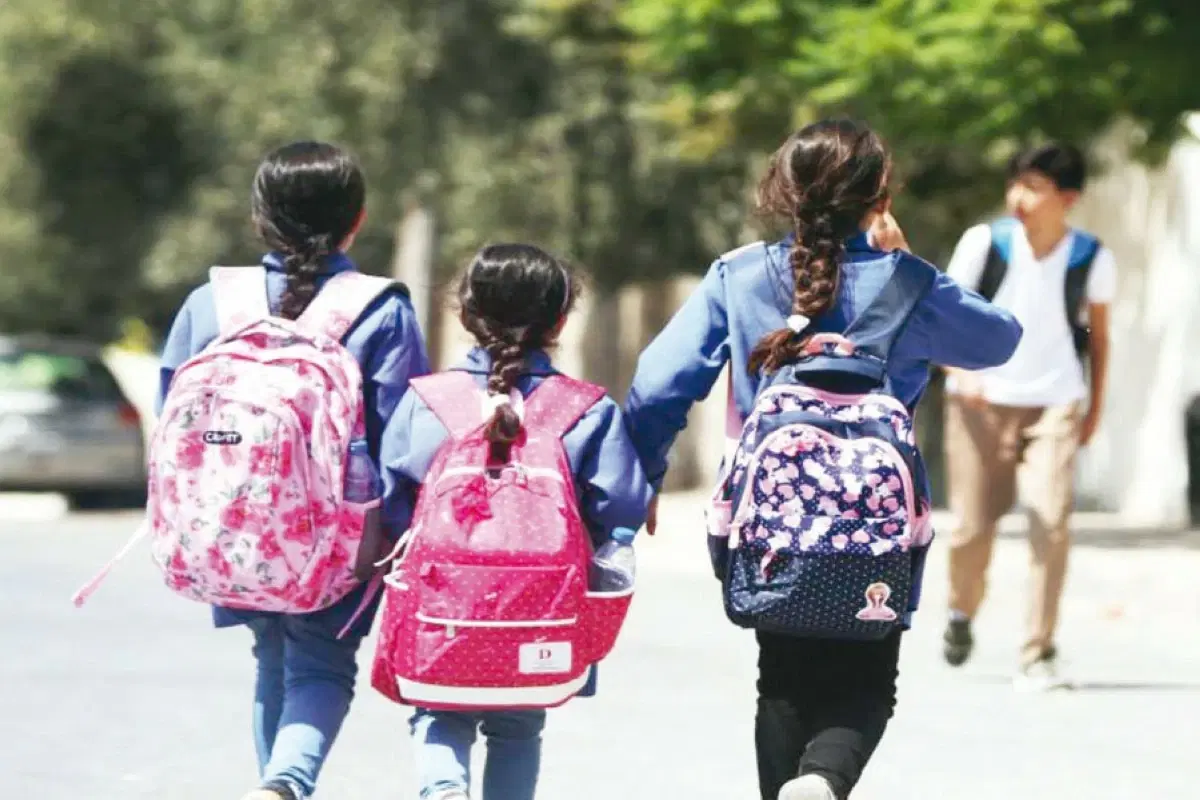
The heavy school bag has become a growing source of concern for families, in light of the daily physical burdens students suffer as a result of carrying books, notebooks, and school supplies that sometimes exceed the capacity of their small bodies.
The danger of this phenomenon is not limited to feelings of fatigue and back and shoulder pain, but extends to affecting students' activity and focus inside classrooms, which places the responsibility of curbing it on the family, the school, and the Ministry of Education.
For his part, education expert Qaisar Al-Gharaibeh said that the school bag, which is supposed to be a student's companion on their educational journey, has become for many students a source of physical exhaustion, given the books, notebooks, tools, and supplies it carries that may exceed a child's ability to carry comfortably.
He added in an interview with "Alrai" that this issue recurs with every school year, and is not limited to the contents of the bag, but extends to the reasons for its increased weight and its health, psychological, and educational repercussions, which requires dealing with it as part of providing a safe and healthy school environment.
Al-Gharaibeh explained that the school bag has undergone a major change over the years, whether in its shapes, the materials used in its manufacturing, or its contents; after it used to be simple and light, limited to a limited number of books and notebooks, it today includes multiple books, pencil cases, tools, water bottles, and meals, in addition to frames and attachments found in some types of bags, which increase their weight even before they are packed.
He pointed out that the weight of the bag is linked to several reasons, most notably some students' failure to adhere to the daily schedule and carrying all books without needing them, the multiplicity of academic subjects, and the lack of lockers or designated places to store books inside schools, in addition to the family’s weak follow-up on the bag's contents and putting unnecessary items in it.
Al-Gharaibeh warned that continuing to carry heavy bags or using them incorrectly may lead to strain on the back, neck, and shoulder muscles, and a feeling of recurring pain, especially among young children or those with a physical build less capable of bearing weights.
He added that carrying the bag on one shoulder or using narrow, unpadded straps may lead to an unbalanced distribution of weight and increased pressure on the shoulders, while an unsuitable bag increases the difficulty of movement and climbing stairs, and may cause feelings of fatigue and discomfort during the school day.
He pointed out that the effects are not limited to the physical side, as the student arriving at school exhausted may be reflected in their activity and ability to focus and pay attention inside the classroom, and going to school might be associated with a feeling of fatigue rather than a passion for learning.
He emphasized the importance of choosing a light bag that is proportional to the student's height and physical build, and that its weight after being packed generally should not exceed 10 to 15 percent of the child's weight, with preference for reducing the weight as much as possible.
He explained that the appropriate bag should include two wide, padded, and adjustable straps, a padded and comfortable back, and be close to the student's body without pressing on it, with books and heavy items placed in the part closest to the back, and the contents distributed in a balanced manner.
Al-Gharaibeh stressed that addressing this phenomenon is a shared responsibility that begins with the family, which must monitor the contents of the bag daily, ensure that only required books are carried, remove unnecessary items, and choose a bag that suits the child's age and size.
Regarding the school's role, he confirmed that it can contribute to easing the burden by organizing class schedules, providing lockers or shelves for storing books, and coordinating among teachers to avoid asking students to bring all books on a daily basis.
He emphasized the importance of continuing the Ministry of Education's efforts to reduce the weight of textbooks by dividing large books into parts suitable for academic terms, and expanding the studied use of digital educational tools and tablets, in a way that reduces what students carry without affecting the quality of the educational process.
Al-Gharaibeh stressed that the school bag is not a marginal detail in a student's life, but an issue related to their health, comfort, and right to a sound educational environment, confirming the necessity for students to go to their schools with activity and a desire to learn, not for their school day to begin with physical burdens that can be reduced through planning, follow-up, and cooperation.