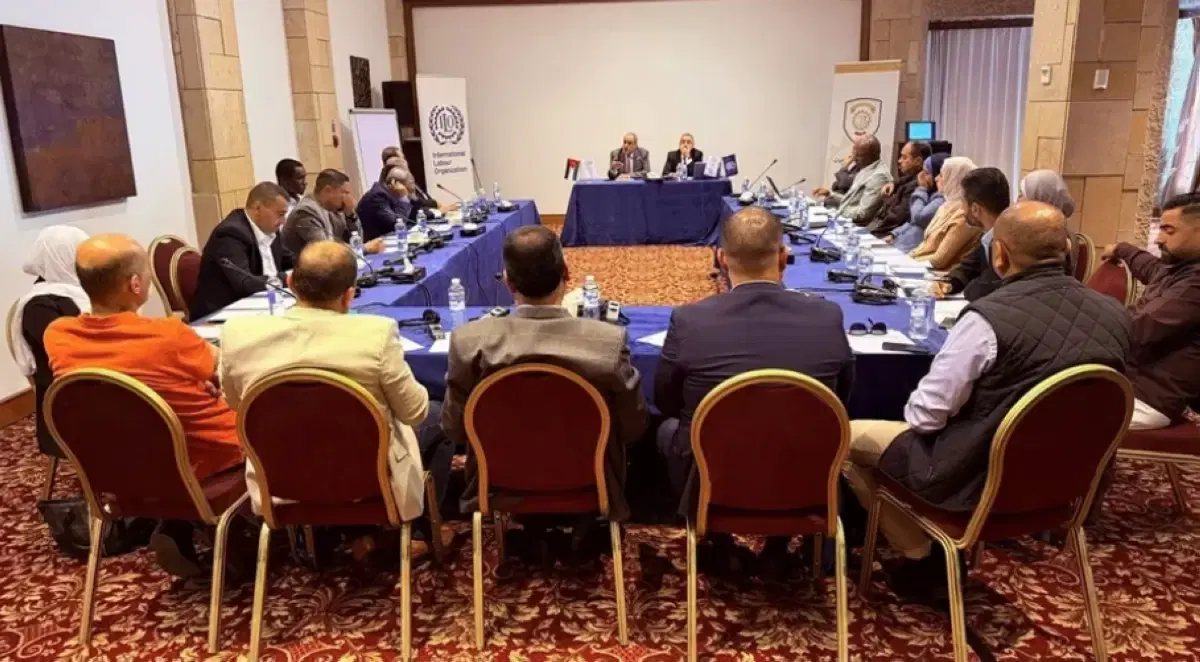
During the opening speech, the President of the Federation, Khaled Al-Fanatsa, emphasized that the world of work is witnessing rapid and unprecedented transformations in light of technological development, the spread of artificial intelligence technologies, and misinformation. This requires labor organizations to develop their media and communication tools to keep pace with these changes, stressing the need to develop their capabilities in digital communication and build clear strategies that contribute to protecting workers' rights.
He added that the workshop represents an important opportunity to unify visions and enhance the capabilities of unionists in the areas of digital communication, media campaign management, and the preparation of influential messages, which strengthens the presence of the trade union movement and supports its ability to convey workers' issues and demands to the concerned authorities and public opinion.
For his part, the Arab Region Officer at the Bureau for Workers' Activities at the International Labour Organization, Mustafa Saeed, emphasized the importance of partnership and cooperation with the General Federation in developing the media and communication capabilities of trade unions.
He stressed that the media plays a fundamental role in trade union work, and that media messages should focus primarily on workers and their issues as the main target group, while taking other parties into account, to ensure that messages reach various groups and achieve their goals, which contributes to enhancing social and economic stability, consolidating social justice, and supporting decent work standards.
The workshop includes a number of specialized sessions presented by the Communication Officer at the Bureau for Workers' Activities at the International Labour Organization, Mamadou Soware, the Federation's advisor Nizam Qahoush, journalist Abdullah Al-Rubeihat, and technology expert Qusay Shaheen. The sessions discuss topics related to developing union communication, including communication during crises and media misinformation, the use of artificial intelligence and reputation management, preparing communication plans during crises, writing union stories and press releases, and communication during strikes, labor disputes, and cyberattacks.