Success of the rice cultivation experiment in Qatrana
Amman3 min read
Share
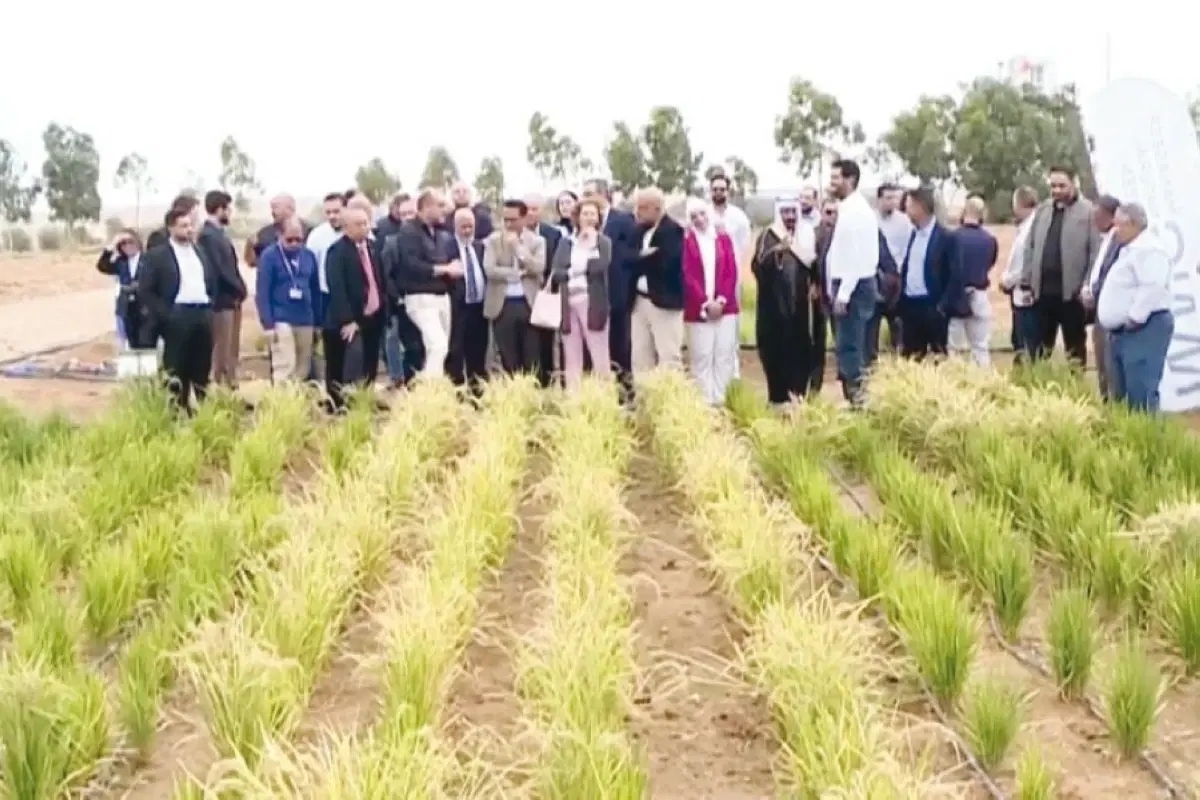
Al-Manaseer Group presented the successful results of a rice cultivation experiment in a desert environment in the Qatrana region, using natural products and fertilizers, and drip irrigation with saline well water, without relying on the traditional method based on water flooding, in an experiment aimed at testing the feasibility of growing crops in difficult conditions that combine water scarcity, high soil salinity, and high temperatures.
The group organized an event at its industrial complex in the Qatrana region of Karak Governorate to announce the results of the experiment, chaired by the Chairman of the Board of Directors of Al-Manaseer Group, Engineer Ziad Al-Manaseer, with the participation of representatives from the National Agricultural Research Center, the Ministries of Agriculture, Water and Irrigation, and Environment, the Jordan Valley Authority, the embassies of Pakistan, Turkey, the Philippines, Indonesia, Spain, and Japan, in addition to the International Union for Conservation of Nature (IUCN), the Arab Center for the Studies of Arid Zones and Dry Lands (ACSAD), Mutah University, Al-Balqa Applied University, the Royal Scientific Society, and representatives of the agricultural sector and farmers.
According to the group, rice was chosen for the experiment due to its sensitivity to salinity and its high water requirements, with the aim of testing the efficiency of the agricultural products used under conditions that are considered challenging for this crop.
It explained that the experiment was carried out in soil with a salinity of 5.3 deciSiemens per meter, in a hot and arid climate, using locally manufactured MNG products, including the "AquaSave" product, which the group described as a natural system that helps retain water and nutrients in the root zone, thereby enhancing plant utilization and reducing irrigation water consumption.
The results of the experiment, according to the group, showed that the rice plants reached the flowering and grain-filling stage on schedule, while plants treated with MNG products recorded stronger and denser growth, and a greater number of longer panicles compared to untreated plants grown in the same soil and water. The group also pointed to a reduction in irrigation water consumption by about 67 percent compared to traditional farming, emphasizing the importance of these results in searching for more water-efficient alternatives, while stressing the need to continue testing these solutions on different crops and in various agricultural environments.
The Chairman of the Board of Directors of Al-Manaseer Group, Engineer Ziad Al-Manaseer, said that the group seeks to continue developing these solutions and offering them to farmers in Jordan and foreign markets, which helps in facing the challenges of water scarcity and soil salinity, and supports the trend towards more sustainable agriculture.