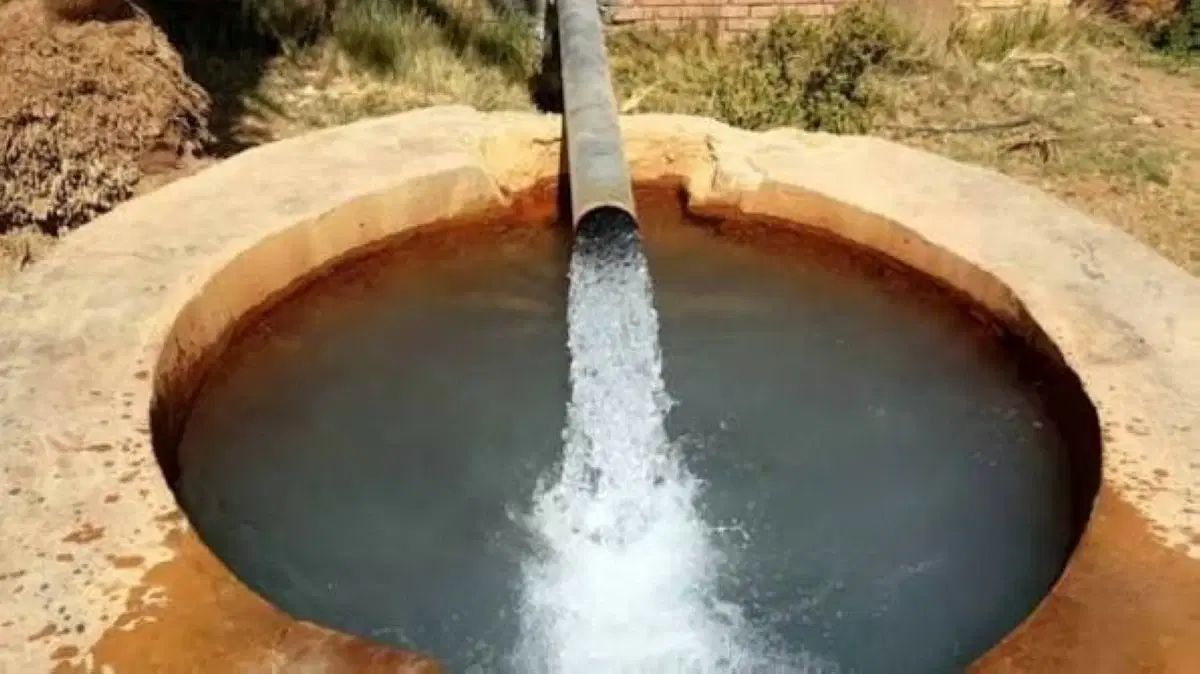
Mafraq strengthens its agricultural presence with rainwater harvesting and land management techniques
Amman4 min read
Share
Acting Director General of the National Agricultural Research Center (NARC), Dr. Zakaria Abdullah Musallam, affirmed that Mafraq Governorate is a vital pillar for food security in Jordan, in light of the remarkable agricultural development, diversity in crops and agricultural products, and the increased efficiency of the agricultural sector it is witnessing.
This came during his patronage of the scientific day organized by NARC, in cooperation with the International Center for Agricultural Research in the Dry Areas (ICARDA), at the Agricultural Research Center in Mafraq, on rainwater harvesting techniques and sustainable land management, as part of the project to support the implementation of the Water Scarcity Initiative (WSI) in the Near East and North Africa (NENA) region.
Musallam stated that Mafraq is witnessing notable agricultural development through the diversity of crops and agricultural products, emphasizing that challenges related to rainfall and water scarcity necessitate the adoption of modern techniques that help farmers harvest rainwater and utilize it, in addition to promoting sustainable land management.
He pointed out that about one-third of the national livestock is located in Mafraq Governorate, which reflects the great importance the governorate holds for food security and livestock in the Kingdom.
He added that the presence of two research stations in the governorate, represented by the Al-Khalidiya and Al-Khanasri stations, provides significant support to scientific research efforts in the Kingdom's agricultural sector and contributes to developing scientific solutions that suit the nature of the governorate and the needs of its agricultural sector.
For his part, the Chairman of the Agriculture and Water Committee in the House of Representatives, MP Dr. Ahmad Shdeifat, emphasized the importance of translating scientific research outcomes into tangible impacts that benefit farmers and the national agricultural sector, noting that the value of scientific research lies in its ability to provide practical solutions to the challenges facing the sector.
He pointed out that water security is a fundamental part of national food security, stressing the importance of addressing climate change challenges by strengthening scientific research and developing adaptation methods, especially in the agricultural sector.
In turn, the project coordinator from NARC, Dr. Abdul Razzaq Al-Tawaha, emphasized the importance of partnership between various stakeholders and supporters to bring about a qualitative shift in the agricultural sector in Mafraq Governorate and the Kingdom in general.
He indicated the center's readiness to provide and harness various available capabilities to serve farmers and the agricultural sector, and to enhance the utilization of scientific research results and modern technologies in facing agricultural and water challenges.
For his part, the Director of the Agricultural Research Center in Mafraq, Dr. Mustafa Shdeifat, pointed out the importance of exchanging experiences and knowledge between various research and agricultural entities to reach radical and tangible scientific solutions to the challenges facing farmers in the governorate.
The scientific day featured a presentation on several topics related to rainwater harvesting techniques and their applications in sustainable land management, in addition to reviewing field experiences and applications in this field, which contributes to enhancing the efficiency of water resource use and supporting the agricultural sector's ability to cope with climatic conditions.
The program included two scientific sessions; the first addressed rainwater harvesting techniques and their applications in sustainable land management, while the second session discussed the application of rainwater harvesting techniques within the living laboratory in the Al-Khanasri area, in addition to exchanging experiences and sustainable agricultural practices.
The scientific day aims to strengthen cooperation between national and international research institutions and to benefit from scientific experiments and field applications in developing techniques capable of helping farmers make optimal use of rainwater and improve the management of land and natural resources, in line with the requirements of adapting to climate change and water scarcity.
The event concluded with a discussion on sustainable agricultural practices and recommendations, amidst an emphasis on the importance of continuing the partnership between research institutions, government agencies, the agricultural sector, and farmers, and transforming study and research results into applied solutions that contribute to enhancing water and food security and sustainable agricultural development.