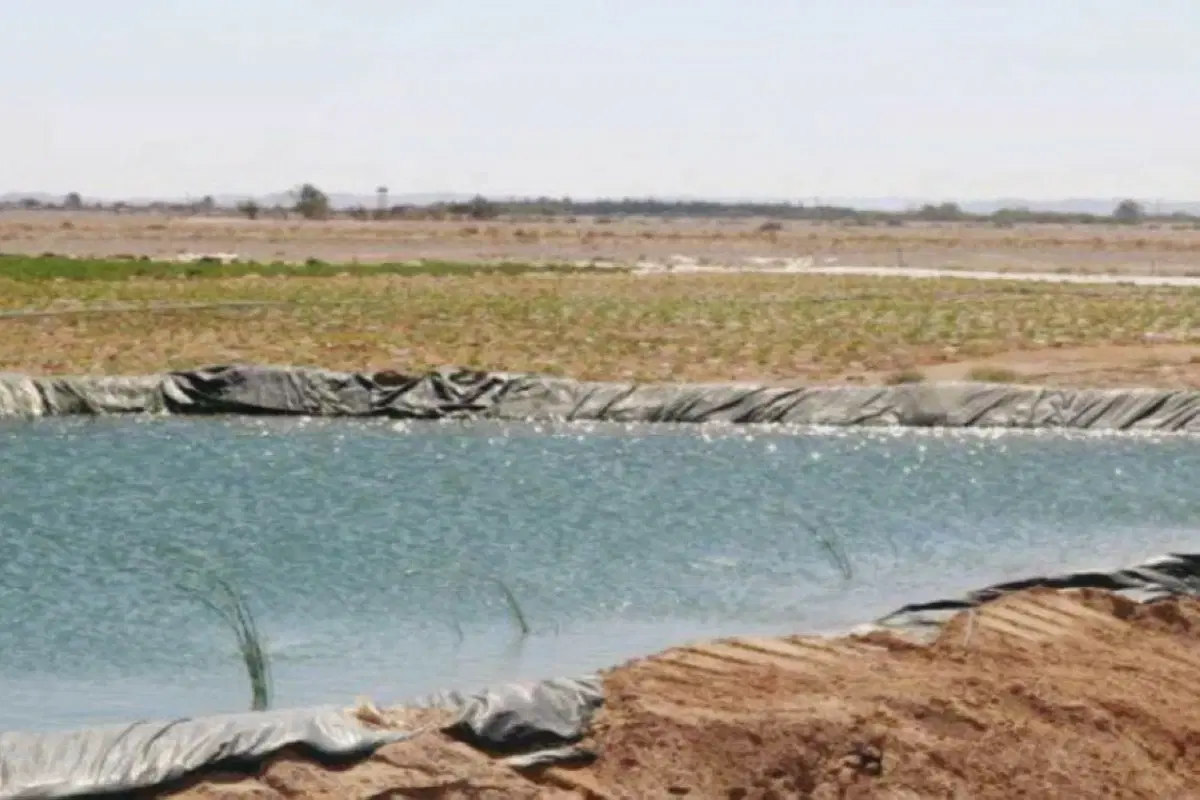
Al-Quwayra expands its agricultural options through water harvesting and fish farming
To enhance food security and provide job opportunities
Amman4 min read
Share
In a region where water scarcity imposes challenges on agricultural production, Al-Quwayra is moving towards expanding its production options, benefiting from water harvesting projects, fish farming, and income-generating initiatives, in an effort to enhance food security, open new horizons for employment, and establish an agricultural model more capable of adapting to climatic and economic variables.
The Director of Agriculture for Aqaba Governorate, Engineer Thaer Al-Rawajfeh, said that the reservoirs designated for water harvesting in the Al-Quwayra District represent one of the important tools for collecting and utilizing rainwater, contributing to the promotion of sustainable water resource management and reducing the effects of water scarcity on agricultural activities.
He added that the fish farming projects implemented by some cooperative societies open the way for diversifying production and income sources, and grant local communities additional opportunities to develop economic activities that integrate with traditional agriculture, pointing to the importance of supporting sustainable productive projects that contribute to empowering families, improving their economic conditions, and providing local job opportunities.
Al-Rawajfeh emphasized that the Ministry of Agriculture continues to support income-generating projects according to approved conditions, in addition to implementing training programs and extension workshops aimed at developing farmers' skills, introducing them to modern practices, and raising the efficiency of resource and production management.
In facing the challenges of water scarcity, Al-Rawajfeh stressed the necessity of developing irrigation methods used on farms, which include surface, drip, and pivot irrigation, according to the nature of the crops and production systems, pointing out that improving irrigation efficiency and regulating its timing to suit plant needs are two fundamental factors in reducing waste and lowering production costs.
He pointed out that agricultural extension and field training contribute to improving irrigation, fertilization, and crop management processes, raising product quality, and enhancing farmers' ability to deal with climatic and economic challenges, which reflects on the sustainability and viability of agricultural projects.
Regarding the 2026–2027 rainy season, Al-Rawajfeh explained that the recent rainfall constitutes a positive indicator for supporting soil moisture, plant and pasture growth, and enhancing water resources, but the assessment of the season remains linked to the continuity of rain and its distribution over the coming months.
According to the readings recorded during the recent weather conditions at stations in Aqaba Governorate, the amount of rainfall reached 18.4 mm at the Desert Golf station, 17.6 mm at the Al-Muzaffar station, 16.2 mm at the Industrial City, about 14.2 mm at Square "4", while the Aqaba University of Technology and Taten stations each recorded 11.4 mm, the Ports 9.8 mm, Al-Shamiya 7.6 mm, and the Development Company 7 mm.
He called on farmers to follow weather forecasts, inspect fields, water drains, and agricultural facilities, and take the necessary preventive measures to protect crops and reduce potential damage resulting from weather fluctuations.
Al-Rawajfeh emphasized that the future of agriculture in Al-Quwayra is not only linked to expanding cultivated areas and increasing production quantities, but to the sector's ability to manage water efficiently, improve crop quality, develop productive projects, and strengthen the partnership between farmers, cooperative societies, and official authorities.
He pointed to the continued field and technical efforts of the Aqaba Governorate Agriculture Directorate to follow up with farmers, companies, and oil presses, and to provide the necessary guidance to protect trees and crops from pests and apply sound agricultural practices.
He concluded by emphasizing that investment in water harvesting, fish farming, and agricultural extension constitutes part of an integrated path towards a more efficient and sustainable agricultural sector, capable of protecting natural resources, creating job opportunities, and expanding the income base for local families, thereby enhancing Al-Quwayra's position as one of the promising agricultural areas in Aqaba Governorate.