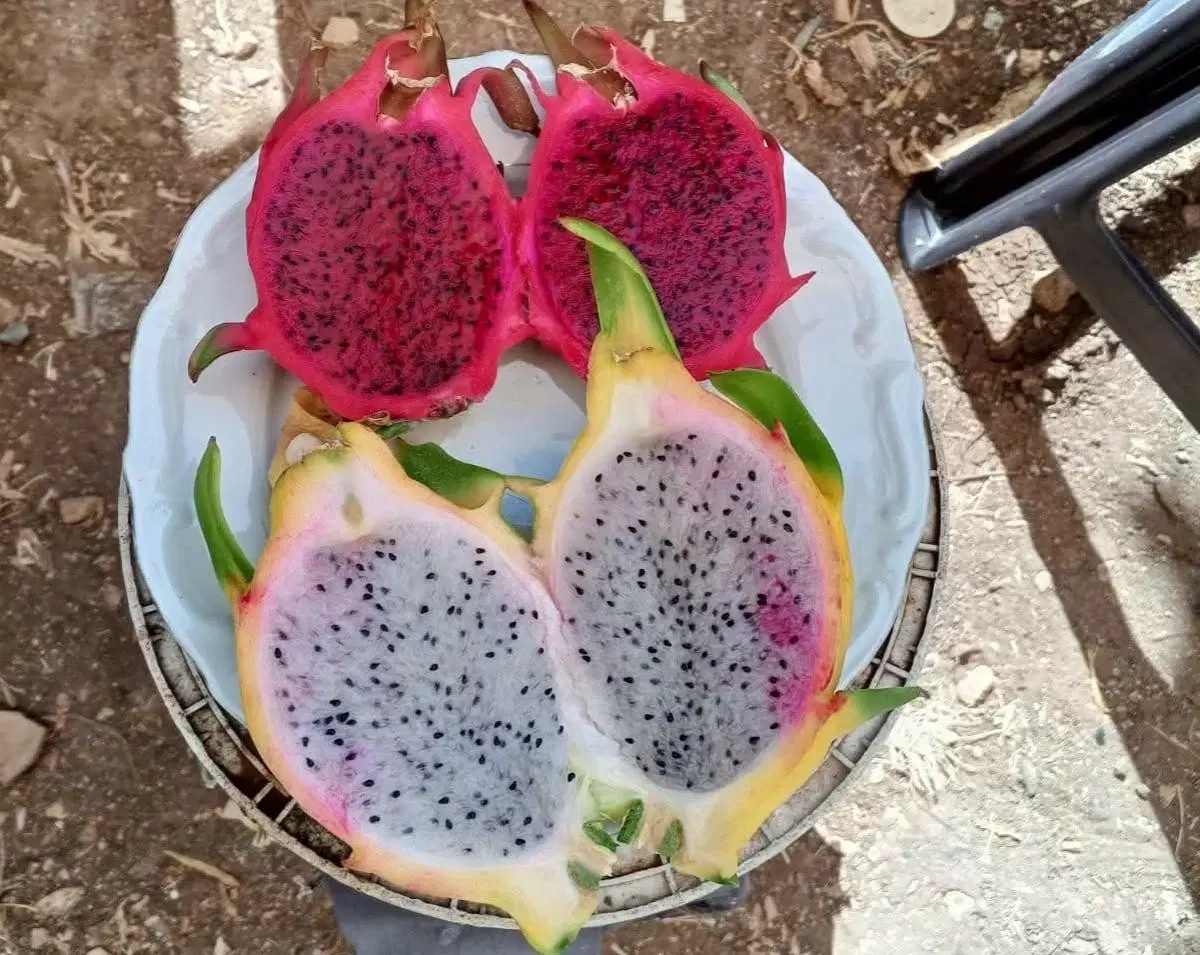
Obeidat said on Friday that the project is based on cultivating a number of distinguished agricultural varieties, most notably dragon fruit, also known as pitaya, and blackberries, as the farmer has been able to produce high-quality fruits, in addition to producing dragon fruit seedlings and providing assistance services in establishing specialized farms for this crop for those wishing to engage in this type of agricultural investment.
He emphasized that the experiment does not stop at plant production, but moves towards building an integrated agricultural system in which the project's components benefit from each other, in a model that approaches the concept of a circular economy aimed at reducing waste and utilizing available resources to the greatest extent possible.
He added that one of the most prominent features of this system is the cultivation of the "Azolla" plant and its use as a natural source rich in protein for feeding local chickens, which contributes to providing part of the nutritional needs, reducing operational costs, and enhancing reliance on resources produced within the project.
Obeidat indicated that the project includes beehives, benefiting from the dragon fruit flowers that provide a food source for the bees, in a form of environmental integration between plant and animal production, where the presence of bees contributes to enhancing the pollination process, while the beehives benefit from the surrounding agricultural environment, achieving an integrative relationship between the various elements of the project.
He explained that the importance of this experiment lies in the fact that it provides a scalable model for small farmers and those wishing to invest in agriculture, especially in light of the need to invest in limited spaces using modern methods that achieve diverse production and reduce production costs, while preserving resources and enhancing sustainability.
He stressed the importance of the guidance and technical role played by the Al-Mazar Al-Shamali Agriculture Directorate in following up with farmers and entrepreneurs, providing them with technical guidance, and encouraging agricultural initiatives that contribute to developing production, diversifying crops, and opening new horizons for agricultural investment.
He continued that the experience of farmer Bilal Al-Jarrah is an example that limited space does not mean limited production when agricultural vision is combined with planning, innovation, and good resource investment. The project, with its cultivation of dragon fruit and blackberries, seedling production, Azolla cultivation, and chicken and bee farming, presents an integrated picture of an agricultural project capable of combining production, sustainability, and diversity.
He pointed out that this experiment reflects an entrepreneurial spirit that deserves support and encouragement for the qualitative addition it can represent to the agricultural sector, while the technical staff at the Al-Mazar Al-Shamali Agriculture Directorate continue their field efforts in following up with farmers and providing guidance and technical advice, which enhances the chances of success for entrepreneurial agricultural projects and expands the base of innovation in the agricultural sector.