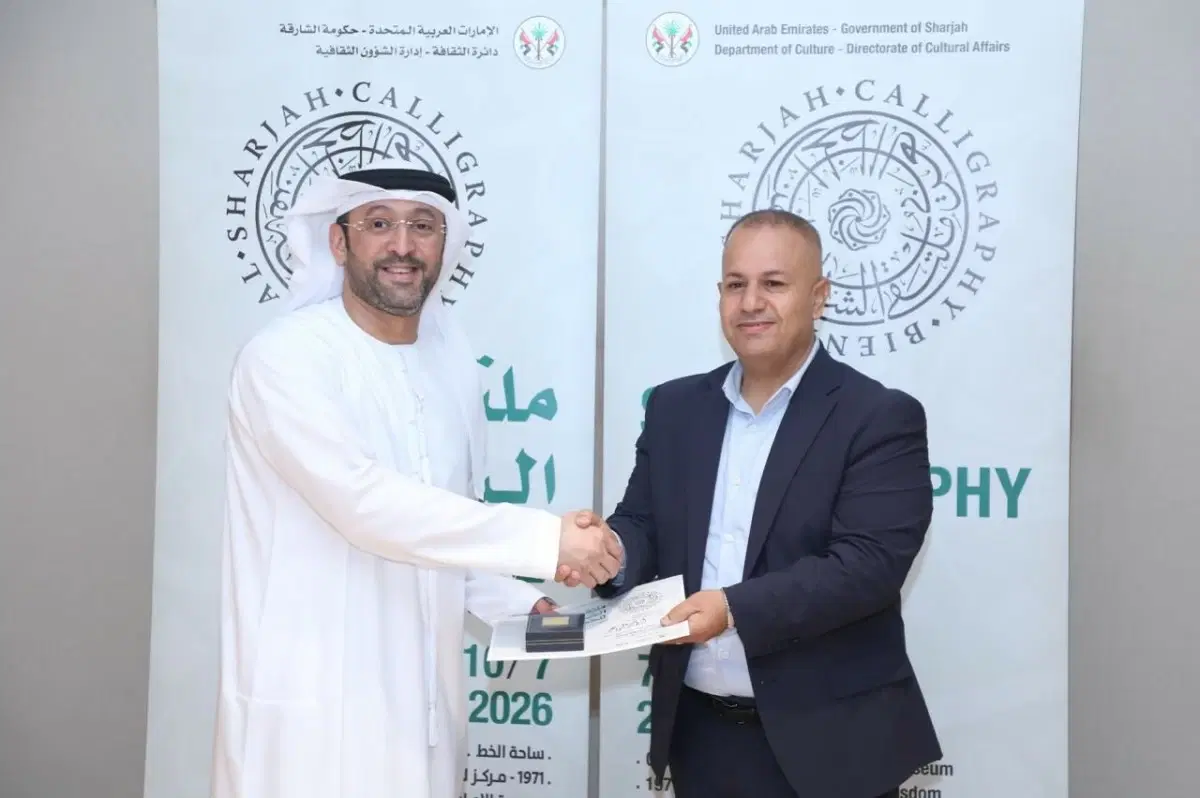
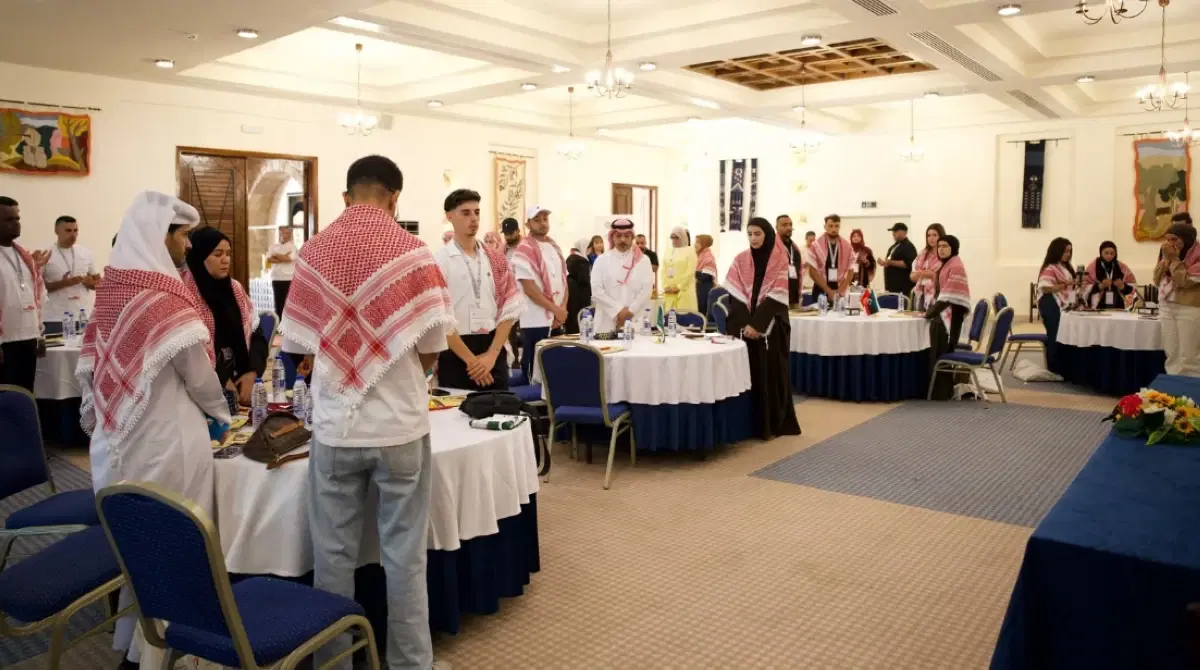
The symposium was held under the title "Arabic Calligraphy: Between Authenticity and Global Leadership," to shed light on the aesthetic and cultural dimensions of the Arabic script and its extensions in literature, architecture, and modern arts.
In his paper, "Visual Identity and Arabic Calligraphy: A Cognitive and Aesthetic Structure," Dr. Khaled Azab addressed the role of Arabic calligraphy in shaping the visual identity of a place and its relationship to Islamic architecture and cultural memory. He called for reading architectural inscriptions and writings beyond viewing a building as a material structure, considering them as evidence bearing connotations about the social, economic, and cultural contexts of the eras in which they appeared.
Azab explained that Arabic calligraphy possesses an expressive and aesthetic energy that contributes to forming a mental image for the recipient through the relationship between text and vision, and the visual interaction created by inscriptions where elements of light and shadow overlap with the connotations and content of the writing. He also highlighted the presence of calligraphy in shaping the uniqueness of Islamic buildings and cities, as well as in architecture, arts, and daily tools, as a component of the Arab-Islamic visual memory and an element that enhances belonging and civilizational continuity.
In turn, Dr. Khalil Gouia presented a paper titled "The Impact of Arabic Script on Lyrical Abstraction Experiences and Visual Cultural Dialogue," in which he examined the influence of Arabic script on modern art experiences and its role in fostering dialogue between visual cultures. He highlighted the transition of the script from its linguistic function to a formative element carrying aesthetic and expressive dimensions, through the rhythm, movement, and creative possibilities it offers that transcend traditional forms.
Gouia reviewed the experiences of a number of modern art pioneers, explaining the aspects of the presence of letters and their semblances in their works, and the possibilities they provided for forming a visual language open to multiple readings. He also addressed the ability of Hurufiyya (letterism) to express the artist's internal experiences and transform them into visual compositions, opening common spaces between artistic experiences and different cultures.