He added that reports indicate the forced displacement of more than 3,000 Palestinians from their homes as part of a large-scale Israeli operation that also saw the demolition of homes and private property, alongside the imposition of a near-total closure on large parts of the city, which severely restricted the residents' freedom of movement and their ability to access basic services.
Friedrich warned that these developments are reminiscent of the wave of mass displacement witnessed in the northern occupied West Bank in early 2025, pointing out that more than 34,000 Palestine refugees from the Jenin, Tulkarm, and Nur Shams camps remain forcibly displaced, despite more than a year having passed since their displacement.
He stressed that "any form of collective punishment is contrary to international law," affirming the necessity of allowing all forcibly displaced persons to return to their homes, while respecting their dignity and rights under international law, and ensuring their access to basic services.
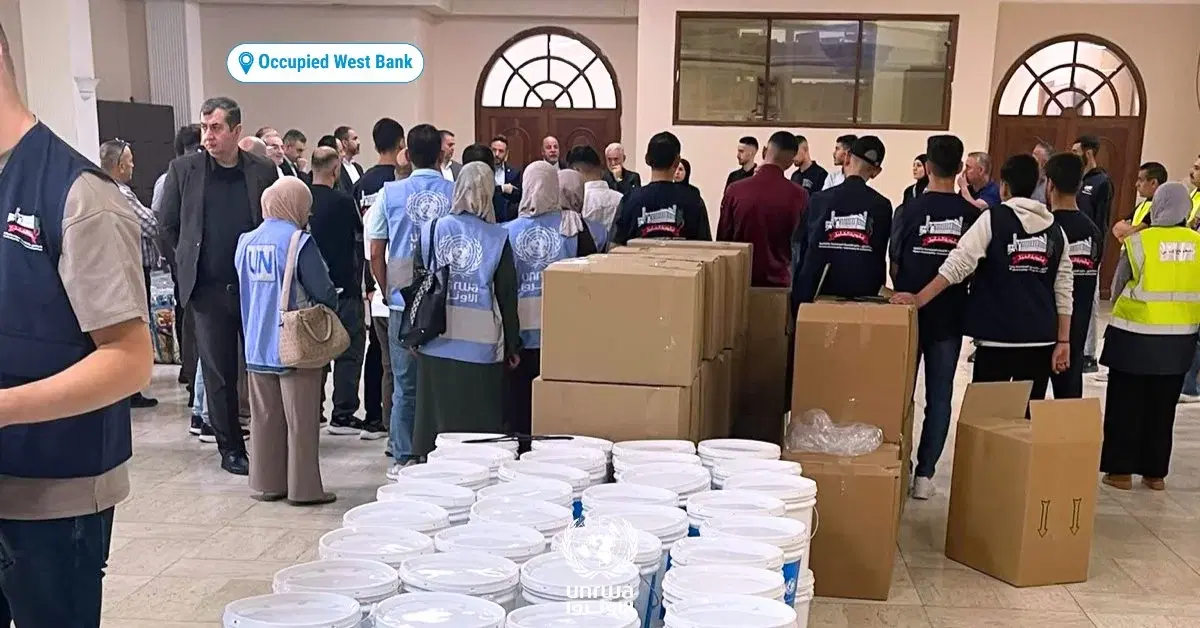
Regarding the humanitarian response, he explained that the United Nations Relief and Works Agency for Palestine Refugees (UNRWA) has acted in close coordination with humanitarian partners and the Palestinian Authority, and in cooperation with the Hebron Governorate and its municipality, to meet the urgent needs of the affected population.
He indicated that the agency has distributed emergency aid, including blankets, mattresses, and pillows, to the affected families as part of its efforts to respond to the humanitarian needs resulting from the current situation in the city.