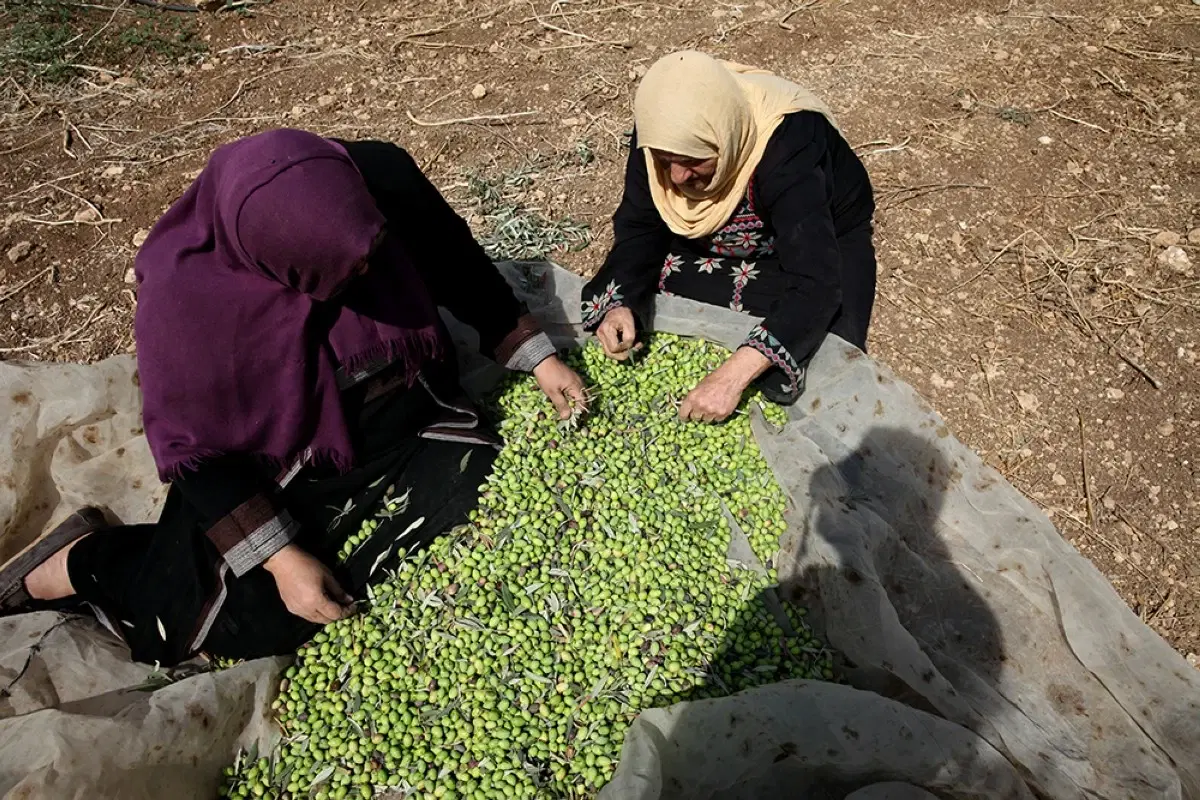
The Director General of the General Union of Jordanian Farmers, Engineer Mahmoud Al-Awar, said that the current olive season is one of the distinguished and good seasons, based on the weather conditions that the Kingdom has witnessed since autumn until the end of spring.
Al-Awar explained that the rainfall amounts reached good rates, while some areas witnessed amounts that exceeded the rates significantly, which reflects positively on the agricultural season, especially rain-fed olive cultivation.
He added that the Kingdom did not witness significant temperature increases during the summer compared to previous seasons, which recorded temperature increases to the end of the thirties, indicating that the periods that witnessed a rise in temperatures during the current season were short.
Al-Awar pointed to the specificity of olive cultivation in Jordan, in light of the existence of two patterns of agriculture; the first is rain-fed, which depends on rainwater, and the second is irrigated, and each of them has its conditions and needs.
He warned of the impact of rising production costs and declining prices on farmers, stressing the need to combine efforts to alleviate the burdens facing the agricultural sector, especially olive farmers who depend on rainwater.
He stressed that olives represent a 'national wealth and national wealth', calling for supporting olive cultivation and farmers, especially by providing support for supplementary irrigation for farmers with rain-fed cultivation, along with giving special attention to the agricultural sector regarding fuel costs.
Regarding the import of olive oil, Al-Awar called for stopping the import during the current season, indicating that the presence of imported oil in the market may negatively affect the marketing of local production and farmers, expressing hope in getting rid of the imported quantities currently in the market without affecting the marketing of local production during the season.
Regarding the preservation of oil quality and the protection of the consumer from fraud, Al-Awar stressed the need for the integration of efforts between regulatory bodies, mills, farmers, and the General Union of Jordanian Farmers, calling on citizens to be accurate when buying olive oil and to rely on reliable sources.
He pointed out that the Union will work during the current season, through its website, pages, phone numbers, and WhatsApp number, to help citizens in various governorates of the Kingdom and guide them to the places where the oil is located with farmers, allowing the consumer to buy oil directly from the farm without interference in prices.
For his part, the representative of the owners of mills and producers of Jordanian olives, Muhammad Tayseer Al-Najdawy, said that the current olive season promises goodness, expecting it to be a promising season and to witness a noticeable increase in production volume compared to last season, which did not exceed the production rate of about 20 to 30 percent of the expected production in normal seasons.
Al-Najdawy confirmed the readiness of the mills to receive the crop, explaining that all mills were inspected by the administrative judges in the governorates, in addition to conducting inspection and supervisory rounds with the participation of delegates from the Ministry of Agriculture, the Ministry of Interior, the General Establishment for Food and Drug, health and supervisory and security agencies.
He pointed out that the results of the inspection operations showed that the mills are in very good condition and fully prepared to receive the olive crop.
He explained that the expected production, according to the statistics of the Ministry of Agriculture, is about 30 thousand tons, adding that the amounts of rain that fell during the past period are promising and promising a good season, and it is expected that the climatic conditions will positively reflect on the quality of olive oil during the current season.
Al-Najdawy called on farmers not to rush to harvest the olives, indicating that the fruits have not yet reached the appropriate ripening stage in all areas, and that patience in harvesting helps to obtain high-quality oil.
He expected that the harvest would begin more after the twentieth of October, with the date varying according to regions and the degree of fruit ripeness, explaining that the conditions differ between the mountainous and Ghouri areas, and it is not possible to set a single date for harvesting for all farmers.
Regarding the wages of olive pressing, Al-Najdawy explained that the wages have increased compared to previous years, indicating that the mills have been working for about 12 years at a wage of 65 piastres per kilogram of oil, but the increase in operating costs and spare parts, most of which are imported from abroad, has led to a significant increase in expenses.
He explained that the Supervisory Council decided to raise the pressing wages to maintain the level of the mills and continue their work with the required efficiency, indicating that most of the mills in the Kingdom are among the best and most modern mills, and some of them are among the most modern mills in the Middle East.
He explained that the pressing wage increased from 65 piastres to 75 piastres per kilogram of oil, due to the increase in the costs of electricity, diesel and workers' wages, explaining that the worker's wage increased from about 15 dinars to about 25 dinars.
Regarding the prices of olive oil during the current season, Al-Najdawy expected that the prices would be close to their levels at the beginning of the year, with the possibility of being relatively high at the beginning of the season, ranging approximately between 100 and 110 dinars, before being affected later by the supply and demand movement in the market.
He stressed that olive oil, like other products, is subject to market rules in terms of supply and demand, and therefore the final price will be determined according to the available quantities and the size of the demand during the season.
He pointed out that if sufficient local quantities of olive oil are available, it is expected that there will be no need to import Tunisian oils as happened last season, stressing that the availability of local production will be a key factor in determining the need for import.
Regarding the procedures followed to ensure the quality of olive oil and protect the consumer, Al-Najdawy explained that about 99 percent of the mills in Jordan have become modern, especially those established or developed since 2015 and thereafter, and operate with high and advanced technologies.
He stressed that the mill owner is keen on the reputation of his mill and the preservation of the quality of the resulting oil, by adhering to the technical and health requirements during the pressing process, not adding any inappropriate materials, using water in the correct way, and maintaining the temperature of the dough and not raising it to levels that affect the quality of the oil.
He pointed out the importance of the temperature not exceeding about 32 degrees Celsius, to help obtain extra virgin olive oil of high quality, in addition to paying attention to the cleanliness and safety of the fruits and storing the produced quantities in the appropriate way to preserve the characteristics and quality of the oil.
Al-Najdawy renewed his call to farmers to be patient in the harvesting process and not to set a fixed date for all areas, because the date of fruit ripening differs from one area to another and from one field to another, indicating that the owner of the field and the farmer is the most aware of the condition of his trees and fruits.
He explained that one of the signs of olive ripening is the change in the color of the fruits to purple or black, calling on farmers to wait until the fruits begin to reach the appropriate ripening stage, indicating that the farmer may need to wait for an additional two to three weeks, depending on the region and the condition of the fruits.
Regarding consumers, Al-Najdawy advised citizens to rely on reliable sources when buying olive oil, and not to be swayed by the offers that spread through electronic pages, especially those that offer exaggeratedly low prices and use them as a means to attract consumers.
He stressed that the reliable source to obtain oil is the well-known mills and reliable bodies and trademarks, calling on the consumer to make sure of the source of the oil before buying it.
He pointed out that buying oil directly from the mill gives the consumer a greater opportunity to make sure of the source and quality of the oil, as he can follow the pressing process in front of him, wait until the end of the pressing process, and then choose the quantity he wants to buy, and he can taste the oil before making the purchase decision, as some mills provide designated places for tasting the oil.
Al-Awar and Al-Najdawy agree that the climatic indicators, from the amounts of rain and moderate temperatures, promise a good olive season and better production than last season, with the importance of patience in harvesting to ensure the quality of the oil, and the necessity of buying the product from reliable sources and protecting the consumer, while the costs of production and pressing and the movement of supply and demand remain key factors in determining prices and the need for import during the current season.