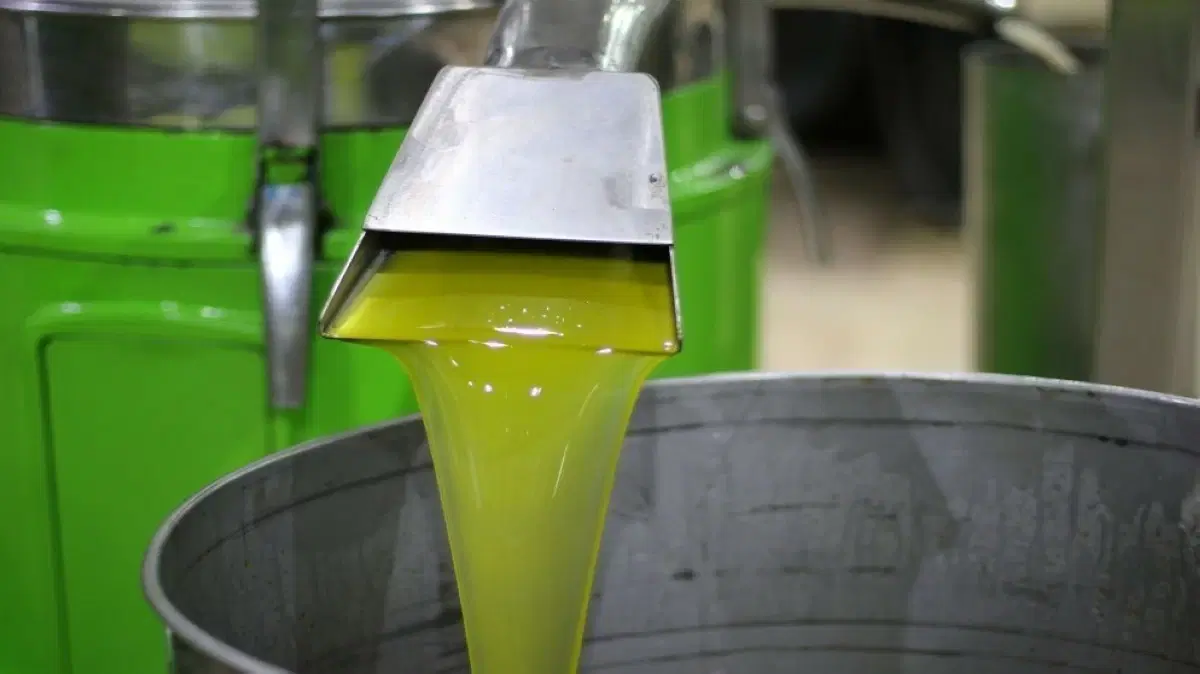
The decision comes as the olive pressing season approaches, based on the provisions of Article 10 of the Regulations for Licensing the Establishment and Operation of Olive Presses No. (z/11) of 2024.
As the season's start date approaches, 153 licensed presses in various governorates of the Kingdom are ready to receive the crop, with expectations of producing about 30,000 tons, according to the syndicate of press owners and olive producers, Tayseer Al-Najdawy.
Al-Najdawy explained to "Al-Mamlaka" that most presses will open their doors to receive the fruits within about 15 days, after completing their preparations and undergoing inspection by the concerned authorities, including the Ministry of Agriculture, the Ministry of Health, and the General Organization for Food and Drug.
The presses are spread across various governorates of the Kingdom, from Aqaba in the south to Ramtha in the north, with the least governorate containing between 10 and 12 presses, according to Al-Najdawy.
Al-Najdawy described the indicators of the current season as "very good", compared to last season, which was difficult for farmers, press owners, and consumers, as the production then did not exceed about 20% of the Kingdom's usual rate, which ranges between 25,000 and 35,000 tons.
In contrast, the current season's production is expected to reach about 30,000 tons, with local consumption ranging between 25,000 and 28,000 tons, which suggests an excess in production.
Pressing Wages
Regarding the cost of pressing, Al-Najdawy anticipated an increase in olive pressing wages this season by a percentage ranging between 5% and 10%, considering the increase to be limited compared to the rise in the costs of operating and maintaining the presses.
The pressing wages currently amount to 65 piasters per kilogram of oil, which is the price adopted for about 12 years, despite the increase in operating and maintenance costs over the past years.
Al-Najdawy attributed the expected increase to the significant rise in the costs of maintaining and operating the presses over the past two years, along with the cost of importing spare parts and equipment from abroad due to their non-production locally.
He pointed out that the press owners have maintained the pressing wages over the past years despite the rising costs, driven by their desire to support farmers.
Oil Prices and Export
As for the price of olive oil, it is subject to supply and demand, with expectations that the price per barrel this season will range between 90 and 110 dinars, depending on the quality, according to Al-Najdawy.
The final price determination is linked to the production level, the volume of supply, and the quality of the oil produced during the season, explaining that the priority will be to meet the local market's need, with the export door opening if local sufficiency is achieved.
Warning Against Fraud
On another note, the Director General of the General Union of Jordanian Farmers, Mahmoud Al-Awaran, warned against offers of domestic olive oil at prices ranging between 50 and 60 dinars, confirming that the cost per barrel for the farmer ranges between 75 and 80 dinars, making those prices unreasonable compared to the production cost.
Al-Awaran called on citizens to buy olive oil from reliable sources, warning against individuals impersonating farmers or oil marketers, and others around the presses who claim to have pressed their crop and sell the oil as fresh produce.
He emphasized that the olive presses will not start their work until after the middle of this month, by decision of the Ministry of Agriculture.
He also called for finding a mechanism to regulate Tunisian olive oil present in the local markets, to prevent its repackaging in new sheets and marketing it as a local product.