Occupation demolishes 2,461 buildings in the West Bank over two years
66 building permits for Palestinians versus 22,000 for settlers
Amman5 min read
Share
Smotrich: Demolitions necessary to consolidate settlement
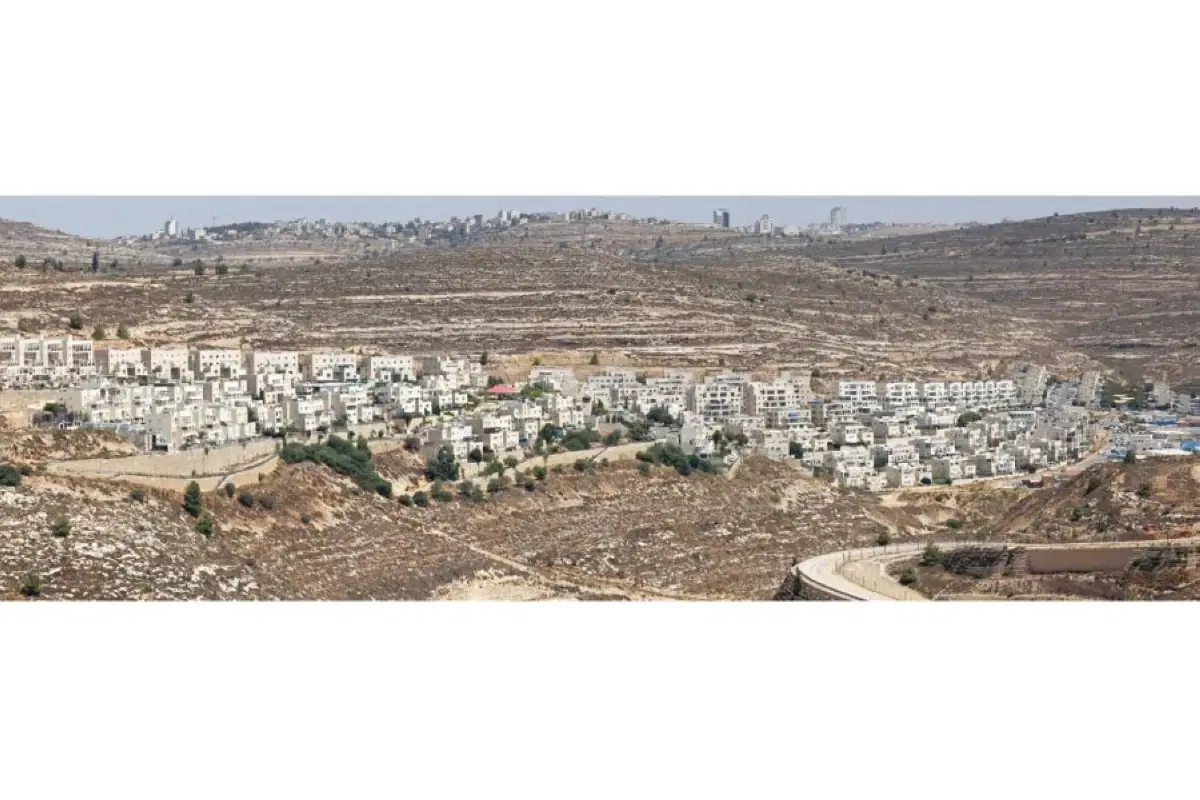
Settlement and human rights data revealed an unprecedented escalation in the demolition of Palestinian buildings and settlement expansion in the West Bank, coinciding with the expansion of settlement construction and the establishment of agricultural and pastoral outposts, at a time when international warnings are increasing that these policies are pushing towards the de facto annexation of the West Bank and undermining the chances of a two-state solution.
According to information provided by Haaretz journalist Amira Hass, supported by data from the United Nations Office for the Coordination of Humanitarian Affairs (OCHA), occupation authorities demolished, over the past two years, 2024 and 2025, about 2,461 Palestinian buildings in Area C, compared to 4,984 buildings over the previous nine years, meaning that about half of the demolitions recorded over 11 years occurred in just two years, and led to the displacement of about 3,500 Palestinians.
According to the United Nations, occupation authorities, represented by the army and the Civil Administration, demolished, in September 2026 alone, 143 buildings, including 42 residential buildings, resulting in 215 Palestinians losing their homes, while about 300 others were economically affected.
The extensive demolitions included 25 commercial buildings at the entrance to Rabah village east of Jenin on August 12.
The Israeli Civil Administration says that the demolitions aim to'maintain the rule of law and regulate construction in the region', but these justifications face widespread criticism, given Israel's control over planning and construction in 61% of the West Bank classified as Area C, where Palestinians rarely obtain building permits.
Israeli Finance Minister Bezalel Smotrich does not hide his political objectives behind these measures, saying that demolishing buildings is 'important and necessary to consolidate settlement', and that Palestinian buildings 'threaten settlements in northern Samaria'.
Commenting on a Peace Now report on the government's settlement policies, Smotrich described what is happening as a 'correction of mistakes that have persisted for about 30 years', expressing pride in what he called a'settlement revolution', and affirming that the government is working to prevent the establishment of a Palestinian state, and that what is happening is 'just the beginning'.
Data from Haaretz and Peace Now indicate that the practical objective of this policy is to reduce the area available for Palestinians to live, work and earn a living, and to prepare the land for further settlement expansion.
In August 2026, the 'Judea Daily News' website reported that the purpose of the wave of demolitions was to prepare the area to receive a new wave of Israeli families wishing to settle, while, the day after extensive demolitions, the settlements of 'Ganim' and 'Kedumim' were re-established.
Israeli official data reveal a significant gap in the granting of building permits; between 2009 and 2020, only 66 building permits were granted to Palestinians in Area C, compared to about 22,000 permits for Israeli settler housing units over the same period. These restrictions, according to human rights reports, push Palestinians to build without permits to meet their housing needs, providing a subsequent pretext for demolishing those buildings.
Settlement expansion, according to Peace Now, has extended to areas classified as Area B, where 23 new settlement outposts were established over two and a half years, while 15 military orders were issued to seize about 200 dunams in Area A south of Jenin to pave a settlement road, a precedent since the signing of the Oslo Accords.
Israeli authorities also approved the construction of 104 new settlements over four years, an 80% increase, and allocated $431 million to support 34 new settlements. Peace Now described these measures as 'silent' and 'de facto' annexation of the West Bank.
In parallel, the United Nations has documented since the beginning of 2026 more than 1,430 incidents of settler violence resulting in injuries or property damage, affecting about 260 Palestinian communities, noting that many of these incidents occurred in the presence of Israeli forces.
Settler violence, demolitions, and displacement have displaced about 3,800 Palestinians in 2026 alone, nearly half of them children, at a rate of 17 people per day, double the daily rate recorded over the previous three years. A UN report noted a recurring pattern of Palestinians being displaced from their villages before settlers seize the land.
UN Middle East envoy Ramiz Alakrof warned that the West Bank is 'on the brink of collapse', affirming that what is happening is not a'sudden deterioration', but the result of 'decades of unresolved conflict'.
Alakrof said these measures are 'interconnected steps, not isolated developments', considering them to be reshaping the West Bank, weakening Palestinian governance, and pushing towards de facto annexation, warning that continuing on this path will undermine the chances of ending the occupation and achieving a negotiated Israeli-Palestinian peace based on a two-state solution.
In light of these developments, international warnings are increasing that settlement expansion, demolitions, displacement, and violence in the West Bank are redrawing the geographical and demographic reality on the ground, and increasingly undermining the practical foundations of a two-state solution.