14,742 attacks carried out by settlers resulted in the martyrdom of 66 Palestinians
Establishment of 211 new colonial outposts and seizure of 64 thousand dunums
Follow Al Rai

14,742 attacks carried out by settlers resulted in the martyrdom of 66 Palestinians
Establishment of 211 new colonial outposts and seizure of 64 thousand dunums
Issuance of 97 colonial tenders for the construction of more than 15 thousand settlement units and the study of 415 plans
1,814 demolition operations affecting 5,059 facilities
Attacks on 147,111 trees, including 100,485 olive trees
The Palestinian Anti-Wall and Settlement Commission said that since October 7, 2023, the occupation forces and settlers have carried out a total of 62,916 attacks on Palestinians, their lands, and properties in the occupied West Bank, including Jerusalem; 48,174 attacks were carried out by the Israeli occupation army, and 14,742 attacks were carried out by settlers.
The Commission explained, in a report issued on Sunday, that Hebron topped the governorates with 10,840 attacks, followed by Ramallah and Al-Bireh with 10,594, then Nablus with 10,261, and Jerusalem with 7,315.
The Commission confirmed that this toll reveals the widening of the attack on the Palestinian presence in the West Bank, in conjunction with the war of extermination on the Gaza Strip, as the military force protects the expansion of settlers, while demolition, seizure, road closures, and attacks on sources of livelihood reduce the ability of citizens to stay on their land, and turn displacement into a means of reshaping the geography and imposing annexation.
The Commission explained that the Israeli occupation's measures did not stop at the limits of field attacks, but extended to a wide system of legislation and decisions that affected the legal and administrative status of Palestinian land, expanded the tools of control over it, and enabled settlers to turn their attacks into facts protected by the occupation's institutions and granted them funding and services. These measures were complemented by confiscation, settlement expansion, and displacement, to reshape the geography and undermine the Palestinian presence in it, by subjecting the land to the logic of annexation, and turning the colonial project into a state policy implemented by the tools of legislation, planning, administration, and military force.
It pointed out that settler attacks resulted in the martyrdom of 66 Palestinians, concentrated in Ramallah and Al-Bireh with 29 martyrs, Nablus with 21, Hebron with seven, Salfit with three martyrs, while Bethlehem and Qalqilya recorded two martyrs in each governorate, in addition to setting fire to 1,182 fires, including 809 cases targeting properties and 373 cases targeting lands. The burning cases were concentrated in Ramallah and Al-Bireh with 376 cases, Nablus with 335, Hebron with 112, Jenin with 73, Bethlehem with 64, Tulkarm with 61, Salfit with 44, Qalqilya with 39, Jerusalem with 32, Tubas with 29, Jericho with 17.
It pointed out that the attacks affected 147,111 trees by smashing, uprooting, burning, and poisoning, including 100,485 olive trees. Hebron recorded 31,516 damaged trees, Ramallah and Al-Bireh 27,922, Nablus 24,073, Jenin 23,658, Bethlehem 15,784, Salfit 11,313, Qalqilya 9,298, Tubas 2,234, Tulkarm 745, Jerusalem 568 trees. The Commission also documented 922 cases of land bulldozing and 2,645 attacks on trees and crops.
It added that during the same period, settlers attempted to establish a total of 211 colonial outposts, most of which were pastoral, with Ramallah and Al-Bireh topping the governorates with 62 cases, followed by Hebron with 57, Nablus with 38, Bethlehem with 29, Jerusalem with 15, reflecting the widening of the targeting of Palestinian land through colonial expansion and imposing new field facts.
It explained that the detailed records available for the attacks indicated that at least 376 Palestinian villages, towns, and communities were exposed to settler terrorism, in one of the indicators of the widening scope of the terrorism practiced by the Israeli occupation state and the size of the prohibited empowerment of settler militias.
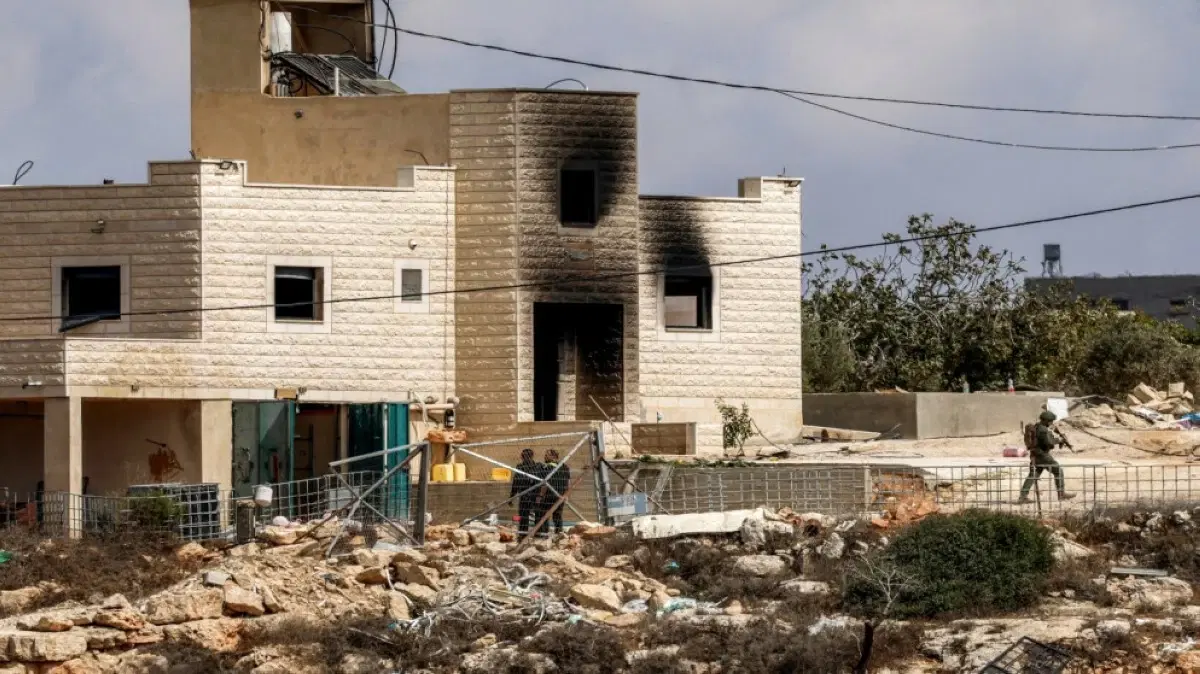
It added that the Israeli occupation authorities carried out 1,814 demolition operations, affecting 5,059 facilities; 1,894 inhabited houses, 307 uninhabited houses, 1,524 agricultural facilities, 723 livelihood sources facilities, and 611 other facilities. The demolished facilities were concentrated in Jerusalem with 1,244 facilities, Hebron with 831, Jenin with 496, Tulkarm with 480, then Nablus with 394, Ramallah and Al-Bireh with 384, Bethlehem with 370, Jericho with 347, Tubas with 200, Qalqilya with 193, and Salfit with 120.
In addition to that, the occupation authorities issued 2,133 demolition or stop-work notices; 577 in Hebron, 306 in Bethlehem, 277 in Ramallah and Al-Bireh, 222 in Jerusalem, 193 in Jericho, 156 in Nablus, 137 in Qalqilya, 85 in Tulkarm, 83 in Salfit, 74 in Jenin, and 23 in Tubas.
The Commission also recorded 7,775 property damage and destruction attacks, 1,120 property seizure incidents, and 1,437 theft incidents, including the confiscation or theft of 13,539 livestock, 1,095 vehicles, 125 agricultural tractors, and 1,617 agricultural tools.
Regarding land seizure and control, the estimated cumulative total reached approximately 64.2 thousand dunums of Palestinian land. The control tools included 231 military hand-placement orders affecting approximately 5,268 dunums, including 46 orders aimed at establishing buffer zones around settlements and 122 orders aimed at cutting security and military roads, and so-called "state lands" announcements with approximately 29.7 thousand dunums (a record average over the past three decades), and 11 expropriation decisions with a total area of approximately 3,534 dunums, in addition to increasing the boundaries of nature reserves by approximately 20 thousand dunums.
The expropriation toll included the original Sebastia order No. 01/26, with an area of 2,068 dunums. In the additions to the orders of hand-placement after the toll of the two years, Tubas topped the governorates with 1,662.625 dunums, followed by Jenin with 1,008.379 dunums.
In colonial planning, the Anti-Wall and Settlement Commission monitored the series of official announcements issued by the Planning Council and the occupation municipality in Jerusalem, submitting a total of 89 procedures for depositing plans in the West Bank containing 19,221 units and extending over 23,129.101 dunums, and 148 approvals for plans containing 24,913 units on 29,066.5374 dunums. Within the municipal boundaries, 85 plan deposits containing 16,005 units on 1,627.950 dunums were recorded, and 93 approved procedures for plans containing 15,156 units on 4,016.918 dunums.
The Commission explained that since the start of the war, the occupation authorities have issued a total of 97 tenders containing 15,760 units; 84 tenders in the West Bank, containing 12,872 units, and 13 tenders within the municipal boundaries, containing 2,888 units. The Jerusalem tenders were distributed between five tenders containing residential units and eight for facilities, infrastructure, development, and other uses. The E1 project in East Jerusalem included 3,401 units, distributed as 2,167 units in Tender 460/2025 and 1,234 units in Tender 186/2026.
It added that the expansion of settlements, pushing plans and tenders, and linking them to roads and infrastructure consolidates control over the land and cuts off communication between Palestinian communities. The danger of the E1 project in the corridor of East Jerusalem is highlighted, as it targets the extension of the city and its relationship with its Palestinian surroundings, while confiscations and demolitions narrow the urban and agricultural field of the villages and allow the expansion of colonial sites.
The Commission concluded by affirming that protecting the citizens and threatened communities requires supporting their stay and access to their lands, water, and sources of livelihood, and holding those responsible for the crimes of the occupation and settler terrorism accountable. It called for practical international measures to stop the expansion of settlements and their support and funding, stressing that continued impunity allows the use of killing, demolition, confiscation, and displacement to impose annexation by force.
Know more about this story?Send us a tip
Ask about this report — answers stay grounded in its text.