MPs in the Field affirm their support for Yarmouk University and Al-Sharairi: We work to make the university suitable for the future
Amman5 min read
Share
Dr. Malik Al-Sharairi, President of Yarmouk University, confirmed that the university has made a comprehensive development of its legislative system, which included updating and modifying 90 percent of the foundations, instructions, and laws, with the aim of improving and enhancing performance and raising various academic and administrative processes within the university framework.
This came during a visit by the "MPs in the Field" initiative delegation to the university and their meeting with the university president, in the presence of deans and the parliamentary bloc, which included the deputies: Dr. Abdul Nasser Al-Khasawneh, Mu'aid Al-Allawane, Hala Jarrah, Bassem Al-Ruwaibdeh, Salem Abu Dawla, Abdul Halim Al-Ananebeh, and Dr. Iyad Al-Jabrin.
Al-Sharairi said that the university is proceeding with the implementation of various development measures that will make the university suitable for the future, by continuing to update and build on the university's heritage and educational and academic system, which enjoys quality, expertise, and competencies, along with the international accreditations and advanced classifications of its programs and specializations, confirming that these assets form the basis for continuing development and enhancing the university's status locally and internationally.
For their part, the deputies affirmed the importance of Yarmouk University and its leading role in the higher education sector, stressing their support for its journey and coordination with the government to provide the necessary support, especially in the financial aspect to face the challenges associated with rising indebtedness and bank interest. They explained that they will work during the discussion of next year's budget to study these issues and coordinate with the government extensively to find solutions that enable the university to continue its role and develop its programs.
Dr. Abdul Nasser Al-Khasawneh, a deputy, said that the visit of the "MPs in the Field" initiative to Yarmouk University comes in line with the initiative's objectives to reach various institutions and sectors in the field, raise questions, listen to the challenges they face, and work to provide the necessary support for them, confirming that universities, led by Yarmouk University, receive the attention of the deputies due to their national and educational importance.
Al-Khasawneh pointed out that the initiative aims to provide support to the university and support it in facing the challenges that obstruct its journey, noting that the financial distress that Yarmouk University is going through is a priority for the deputies, and that this file will be followed up and coordinated with the government during the discussion of the general budget for the coming year.
After the field tour, Al-Khasawneh called for the allocation of specific financial amounts for maintenance and returns for the rehabilitation of the university, stressing that these are essential reasons that the government must provide to support the infrastructure of educational institutions.
For his part, Deputy Mu'aid Al-Allawane affirmed that the university is capable of overcoming the crisis, while Deputy Abdul Halim Al-Ananebeh stressed the strategic importance of the university in the northern region. Deputy Hala Jarrah called for continued support for the university as one of the most important government educational institutions, referring to her previous follow-ups with the presidency of the government in this regard.
For his part, Deputy Bassem Al-Ruwaibdeh affirmed the need to improve the financial situation of the university, while Deputy Salem Abu Dawla questioned the alternative plans for the university's administration to address the financial crisis, and in the same context, Deputy Dr. Iyad Al-Jabrin questioned the mechanism of work of the casual workers in the university and whether there are future procedures to regulate this file.
In response, Al-Sharairi reviewed the university's integrated strategic plans, which included developing the academic side, attracting scientific competencies and expertise, and introducing specializations that keep pace with labor market requirements. He pointed to the establishment of the Technical College, which is relied upon to make a qualitative leap, and is expected to receive 740 students in its first batch, which constitutes an important source for attracting Arab and international students.
Al-Sharairi pointed out that the biggest challenge facing the university over the past 15 years was the administrative challenge, confirming that the human element represents the real capital for developing work. He also reviewed the measures taken to control expenses and innovate new ways to provide financial allocations, explaining that the university pays about 6 million dinars as bank interest according to the 2025 budget, and is currently working to address this file from several aspects.
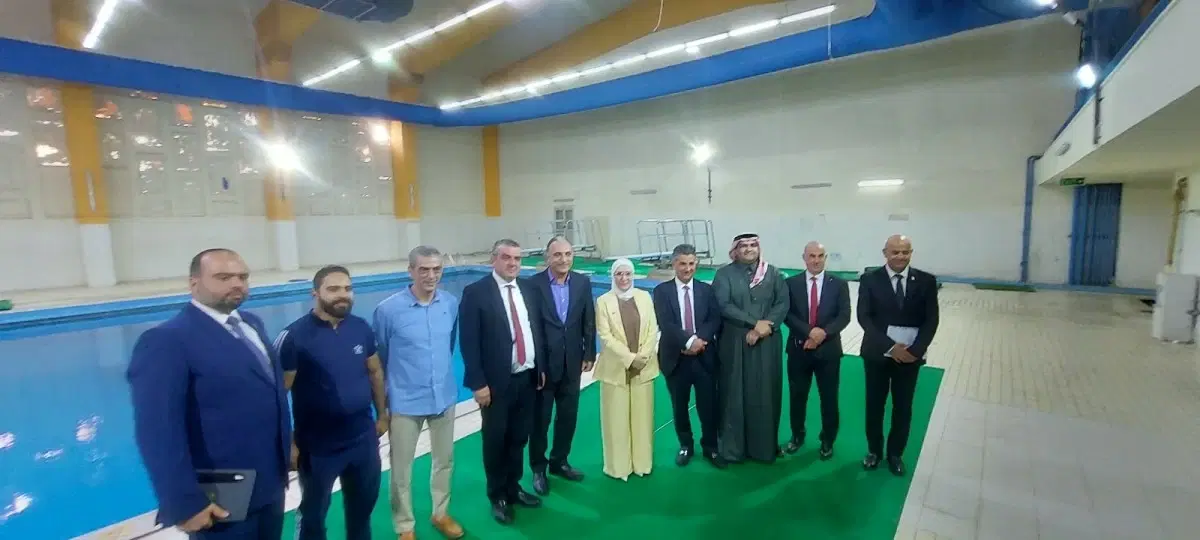
The parliamentary delegation toured a number of university facilities and development projects, including the artesian well, which is one of the new projects in the university and provides a training opportunity for students of the Faculty of Science and the Hajjawi Faculty of Technological Engineering, enhancing the practical and field training aspect for students. The tour also included a visit to the Faculty of Arts and a review of the ongoing maintenance and development works there, as well as a visit to the Faculty of Physical Education and Sports Sciences, where the delegation reviewed the reality of the facilities, equipment, and services provided, expressing their admiration for the advanced level reached by these facilities and the ongoing development and modernization works at the university.