Most prominent candidates in the Israeli elections
Agencies5 min read
Share
Voters will cast their ballots in the Israeli elections on Tuesday for party lists, and parliamentary seats are distributed to the candidates included on these lists according to the proportional representation system.
After a long period in which Israeli Prime Minister Benjamin Netanyahu appeared to be on his way to losing power in the elections, the competition has intensified as the voting date approaches, while his opponents still lack a clear path to power.
Benjamin Netanyahu
Netanyahu's name stands out among the most important candidates in the first parliamentary elections Israel has witnessed since it launched a war on Gaza and Lebanon and carried out airstrikes on Iran.
Netanyahu has spent most of the period since 2009 in power, having first assumed the premiership in the 1990s, becoming Israel's most prominent face abroad and a divisive figure at home.
His supporters see him as the strong leader Israel needs to defend itself in a hostile region. However, Netanyahu is fighting for his political future, as he is wanted by the International Criminal Court over allegations of war crimes in Gaza, and is also on trial within Israel on corruption charges.
Opinion polls have shown a sharp decline in the popularity of the Likud party since the war on Gaza on October 7, 2023. Furthermore, his government's policies on issues of religion and state do not find support among many Israelis.
But Netanyahu (77) has repeatedly proven his superior ability to remain at the heart of the political scene. He has said he wants to form an "expanded national" government after the elections if he wins. If the elections lead to a political stalemate, he could remain in power as head of a caretaker government for many months.
Netanyahu's rivals
Among Netanyahu's most prominent rivals is Gadi Eisenkot, a former chief of staff who lost one of his sons in the Gaza war. Eisenkot (66) presents himself as an outsider to the political establishment and a hardliner on security issues, while his humble background and the sacrifices made by his family stand in stark contrast to Netanyahu's long career in high office and the corruption cases pursuing him. He leads a new centrist party called "Yashar," a Hebrew word meaning "straight" or "honest."
Also standing out is Naftali Bennett, a former prime minister (54), a former commando (special forces) commander, and a member of the right-wing current, who served as an aide to Netanyahu and made a fortune in the high-tech sector.
He allied with former centrist Prime Minister Yair Lapid in a new party called "Together." The party's messages focus on addressing the trauma that has afflicted Israel and returning the country to the right path. This alliance—despite its parties being on opposite ends of the political spectrum—succeeded in ousting Netanyahu in the 2021 elections.
Another rival is Avigdor Liberman, a former defense minister (68), who was previously a close ally of Netanyahu. Being more hardline than Netanyahu himself, Liberman resigned from the government in 2018, accusing the prime minister of being too lenient with Palestinian militants in the Gaza Strip, thus becoming one of Netanyahu's harshest critics. Liberman's party (Yisrael Beiteinu) draws a large part of its electoral base from immigrants from the former Soviet Union.
Also prominent is former General Yair Golan (64), who currently leads the Democrats party, which was founded on the ruins of the historic Labor Party and the smaller left-wing Meretz party.
Candidates in Netanyahu's camp
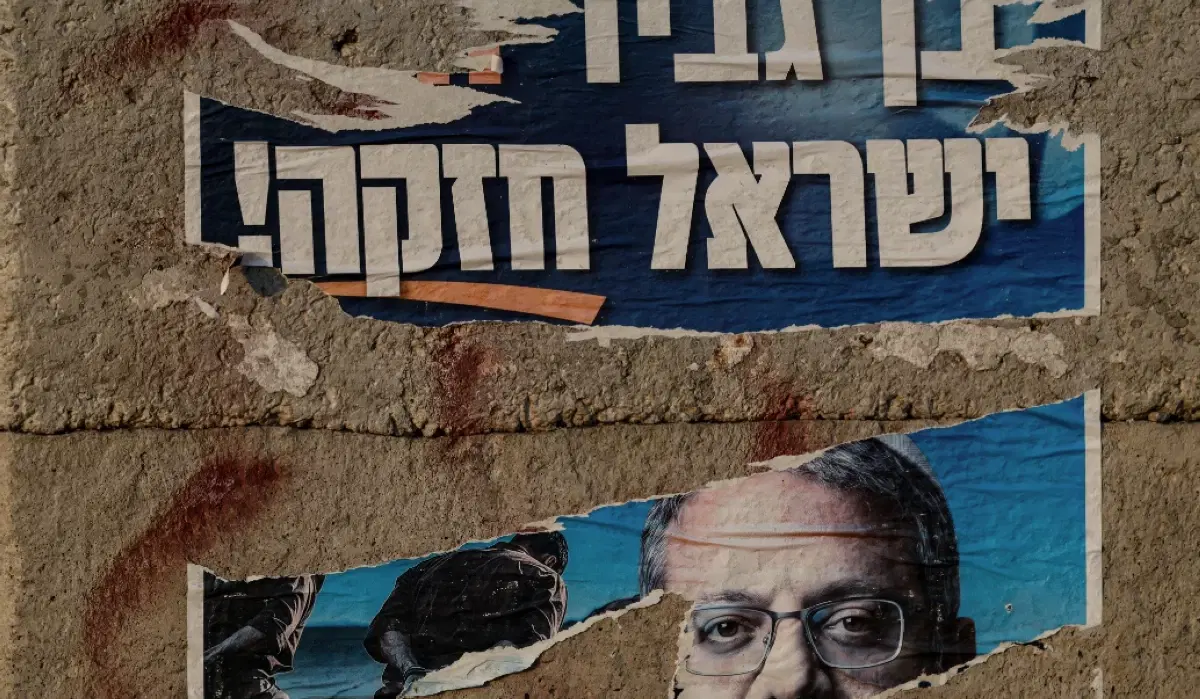
Both extremist ministers Bezalel Smotrich (46) and Itamar Ben-Gvir (50) have sparked widespread international criticism due to their far-right policies toward the Palestinians.
Smotrich leads efforts for the rapid expansion of Israeli settlements in the West Bank, expressing his hope that this will lead to "burying" the idea of a Palestinian state.
Ben-Gvir, who was convicted in 2007 of racist incitement against Arabs, has called for the imposition of the death penalty on Palestinians, the tightening of their detention conditions in prisons, and making it easier for Israelis to obtain firearms.
Smotrich and Ben-Gvir have called for the expulsion of Palestinians from the Gaza Strip and the settlement of Israelis in the Strip.
For years, Netanyahu has relied on two ultra-Orthodox Jewish parties—the United Torah Judaism party and the Shas party—to ensure his political survival. The demands of these two parties to exempt ultra-Orthodox Jews from mandatory military service, along with their low participation rates in the labor market and reliance on government subsidies, have angered many Israelis, especially in light of the current war conditions.
Parties that do not clearly support either camp may tip the scales in favor of Netanyahu or his rivals. Among these parties are the United Arab List and the Joint List, the two parties representing the Arab minority in Israel, which makes up about 20% of the population. Alongside them, a new right-wing party called "Amkha Yisrael" (Your People Israel) stands out, as well as another center-right party called "Reserves," both of which opinion polls show to be wavering.